Calcium chloride is safe when handled properly. The key risks are thermal burns from the heat generated during dissolution, skin and eye irritation from direct contact with the solid or concentrated solutions, and violent boiling when added to hot water.
This calcium chloride exothermic reaction is not a side effect—it is the primary reason Calcium Chloride is specified in applications ranging from self-heating food packaging to winter road maintenance. For technical procurement professionals, understanding the thermodynamics behind this behavior is essential for selecting the correct grade (anhydrous vs. dihydrate), anticipating safety requirements, and evaluating supplier claims.
The heat release is measurable: dissolving anhydrous calcium chloride in water at 25°C produces a temperature rise of over 5°C per 5 grams in a typical laboratory demonstration . At industrial scale, the effect is more pronounced. This article explains the mechanism behind the exothermic dissolution, compares the thermal performance of different calcium chloride forms, and provides practical guidance for safe handling and application-specific selection.

What Is the Calcium Chloride Exothermic Reaction?
The exothermic reaction is the release of heat energy when calcium chloride dissolves in water. This occurs because the energy released when calcium ions (Ca²⁺) and chloride ions (Cl⁻) bond with water molecules exceeds the energy required to break apart the calcium chloride crystal lattice .
The dissolution process follows this equation:
CaCl₂(s) → Ca²⁺(aq) + 2Cl⁻(aq)
The enthalpy of dissolution for anhydrous calcium chloride is approximately -82.9 kJ/mol, meaning 82.9 kilojoules of heat are released for every mole of CaCl₂ that dissolves . For a 5-gram sample, this translates to roughly -3.7 kJ of heat liberated .
Why Does Calcium Chloride Generate Heat When It Dissolves?
The heat generation is a net energy effect. Two competing processes occur simultaneously: the breakdown of the solid crystal lattice (which requires energy input) and the hydration of the freed ions (which releases energy).
Lattice Energy vs. Hydration Energy
Calcium chloride has a lattice energy of 2,271 kJ/mol—the energy needed to separate Ca²⁺ and Cl⁻ ions from their solid arrangement. However, the hydration energy—the energy released when these ions form bonds with water molecules—is -2,352 kJ/mol .
Because the hydration energy magnitude exceeds the lattice energy, the overall process is exothermic. The difference of approximately 81 kJ/mol is released as heat.
This is not a universal property of all salts. Sodium chloride (NaCl), for example, has a lattice energy of 790 kJ/mol and a hydration energy of -786 kJ/mol, resulting in a nearly thermoneutral dissolution .
The Role of Water of Hydration
Anhydrous calcium chloride (CaCl₂ with less than 1% water) generates the most heat because it has the highest affinity for water. The compound is hygroscopic—it absorbs moisture from the air—and deliquescent, meaning it can dissolve in the moisture it absorbs.
The hydration reaction can proceed through multiple stages:
CaCl₂ + 2H₂O → CaCl₂·2H₂O + heat
CaCl₂ + 6H₂O → CaCl₂·6H₂O + heat
The integral heat of hydration from anhydrous CaCl₂ to CaCl₂·6H₂O is approximately -35.5 kcal/mol (about -148.5 kJ/mol) . This multi-stage hydration explains why calcium chloride releases heat over an extended period rather than in a single instantaneous burst.
How Do Different Calcium Chloride Forms Compare in Heat Output?
Calcium chloride is commercially available in three primary forms, each with distinct thermal characteristics when dissolved.
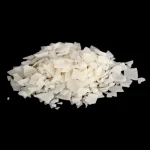
Anhydrous Calcium Chloride (94-97% CaCl₂)
Anhydrous calcium chloride delivers the highest heat output per unit weight. In a controlled patent formulation, anhydrous CaCl₂ generated sufficient heat to raise the mixture temperature to 150°F (65°C) within 30 seconds of water addition .
For technical procurement, the key specification is purity: 94% minimum CaCl₂ content is typical for industrial grades, with the balance being water, sodium chloride, and other impurities.
Dihydrate Calcium Chloride (74-77% CaCl₂)
Dihydrate calcium chloride contains approximately two molecules of water per CaCl₂ unit. It produces less heat on dissolution because part of the hydration energy has already been expended during manufacturing. However, it is less hygroscopic, easier to handle, and more cost-effective for applications where extreme heat is not required.
Liquid Calcium Chloride (28-42% CaCl₂)
Liquid calcium chloride is pre-dissolved and therefore generates no heat upon delivery. It is used in dust suppression and pre-wetting applications where the thermal effect is not the primary mechanism.
| Property | Anhydrous (94%) | Dihydrate (74%) | Liquid (30-40%) |
|---|---|---|---|
| Heat output on dissolution | Highest | Moderate | None |
| Hygroscopicity | Extremely hygroscopic | Moderately hygroscopic | N/A |
| Handling risk | Dust irritation; thermal burn risk | Lower dust; mild heat | Low risk |
| Typical cost (market reference) | ~800-1,000 RMB/ton | ~750-850 RMB/ton | ~500-1,000 RMB/ton |
Typical market reference values; actual pricing varies by region, purity, and volume .
How Is the Exothermic Reaction Used in Self-Heating Applications?
The controlled release of heat from calcium chloride dissolution has been adapted for consumer and industrial self-heating products.
Self-Heating Beverage Containers
A patented design uses a sealed container of anhydrous calcium chloride immersed in a predetermined volume of water. The heat released heats the beverage through a heat-transfer interface . The key engineering challenge is managing the reaction rate—too fast, and the container becomes dangerously hot; too slow, and the beverage does not reach serving temperature within a practical timeframe.
Food Warming Packs
Calcium chloride-based warming packs typically combine the salt with a gelling agent. The gel structure moderates the temperature rise, preventing steam generation even when temperatures reach 240-260°F (115-127°C) . The viscous paste or gel form also prevents spattering that could scald users.
Construction and Curing Applications
In cold-weather concrete curing, calcium chloride accelerates setting time and generates heat that protects fresh concrete from freezing. The exothermic dissolution contributes to the early strength development of the mix.
What Are the Safety Risks of the Calcium Chloride Exothermic Reaction?
The heat generated is an inherent hazard that requires engineering controls, not a defect that can be designed out.
Thermal Burns from Violent Boiling
Adding calcium chloride to hot water can cause violent boiling and spattering. NOAA documentation records a case where this reaction caused injury . The mechanism is straightforward: the heat released during dissolution adds to the thermal energy already present in the hot water, rapidly exceeding the boiling point.
Precaution: Always use cool or ambient-temperature water when dissolving calcium chloride. The heat released will warm the solution naturally.
Direct Contact Hazards
- Skin contact: Solid calcium chloride causes mild irritation on dry skin. Strong solutions (above 30% concentration) can cause marked irritation and superficial burns .
- Eye contact: Dust or solution contact causes irritation and potential transient corneal injury .
- Inhalation: Dust causes irritation of the nose and throat. The OSHA PAC-1 level for calcium chloride is 3 mg/m³ .
Safe Handling Protocol
Personal protective equipment for handling anhydrous calcium chloride should include:
- Safety glasses or chemical goggles compliant with OSHA 29 CFR 1910.133 or EN 166
- Rubber or chemical-resistant gloves
- Long-sleeved clothing to prevent skin contact
- Dust respirator (NIOSH-approved) when handling powdered forms in confined spaces
Storage requirements include keeping containers tightly closed in a dry, cool, and well-ventilated area . Calcium chloride should be stored away from incompatible materials including strong oxidizing agents and bromine trifluoride .
Where Is Calcium Chloride Exothermic Reaction Applied in Deicing?
The exothermic property gives calcium chloride a performance advantage in winter road maintenance that sodium chloride cannot match.
The Deicing Mechanism
When calcium chloride contacts ice and snow, two effects occur simultaneously:
- Freezing point depression: The dissolved salt lowers the freezing point of water, causing ice to melt at temperatures where pure water would remain solid.
- Exothermic heat release: The heat generated during dissolution warms the surrounding ice-water mixture, accelerating the melting process.
Comparative testing under the improved SHRP ice-melting protocol confirms that CaCl₂ and MgCl₂ both exhibit measurable exothermic effects during deicing, while NaCl does not . At an ambient temperature of +20°C, pure CaCl₂ raised the solution temperature to +58°C upon mixing—a 38°C elevation—compared to NaCl, which actually lowered the temperature .
Practical Temperature Advantages
Calcium chloride remains effective at temperatures as low as -25°C (-13°F), whereas sodium chloride loses most of its effectiveness below -9°C (15°F). The exothermic heat release contributes to this extended temperature range by providing an initial thermal boost to the melting process.
For solid deicers, the recommendation from SHRP testing is to use solid linear spreading as the application method, as solid forms exhibit higher ice-melting efficiency than pre-dissolved liquids .
Why Should Technical Buyers Consider Purity and Form?
The thermal performance of calcium chloride is directly tied to its purity and physical form, making specification critical for procurement.
Purity and Impurity Effects
Industrial-grade anhydrous calcium chloride at 94% purity contains approximately 6% of other materials—primarily sodium chloride, magnesium chloride, and water. Each percentage point of inert material reduces the heat output per unit weight. For applications where thermal performance is the primary function (self-heating packs, rapid deicing), higher purity grades (95-97%) may justify the cost premium.
Physical Form and Dissolution Rate
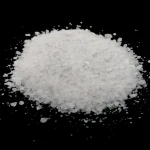
Calcium chloride is available as flakes, pellets, prills, and powder. Smaller particle size increases the surface area available for dissolution, accelerating the heat release rate. Powdered anhydrous CaCl₂ dissolves rapidly and generates peak temperatures within seconds; larger prills dissolve more slowly and sustain a more moderate temperature over a longer period.
For self-heating applications, a controlled-release design may use larger prilled material encapsulated in a gel to extend the thermal output .
Storage and Shelf Life
Anhydrous calcium chloride is hygroscopic and will absorb moisture from ambient air. Packaging must provide an effective moisture barrier. Bulk quantities stored in lined drums or sealed supersacks maintain product integrity longer than materials in breathable containers.
What Is the Correct Procedure for Dissolving Calcium Chloride?
Safe dissolution follows a defined sequence that accounts for the exothermic nature of the reaction.
Pre-Dissolution Checklist
- Verify that the dissolution vessel is rated for the expected temperature rise (up to 65°C for concentrated solutions)
- Confirm that the vessel material is compatible—calcium chloride solutions can attack some metals, particularly zinc-coated surfaces
- Ensure adequate ventilation or local exhaust for dust control
- Stage eyewash and safety shower within immediate reach
- Use only cool or ambient-temperature water
Dissolution Steps
Step 1: Add water to the vessel first. Never add water to calcium chloride. Adding water to the solid can cause localized overheating and spattering.
Step 2: Add calcium chloride gradually. Introduce the solid in controlled increments. The dissolution is rapid and self-sustaining once initiated.
Step 3: Stir if necessary. Gentle agitation accelerates dissolution and distributes heat evenly. Avoid vigorous stirring that could generate dust or splash.
Step 4: Monitor temperature. For large batches, use a thermometer to confirm the solution does not exceed the working limit of the vessel or downstream equipment.
Step 5: Allow to cool before transfer. Hot calcium chloride solutions can damage pumps, seals, and piping not rated for elevated temperatures.
What to Avoid
- Do not use hot water. This is the primary cause of violent boiling accidents .
- Do not add large quantities at once. Rapid addition can cause localized boiling and spattering even in cool water.
- Do not seal the vessel immediately. Allow the solution to equilibrate to ambient temperature before closing.
Conclusion
The calcium chloride exothermic reaction is a controllable thermodynamic property with practical engineering value, not an unavoidable hazard. The heat originates from the difference between lattice energy (2,271 kJ/mol) and hydration energy (-2,352 kJ/mol), producing a net release of approximately -82.9 kJ/mol for anhydrous material .
Three factors determine whether the exothermic effect is an asset or a liability in your application: product form (anhydrous generates the most heat; dihydrate and liquid forms generate less or none), handling discipline (always add solid to cool water, never the reverse), and engineering controls (vessel rating, ventilation, personal protective equipment). For technical buyers, the specification that matters most is not simply "calcium chloride"—it is the purity grade, particle form, and moisture content that align with the intended thermal application.
FAQs
What temperature does calcium chloride reach when dissolved in water?
The final temperature depends on the calcium chloride concentration and starting water temperature. In a controlled lab test, dissolving 5 grams of anhydrous CaCl₂ in water at 25°C produced a 5.12°C temperature rise . At higher concentrations and with larger quantities, temperatures can reach 150°F (65°C) within 30 seconds . A 30% solution by weight can approach 180-200°F under adiabatic conditions.
Is calcium chloride exothermic when it absorbs moisture from air?
Yes. Anhydrous calcium chloride is hygroscopic—it absorbs water vapor directly from the air—and the same hydration reaction that releases heat in liquid water occurs when it absorbs atmospheric moisture. This is why calcium chloride is used as a desiccant in industrial drying applications. The heat release is slower than with liquid water because the moisture availability is limited by humidity.
How does calcium chloride compare to magnesium chloride for heat generation?
Both salts exhibit exothermic dissolution, but calcium chloride releases more heat per unit weight. Comparative testing under identical conditions showed pure CaCl₂ raising solution temperature from +20°C to +58°C upon mixing, while MgCl₂-based formulations produced lower temperature elevations . For deicing, CaCl₂ is generally specified for the lowest temperature applications where maximum heat output is required.
Is anhydrous calcium chloride safe for use in self-heating food packaging?
Anhydrous calcium chloride is used in commercial self-heating food and beverage containers, but the design must prevent direct contact between the calcium chloride and the food product. Patented designs use a sealed, rupturable container that separates the salt from the water until activation . The gel-forming additives moderate the temperature and prevent steam generation even at 240-260°F internal temperatures.
What happens if calcium chloride is added to hot water?
Adding calcium chloride to hot water can cause violent boiling and spattering. The exothermic heat released during dissolution adds to the thermal energy already in the water, rapidly exceeding the boiling point. NOAA documentation records an injury case from this specific scenario . Always use cool or ambient-temperature water when dissolving calcium chloride.
How should calcium chloride be stored to prevent caking?
Store calcium chloride in tightly closed containers in a dry, cool, well-ventilated area . Anhydrous material is highly hygroscopic and will absorb moisture from ambient air, causing caking and partial premature hydration. Bulk storage in lined drums or sealed supersacks with moisture barriers is recommended. Keep containers closed when not in active use.
Can calcium chloride solutions be stored in metal containers?
Calcium chloride solutions can attack some metals, particularly zinc-coated (galvanized) steel and aluminum. Long-term exposure of calcium chloride solution to galvanized iron has caused hydrogen evolution and explosion incidents . Use plastic, fiberglass, or stainless steel vessels and piping rated for the solution concentration and temperature.
What is the freezing point of calcium chloride solutions?
Calcium chloride solutions have significantly lower freezing points than pure water. A 30% CaCl₂ solution freezes at approximately -55°C (-67°F), which is why calcium chloride is effective for deicing at temperatures where sodium chloride fails. The exact freezing point depends on concentration; the eutectic point for the CaCl₂-water system is approximately -52°C at 30% concentration.
How long does the heat last during calcium chloride dissolution?
The thermal output duration depends on particle size and application design. With finely powdered anhydrous CaCl₂, most of the heat is released within 30-60 seconds. With larger prills or encapsulated material, the heat release can be sustained for up to 15 minutes at relatively uniform temperatures . For self-heating applications, a controlled-release design with gel encapsulation extends the useful thermal duration.
What purity of calcium chloride is needed for maximum heat generation?
Anhydrous calcium chloride at 94-97% purity provides the highest heat output per unit weight. Lower-purity grades (74% dihydrate) contain pre-hydrated material that has already released a significant portion of its heat potential. For applications where thermal performance is the primary function, specify the highest available anhydrous grade.