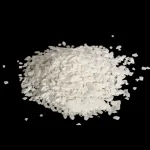
Calcium chloride is safe for its intended applications when its impurity profile is properly controlled. The key risks arise when specific contaminants — iron, magnesium, sulfates, heavy metals, or organic residues — exceed the thresholds defined for a given grade or use case.
Commercial Calcium Chloride rarely exists as a pure compound. Whether produced as a byproduct of the Solvay process, recovered from natural brines, or synthesized from limestone and hydrochloric acid, the final product carries a characteristic suite of impurities that reflect its raw materials and manufacturing route. For quality control professionals, understanding what these impurities are, where they come from, and how they compromise performance is not an academic exercise — it is the foundation of every specification, every batch release, and every supplier qualification decision.
This article examines the most consequential calcium chloride impurities found in commercial grades and the mechanisms through which they degrade performance. It covers the analytical standards that define acceptable limits, the physical and chemical consequences of exceedances, and the practical approaches QC teams use to detect and mitigate impurity-related failures.
What This Article Covers
- The primary impurities in commercial Calcium Chloride and their origins
- How iron, magnesium, sulfates, and heavy metals affect different performance parameters
- The role of ASTM E449 in impurity quantification and grade classification
- Mechanisms linking specific contaminants to corrosion, color, and reactivity issues
- Practical QC strategies for detecting and controlling calcium chloride impurities
- Bottom line: Impurity control is grade-dependent; the same contaminant that is harmless in one application may be disqualifying in another.

What Are the Primary Impurities in Calcium Chloride?
The impurity profile of commercial Calcium Chloride is largely determined by its production pathway. Three sources dominate global supply: the Solvay ammonia-soda process, natural brine extraction, and the reaction of lime with hydrochloric acid. Each route introduces a distinct set of contaminants.
Alkali metal chlorides — primarily sodium chloride (NaCl) and potassium chloride (KCl) — are the most abundant impurities by weight. In technical-grade material, total alkali chlorides can reach 5.5% in 94% prills, while higher-purity grades maintain levels below 3.5%. These impurities are largely tolerable in de-icing and dust-control applications, where their hygroscopic properties may even be beneficial.
Magnesium chloride (MgCl₂) represents another common contaminant, typically present at concentrations measured in tenths of a percent. Like NaCl, its impact is context-dependent: it contributes to the deliquescent behavior that makes Calcium Chloride effective as a desiccant, but it can interfere with crystallization processes in high-precision applications.
Iron and heavy metals — including lead, copper, and arsenic — are the impurities most likely to cause catastrophic performance failures. Iron content in commercial grades ranges from 5 to 150 parts per million, and it exists in multiple states of combination, including forms that resist conventional filtration. These metals discolor the product, catalyze unwanted side reactions, and compromise the optical and electrical properties of downstream materials.
Sulfates and water-insoluble matter round out the typical impurity suite. Calcium sulfate (CaSO₄) precipitates can form during concentration and storage, while insoluble residues indicate incomplete dissolution or carryover from raw materials.
How Do Iron and Heavy Metal Impurities Affect Calcium Chloride Performance?
Iron contamination is the most consequential impurity issue in Calcium Chloride QC because its effects are both visible and functionally destructive. Iron in commercial Calcium Chloride typically originates from raw materials and processing equipment, and it appears in two states: a filterable form that precipitates in alkaline solution, and a colloidal form that passes through conventional filtration media.
The presence of iron at concentrations above approximately 10 ppm produces a characteristic yellow-to-brown discoloration that intensifies with storage. In applications where Calcium Chloride serves as a raw material for phosphors, optical materials, or high-purity chemical synthesis, even trace iron at the 0.0001% level can render a batch unusable.
Heavy metals beyond iron — lead, copper, nickel, manganese — present a different class of risk. These contaminants are typically controlled to single-digit parts-per-million levels in reagent and pharmacopeial grades. Their presence signals either contaminated raw materials or corrosion of processing equipment, and they can interfere with catalytic processes, promote oxidative degradation, and introduce toxicological concerns in food and pharmaceutical applications.
ASTM E449 provides the standardized analytical framework for quantifying these impurities. The standard specifies test methods for determining Calcium Chloride, magnesium chloride, potassium chloride, sodium chloride, and calcium hydroxide content. For QC laboratories, conformance to ASTM E449 methodology is the baseline requirement for any impurity claim.
What Standards Define Acceptable Impurity Limits for Calcium Chloride?
The acceptable impurity profile for Calcium Chloride is not a fixed set of numbers — it is a function of the grade and the application. Understanding this grade-dependent framework is essential for QC professionals who must determine whether a particular batch specification is fit for purpose.
ASTM E449 establishes the analytical procedures but does not itself set pass/fail limits. The standard specifies how to measure Calcium Chloride content, magnesium chloride, potassium chloride, sodium chloride, and calcium hydroxide. Grade specifications and purchase contracts define the acceptable ranges for each parameter.
Industrial grades (74-77% flakes, 94-96% prills) tolerate the widest impurity ranges. Typical specifications for 94% prills permit up to 5.5% magnesium and alkali chlorides, 0.2% water insolubles, and 0.35% alkalinity as Ca(OH)₂. These materials serve de-icing, dust suppression, and freeze-proofing applications where the calcium chloride impurities do not compromise the intended function.
Food-grade calcium chloride is governed by stricter limits. The Food Chemicals Codex (FCC) specification permits arsenic at no more than 3 ppm, mercury at no more than 1 ppm, and lead at no more than 2 ppm. Fluoride content is capped at 0.004%, and magnesium plus alkali salts at 4.0%. These limits reflect the reality that food-grade material may enter the human food supply.
Pharmaceutical and USP grades impose the most rigorous controls. Endotoxin levels in USP-grade Calcium Chloride hexahydrate are maintained below 0.005 EU/mg, a threshold that technical grades exceed by orders of magnitude. Heavy metal limits for pharmacopeial material are typically 0.0015% or lower as Pb, with individual limits for barium, copper, and iron.
How Do Sulfate and Magnesium Impurities Compromise Performance?
Sulfate contamination in Calcium Chloride presents a slow-acting but predictable performance threat. Calcium sulfate (CaSO₄) has limited solubility, and when sulfate-bearing Calcium Chloride solutions are concentrated or subjected to temperature changes, CaSO₄ precipitation can occur. In liquid Calcium Chloride products, this manifests as sediment formation that clogs spray nozzles, settles in storage tanks, and reduces the effective concentration of the active ingredient.
The interaction between sulfates and other impurities can create synergistic problems. Research on Calcium Chloride hexahydrate phase-change materials has shown that sulfate impurities influence crystallization kinetics, potentially altering the melting point and heat-storage capacity of the material. While these effects are minor in de-icing applications, they become significant in thermal energy storage systems where precise phase-transition temperatures are required.
Magnesium chloride, the most common metallic impurity after sodium and potassium, affects Calcium Chloride performance through several pathways. It is more hygroscopic than Calcium Chloride itself, which can accelerate moisture absorption during storage and handling. In molten Calcium Chloride electrolysis, magnesium impurities accumulate in the melt and can alter the electrochemical behavior of the system.
ASTM E449 includes specific procedures for determining magnesium chloride, potassium chloride, and sodium chloride content, allowing QC laboratories to track these impurities against specification limits. For high-purity applications, the combined magnesium and alkali salt content is often specified as a single parameter with a maximum threshold — typically 3.5% for 94% anhydrous prills and substantially lower for reagent grades.
What Role Do Water-Insoluble Impurities Play in Calcium Chloride Quality?
Water-insoluble matter represents a distinct category of calcium chloride impurities that can cause immediate operational problems. These contaminants — which may include silica, clay, unreacted limestone, and corrosion products — do not dissolve in aqueous Calcium Chloride solutions and can remain suspended or settle as sediment.
For liquid Calcium Chloride products, insoluble matter is a direct cause of equipment fouling. Spray systems used for dust control and road de-icing are particularly vulnerable: even small concentrations of insoluble particles can accumulate at nozzle orifices and progressively reduce flow rates. ASTM E449 does not include a direct procedure for water-insoluble matter, but many grade specifications define limits independently, typically at 0.1-0.2% for industrial grades.
The presence of insoluble matter also complicates analytical testing. When a sample is prepared for Calcium Chloride determination by titration or other methods, undissolved particles can introduce positive or negative bias depending on the analytical technique. ASTM E449 acknowledges this by requiring careful sample preparation, though individual laboratories must validate their own dissolution procedures.
For applications requiring visually clear Calcium Chloride solutions — brine refrigeration systems, certain chemical synthesis routes — insoluble matter is a zero-tolerance parameter. Suppliers of high-purity grades typically specify “clear, colorless solution” as a qualitative pass/fail criterion that supplements numerical impurity limits.
How Can QC Laboratories Detect and Quantify Calcium Chloride Impurities?
Effective impurity control begins with a sampling and analytical program that matches the precision requirements of the grade specification. ASTM E449 provides the foundational test methods, but QC laboratories must implement these procedures with appropriate instrumentation and validation.
For routine industrial-grade QC, the ASTM E449 procedures for Calcium Chloride content (sections 8-17), magnesium/alkali chlorides (sections 18-28), and calcium hydroxide (sections 29-36) form the complete analytical suite. Titrimetric methods remain the workhorse for concentration determination, while flame atomic absorption or inductively coupled plasma techniques provide the sensitivity needed for trace metal quantification.
For heavy metal screening, the detection limits required by food-grade and pharmaceutical specifications demand instrumentation capable of measuring parts-per-billion to low-parts-per-million concentrations. Graphite furnace atomic absorption spectroscopy and ICP-mass spectrometry are standard tools in this range. The regulatory limits — 2 ppm lead, 1 ppm mercury, 3 ppm arsenic for food grade — are well within the capability of these techniques.
Iron determination requires particular attention because iron exists in multiple chemical states. The colloidal iron fraction that resists filtration may not be captured by simple dissolution-and-analysis protocols. ASTM E449 does not prescribe a specific iron procedure, but laboratory experience indicates that acid digestion followed by atomic spectroscopy provides the most reliable quantification of total iron content.
Endotoxin testing, though not covered by ASTM E449, is mandatory for USP-grade material. The Limulus amebocyte lysate (LAL) assay is the standard method, with limits set at less than 0.005 EU/mg for injectable-grade Calcium Chloride.
What Practices Reduce Impurity-Related Performance Failures?
QC strategies for managing calcium chloride impurities operate at two levels: incoming material qualification and in-process control. Both depend on a clear understanding of which impurities matter for the intended application.
Grade-specific specification development is the first line of defense. For de-icing applications, the relevant impurity parameters are water-insoluble matter and alkalinity, with iron and heavy metals of secondary concern. For food and pharmaceutical applications, the specification must address the full suite of toxicological contaminants at regulatory limits. QC teams should resist the temptation to apply a single “high purity” specification across all applications — over-specifying low-risk parameters increases cost without improving performance.
Supplier qualification should include impurity profile verification on at least three independent lots. Because Calcium Chloride production routes vary, two suppliers offering the same nominal grade may deliver materially different impurity profiles. The Solvay process tends to produce higher sodium chloride content, while brine-derived material may carry elevated sulfate or bromide levels.
Statistical process control on key impurity parameters allows QC laboratories to detect drift before specification limits are exceeded. A supplier whose iron content historically averages 5 ppm but begins reporting values of 15-20 ppm is signaling a process change — perhaps a shift in raw material source or equipment corrosion — that merits investigation before the next shipment arrives.
FAQs
What is the most common impurity in commercial calcium chloride?
Sodium chloride (NaCl) is typically the most abundant impurity, often present at concentrations of 3-5% in technical grades. It originates from raw materials and is difficult to remove economically without specialized purification processes. ASTM E449 includes procedures for quantifying total alkali chlorides, which are reported as NaCl equivalent.
How does iron contamination affect calcium chloride in de-icing applications?
Iron at concentrations above 50-100 ppm can cause visible discoloration of Calcium Chloride brines and may contribute to staining of concrete and pavement surfaces. However, the functional impact on de-icing performance is minimal. Iron becomes a critical parameter only in applications where the Calcium Chloride serves as a chemical intermediate or where product appearance is a quality criterion.
- Visible discoloration threshold: approximately 10-20 ppm
- Concrete staining risk: elevated at higher concentrations
- Functional de-icing impact: negligible below 100 ppm
Is calcium chloride with high magnesium content still usable?
Usability depends on the application. Magnesium chloride co-exists with Calcium Chloride in many natural brines and is not inherently disqualifying. In de-icing and dust control, magnesium’s hygroscopic properties are compatible with Calcium Chloride performance. In applications requiring precise crystallization behavior or high-purity chemical conversion, magnesium above specified limits can interfere with process control.
How does ASTM E449 address heavy metal impurities?
ASTM E449 provides test methods for the primary components of Calcium Chloride — the Calcium Chloride content itself, magnesium chloride, potassium chloride, sodium chloride, and calcium hydroxide. Heavy metals such as lead, arsenic, and mercury are not covered by ASTM E449 procedures. These require separate analytical methods, typically atomic spectroscopy, referenced in grade-specific specifications from FCC, USP, or customer contracts.
- ASTM E449 scope: major components and alkali chlorides
- Heavy metal methods: external (ICP-MS, GFAA, colorimetric)
- Grade specifications: define limits and reference appropriate methods
What causes water-insoluble matter in calcium chloride?
Water-insoluble matter in Calcium Chloride typically originates from raw materials (silica, clay, unreacted limestone) or from corrosion products introduced during processing and storage. The specific composition varies by production route. Solvay-process material tends to have lower insoluble content because the synthetic route starts from dissolved reactants, while brine-derived and limestone-based products may carry higher levels of particulate contaminants.
Can sulfate impurities be removed from calcium chloride?
Yes, but the economics depend on the starting concentration. Sulfate can be precipitated as calcium sulfate by controlled pH adjustment and filtration, but this process also removes some Calcium Chloride if not carefully controlled. Ion exchange and membrane separation offer alternative removal pathways for high-value applications. In practice, most industrial-grade Calcium Chloride is specified with a maximum sulfate limit rather than subjected to post-production sulfate removal.
What is the impurity difference between 74% and 94% calcium chloride?
The 74% grade is the dihydrate form (CaCl₂·2H₂O) and carries approximately 20% more water of crystallization than the 94% grade, which is predominantly anhydrous. Impurity concentrations on a dry basis are similar between the two, but the higher water content of the 74% grade means that water-soluble impurities are effectively diluted. Water-insoluble impurities may appear at higher relative concentrations in the anhydrous grade if present at the same absolute level.
How should QC labs handle calcium chloride samples for heavy metal testing?
Sample preparation for heavy metal analysis requires dissolution of the Calcium Chloride in high-purity water or dilute acid, followed by appropriate analytical measurement. The high chloride matrix can cause spectral interferences in some techniques, so matrix-matched calibration standards or internal standardization are recommended. Sample containers should be acid-washed and tested for the target analytes to avoid contamination.
Do calcium chloride impurities affect its shelf life?
Impurities can accelerate degradation during storage. Iron and heavy metals catalyze oxidative reactions that may discolor the product over time. Hygroscopic impurities like magnesium chloride can increase moisture uptake, leading to caking or dissolution in solid products. For long-term storage, Calcium Chloride with lower impurity levels generally exhibits greater stability, though packaging and environmental conditions are equally important factors.
What documentation should accompany a calcium chloride shipment for QC purposes?
A complete documentation package for quality-critical Calcium Chloride shipments should include: a certificate of analysis (CoA) listing all specification parameters and test results, the applicable specification or grade designation with revision date, reference to the ASTM E449 test methods used, and any additional analytical data required by the purchase contract. For regulated applications, the CoA should also reference compliance with FCC, USP, or other applicable standards.
Conclusion
Impurity control in Calcium Chloride is fundamentally an exercise in application-specific risk assessment. The same iron content that disqualifies a batch for phosphor manufacturing is irrelevant for road de-icing. The sodium chloride concentration that is benign in a dust-suppression brine may exceed limits for pharmaceutical use. QC professionals must therefore resist the impulse to apply a single “pure” standard across all applications and instead develop specifications that reflect the actual performance requirements of each use case.
The analytical framework provided by ASTM E449 offers a standardized basis for quantifying the primary components and alkali chloride impurities in Calcium Chloride . For heavy metals, sulfates, and application-specific contaminants, supplementary methods and grade-specific limits complete the picture. The most effective QC programs combine rigorous incoming material testing with statistical monitoring and supplier qualification practices that detect impurity drift before it reaches the specification limit.
When evaluating Calcium Chloride sources, prioritize suppliers who provide complete and verifiable impurity data — not just a certificate of analysis, but evidence that the data derives from validated methods and consistent production. For applications where calcium chloride impurities carry direct performance or safety consequences, the cost of confirming the impurity profile is almost always lower than the cost of a batch failure.