
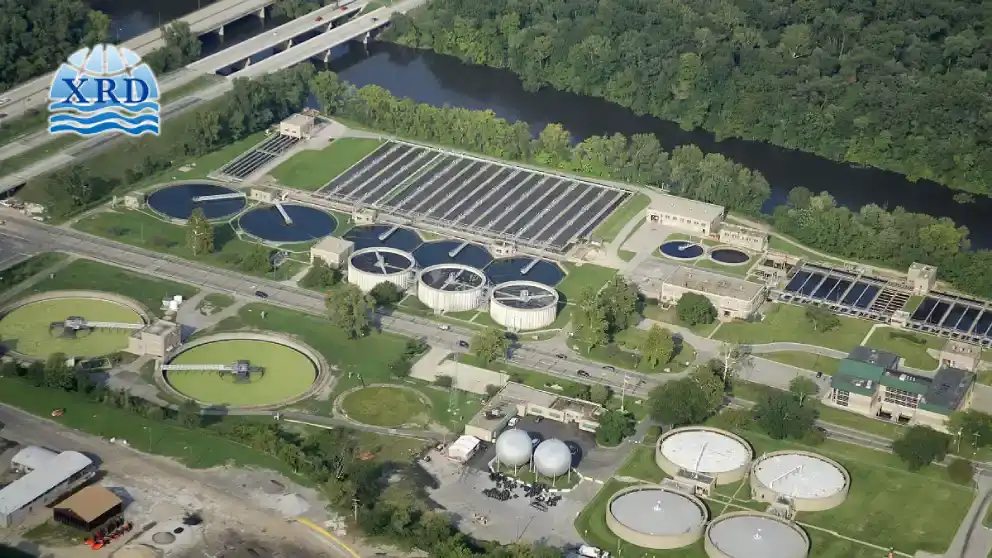
Introduction — Challenges in Treating Oily Wastewater and the Role of Demulsification
Oil-contaminated wastewater is widely generated across industries such as metal processing, petroleum extraction, and food production. These effluents often contain stable emulsified oils that are difficult to separate, posing serious environmental risks and regulatory compliance challenges.
A major technical bottleneck lies in the stability of emulsified oil droplets. Stabilized by surfactants and fine particulates, these droplets resist conventional physical separation methods like dissolved air flotation (DAF) and filtration. As a result, achieving efficient oil-water separation requires chemical intervention.
Among various solutions, calcium chloride (CaCl₂) stands out as a classical and cost-effective chemical demulsifier. With strong charge neutralization capability and wide applicability, it plays a critical role in modern wastewater treatment systems.
Mechanistic Insights — How Calcium Chloride Breaks Emulsions
Electrical Double Layer Compression
The stability of emulsified oil droplets is largely governed by electrostatic repulsion. Negatively charged oil droplets are surrounded by an electrical double layer that prevents coalescence.
Calcium ions Ca2+ compress this double layer by neutralizing surface charges, reducing the Zeta potential and enabling droplets to collide and merge.
Adsorption Bridging and Sweep Flocculation
Under suitable pH conditions, calcium ions promote the formation of microflocs. These flocs can adsorb dispersed oil droplets and bridge them together, forming larger aggregates that are easier to separate.
Chemical Displacement Reaction
In wastewater containing soap-based emulsifiers, calcium chloride reacts with sodium or potassium soaps to form insoluble calcium soaps:
- Breaks the emulsifying structure
- Converts soluble surfactants into precipitates
- Accelerates phase separation
This mechanism is especially effective in treating saponified oily wastewater.
Key Advantages of Calcium Chloride as a Demulsifier
Cost-Effectiveness
Compared to organic demulsifiers such as polyacrylamide (PAM) or polymeric coagulants (PAC), calcium chloride is significantly more economical, especially for large-scale industrial applications.
Broad Applicability
Calcium chloride is effective across a wide range of oil types, including:
- Mineral oils
- Animal and vegetable oils
- Mechanical emulsions (cutting fluids)
Pre-Treatment Efficiency
As a front-end treatment agent, calcium chloride reduces oil load before downstream processes such as:
- Biological treatment systems
- Ultrafiltration (UF)
- Reverse osmosis (RO)
This improves overall system efficiency and reduces fouling risks.
Operational Safety
Unlike strong acids or bases used for demulsification, calcium chloride is chemically stable and safer to handle, making it suitable for continuous industrial dosing systems.
Engineering Practice — Key Factors Affecting Performance
Dosage Optimization
Determining the optimal dosage is essential. Overdosing may increase sludge volume, while underdosing leads to incomplete demulsification.
Jar testing is widely used to identify the ideal dosage range under specific wastewater conditions.
pH Control
Calcium chloride performs best under neutral to slightly alkaline conditions. In such environments:
- Oil droplet destabilization is enhanced
- Floc formation becomes more efficient
Mixing Intensity and Retention Time
Proper mixing ensures uniform dispersion of calcium ions during the rapid mixing phase, followed by gentle agitation to promote floc growth.
- High shear → improves contact
- Low shear → promotes floc aggregation
Synergistic Use with Other Chemicals
Calcium chloride is often used in combination with:
- Polyacrylamide (PAM) for floc strengthening
- Polyaluminum chloride (PAC) for enhanced coagulation
This combination significantly improves separation efficiency in complex wastewater systems.
Typical Applications and Case Studies
Cutting Fluid and Emulsion Wastewater
In mechanical processing industries, wastewater contains highly stable emulsified oils. Calcium chloride effectively destabilizes these emulsions, enabling efficient oil removal before discharge or reuse.
Oilfield Produced Water
Oil extraction processes generate wastewater with persistent emulsified hydrocarbons. Calcium chloride helps break these emulsions, improving oil-water separation and reducing downstream treatment load.
Edible Oil Processing Wastewater
In vegetable oil refining and food processing, wash water contains residual oils and surfactants. Calcium chloride facilitates rapid oil separation through precipitation and flocculation.
Performance Data (Typical Outcomes)
- Oil removal efficiency: 70–95%
- COD reduction: 30–60% (pre-treatment stage)
- Improved downstream stability and reduced fouling
Future Outlook — The Evolving Role of Calcium Chloride
Towards Green Water Treatment
Future innovations focus on:
- Reducing sludge generation
- Enhancing separation efficiency with lower chemical inputs
Integration with Smart Dosing Systems
Automated dosing and real-time monitoring systems allow precise control of calcium chloride usage, improving consistency and reducing operational costs.
Role in Water Reuse Systems
With increasing emphasis on wastewater recycling, calcium chloride serves as a critical pre-treatment chemical that enables:
- Higher recovery rates
- Lower membrane fouling
- More stable long-term operation
Conclusion
Calcium chloride remains a foundational chemical in the demulsification of oily wastewater. Its strong charge neutralization ability, cost-effectiveness, and operational simplicity make it an indispensable tool in industrial water treatment.
As environmental standards tighten and treatment systems evolve, calcium chloride continues to provide reliable and scalable performance—bridging traditional chemistry with modern sustainability goals.