Xanthate (PAX, SIBX, SIPX, SEX, ETC)
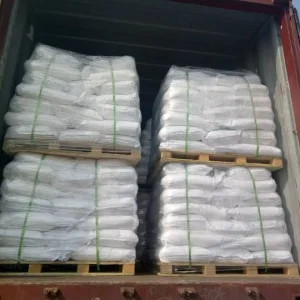
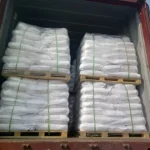
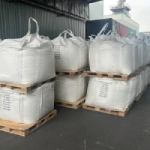
25kg-packing-palletizing
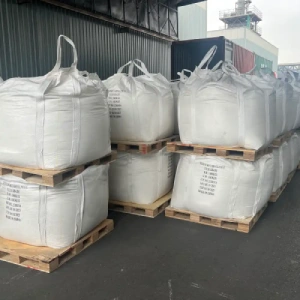
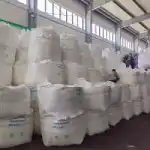
bigbags-packing-palletizing
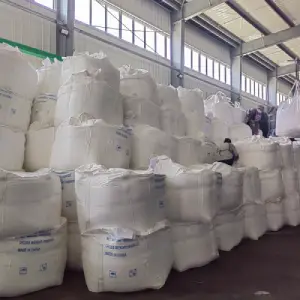
Warehouse

Xanthate (PAX, SIBX, SIPX, SEX) 140-90-9

Model NO. Xanthate (PAX, SIBX, SIPX, SEX, ETC)
CAS No. 140-90-9
Formula R-O-CS₂⁻ M⁺
Payment L/C, T/T, D/P, D/A, etc.
Production capacity 20000 t/y
Customization Available
Certification CE, RoHS, ISO, SGS, Halal
Will reply within 24h!
Contact Us

$ Request a Quote

Request a Sample

Ask a Question

Request a Document

⚡Quick Reply
Contact Us

Overview

XRD Chemical is a professional Xanthate manufacturer and supplier in China, offering a complete range of xanthate collectors for sulfide mineral flotation in the mining industry.

Xanthates are salts or esters of xanthic acid, with the general formula [R−O−CS₂]⁻M⁺, where R is an alkyl group and M is typically sodium or potassium [citation:6]. The name xanthate is derived from the Greek word xanthos, meaning yellowish or golden, referring to the characteristic yellow color of most xanthate salts [citation:6]. These organosulfur compounds are produced by reacting an alcohol with carbon disulfide and an alkali metal hydroxide [citation:6].

Xanthates are the most widely used collectors in froth flotation for the recovery of sulfide minerals including copper, lead, zinc, nickel, and precious metals [citation:6]. Our product range includes Potassium Amyl Xanthate (PAX), Sodium Isobutyl Xanthate (SIBX), Sodium Isopropyl Xanthate (SIPX), and Sodium Ethyl Xanthate (SEX) [citation:8][citation:6]. Different alkyl chain lengths and counter ions provide varying collecting power and selectivity, allowing customized solutions for specific ore types and flotation circuits.

Why Choose XRD Xanthate Collectors:

• Full product range: PAX, SIBX, SIPX, SEX with 90-95% purity
• Strong collecting power for sulfide copper, lead, zinc, and nickel ores
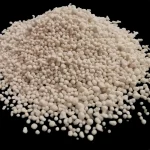
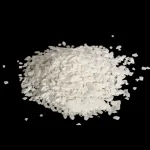
• Available in powder, granules, flakes, sticks, and solution forms
• Produced from high-quality alcohols and carbon disulfide
• Free samples and flotation testing support available
• COA and MSDS documents available for download
Details

HS Code 2930.90
Synonym Dithiocarbonate, Alkyl xanthic acid salt, Xanthogenate
Forms Available Powder (crystalline or granular), Aqueous solution (for industrial use)
Density ~1.1–1.6 g/cm³ (varies by alkyl chain length)
Purity Technical grade: 80–95%, Reagent grade: ≥98%
Molecular Weight Sodium ethyl xanthate: 144.18 g/mol, Potassium amyl xanthate: 230.44 g/mol
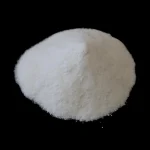
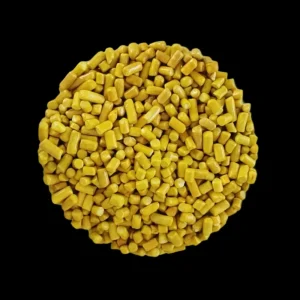
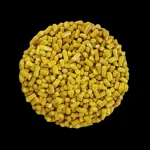
Appearance Yellowish powder or pellets (strong sulfur odor)
Grades Mining grade (high purity for flotation), Industrial grade (rubber/chemical uses), Reagent grade (lab use)
Packing Options 25KG, Big bags, Palletizing, Customization

Applications

MiningRubber industry

FAQ

Q What are Xanthates and how are they produced?

Xanthates are salts of xanthic acid with the general formula [R−O−CS₂]⁻M⁺, where R is an alkyl group and M is typically sodium or potassium . They are produced by treating an alcohol with carbon disulfide and an alkali metal hydroxide, a process called xanthation . The resulting xanthate salts are yellow crystalline solids available in powder, granule, flake, stick, and solution forms .

Q What is the difference between PAX, SIBX, SIPX, and SEX?

The four common xanthates differ in their alkyl chain length and counter ion. PAX (Potassium Amyl Xanthate) has the longest alkyl chain, giving it the strongest collecting power and is used for difficult-to-float ores. SIBX (Sodium Isobutyl Xanthate) has intermediate chain length and is the most widely used general-purpose collector . SIPX (Sodium Isopropyl Xanthate) and SEX (Sodium Ethyl Xanthate) have shorter chains, providing greater selectivity for finer separations .

Q How do Xanthates work in mineral flotation?

Xanthates act as collectors in froth flotation by selectively adsorbing onto sulfide mineral surfaces through their polar dithiocarbonate head group, while the non-polar alkyl tail makes the mineral particle hydrophobic. This allows air bubbles to attach to the mineral particles and float them to the surface for recovery. The chain length determines collecting power and selectivity.

Q What sulfide minerals can be recovered using Xanthates?

Xanthates are effective for recovering a wide range of sulfide minerals including chalcopyrite and chalcocite (copper), galena (lead), sphalerite (zinc), pentlandite (nickel), pyrite (iron), and precious metal-bearing sulfides. They are the primary collectors used in the flotation of copper, lead, and zinc sulfide ores worldwide.

Q How should Xanthates be stored and handled?

Xanthates should be stored in a cool, dry, well-ventilated area in tightly sealed containers away from moisture, heat, and acids. They decompose in the presence of acids to release carbon disulfide and the parent alcohol . They are also sensitive to heat and moisture. Under proper storage conditions, shelf life is typically 6-12 months. Use appropriate PPE including gloves and respiratory protection when handling xanthate powders.

Documents

COA-Xanthate-PAX.pdf
COA-Xanthate-SIBX-90%.pdf
COA-Xanthate-SIPX-90%.pdf
MSDS-Xanthate-PAX-90%-pellet.pdf
MSDS-Xanthate-SIBX.pdf
MSDS-Xanthate-SIPX.pdf

Featured Products

Calcium magnesium acetate - CaMg₂(CH₃COO)₆

Calcium magnesium acetate

Formula: CaMg₂(CH₃COO)₆

CAS No.: 76123-46-1

HS Code: 2915.29.9090

Calcium chloride - CaCl₂

Calcium chloride

Formula: CaCl₂

CAS No.: 10043-52-4

HS Code: 2827.20

Soda ash - Na₂CO₃

Soda ash

Formula: Na₂CO₃

CAS No.: 497-19-8

HS Code: 2836.20

Sodium metabisulfite - Na₂S₂O₅

Sodium metabisulfite

Formula: Na₂S₂O₅

CAS No.: 7681-57-4

HS Code: 2832.10