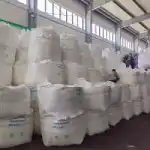
Sodium chloride
Sodium chloride
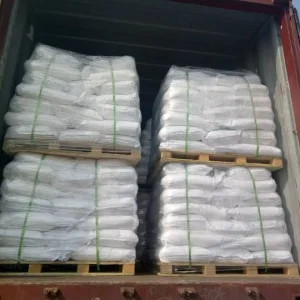
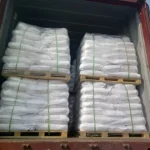
25kg-packing-palletizing
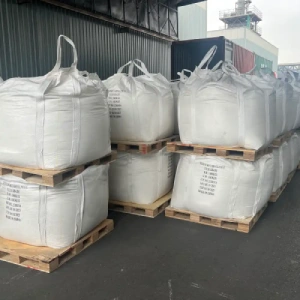
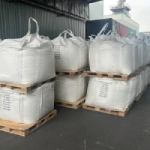
bigbags-packing-palletizing
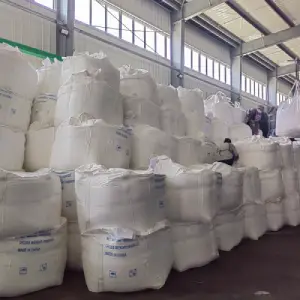
Warehouse

Sodium Chloride (NaCl) 7647-14-5

Model NO. Sodium chloride
CAS No. 7647-14-5
Formula NaCl
Payment L/C, T/T, D/P, D/A, etc.
Production capacity 20000 t/y
Customization Available
Certification CE, RoHS, ISO, SGS, Halal
Will reply within 24h!
Contact Us

$ Request a Quote

Request a Sample

Ask a Question

Request a Document

⚡Quick Reply
Contact Us

Overview

XRD Chemical is a professional Sodium Chloride manufacturer and supplier in China, offering high-purity sodium chloride (99.5% min) for food processing, water treatment, de-icing, and industrial applications.

Sodium chloride, commonly known as table salt or just salt, is an ionic compound with the formula NaCl and a molecular weight of 58.44 g/mol. It is one of the most abundant minerals on Earth, occurring naturally in seawater and as the mineral halite in underground deposits. It is a white crystalline solid with a characteristic saline taste, highly soluble in water. Industrial sodium chloride is produced by mining rock salt deposits, solar evaporation of seawater, or vacuum evaporation of purified brine.

The primary applications of sodium chloride span virtually every industry. In food processing, it is used as a seasoning, preservative, and fermentation control agent. Industrial uses include water softening through ion exchange regeneration, de-icing of roads and highways, textile dyeing where it promotes even dye uptake, drilling fluid formulation in oil and gas operations, and chlor-alkali production where it serves as feedstock for producing chlorine, sodium hydroxide, and other chemicals. Food grade, industrial grade, and de-icing grade products are available.

Why Choose XRD Sodium Chloride:

• 99.5% NaCl purity, white crystalline solid, multiple granulation sizes available
• Food grade (FCC), industrial grade, and de-icing grade options
• Essential for water softener regeneration and ion exchange systems
• Effective de-icing agent for winter road maintenance
• Also suitable for textile dyeing, drilling fluids, and chlor-alkali production
• Highly soluble in water — rapid dissolution for brine preparation
• Free samples available for evaluation
• COA and MSDS documents available for download
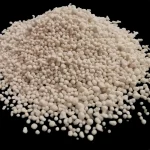
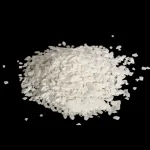
Details

HS Code 2501.00
Synonym Table salt (food grade), Rock salt, Halite (mineral form), Sea salt (evaporated from seawater), Brine salt, Common salt
Forms Available Crystalline solid (coarse or fine), Powder, Compressed pellets (for water softeners), Liquid brine
Density 2.16 g/cm³ (anhydrous)
Purity Food grade: ≥99.7%, Pharmaceutical grade: ≥99.9% (USP/EP), Industrial grade: 95–99%
Molecular Weight 58.44 g/mol
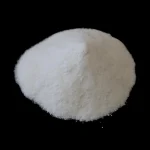
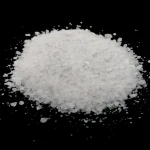
Appearance White crystalline powder or crystals, May appear colorless when pure
Grades Food grade (edible, with/without iodine), Pharmaceutical grade (USP/EP), Industrial grade (technical use), Reagent grade (laboratory use), Solar salt (evaporated from seawater), Vacuum salt (high-purity, recrystallized)
Packing Options 25KG, Big bags, Palletizing, Customization

Applications

Food additiveDe-icingChemicalMedicalTextile dyeingleather tanning

FAQ

Q What is Sodium Chloride?

Sodium Chloride (NaCl), commonly known as salt, is an ionic compound with a molecular weight of 58.44 g/mol. It occurs naturally in seawater and underground halite deposits. It is a white crystalline solid, highly soluble in water, and is one of the most important industrial minerals globally, used in food processing, water treatment, de-icing, chemical production, and countless other applications.

Q How is sodium chloride used in water treatment?

In water treatment, sodium chloride is primarily used to regenerate ion exchange water softeners. The softener resin removes calcium and magnesium ions that cause hardness, and when saturated, a concentrated sodium chloride brine solution flushes through the resin bed, replacing the accumulated hardness ions with sodium ions. This restores the softening capacity of the resin. High-purity salt is essential to prevent resin fouling and maintain system efficiency.

Q How effective is sodium chloride for de-icing?

Sodium chloride (rock salt) is the most widely used de-icing agent globally due to its low cost and availability. It lowers the freezing point of water and is effective down to approximately -9°C. Below this temperature, its effectiveness decreases, and calcium chloride or magnesium chloride may be required. Sodium chloride remains the primary choice for routine winter road maintenance on highways and municipal roads.

Q How is sodium chloride used in the chlor-alkali industry?

Sodium chloride is the essential feedstock for the chlor-alkali industry. Through electrolysis of concentrated brine in membrane, diaphragm, or mercury cells, sodium chloride is converted into chlorine gas, sodium hydroxide (caustic soda), and hydrogen gas. These three products are foundational to the chemical industry, used in the production of PVC, aluminum, paper, soaps, and many other materials. High-purity salt is required to prevent membrane fouling.

Q What is the difference between food grade and industrial grade sodium chloride?

Food-grade sodium chloride meets FCC specifications and is safe for human consumption, used in food processing, seasoning, and preservation. Industrial-grade sodium chloride is intended for technical applications such as water softening, de-icing, and chemical production, and may have slightly lower purity or different additive profiles. De-icing grade is the most economical and is typically coarser with anti-caking agents. XRD Chemical supplies all grades with appropriate certifications.

Featured Products

Calcium magnesium acetate - CaMg₂(CH₃COO)₆

Calcium magnesium acetate

Formula: CaMg₂(CH₃COO)₆

CAS No.: 76123-46-1

HS Code: 2915.29.9090

Calcium chloride - CaCl₂

Calcium chloride

Formula: CaCl₂

CAS No.: 10043-52-4

HS Code: 2827.20

Soda ash - Na₂CO₃

Soda ash

Formula: Na₂CO₃

CAS No.: 497-19-8

HS Code: 2836.20

Sodium metabisulfite - Na₂S₂O₅

Sodium metabisulfite

Formula: Na₂S₂O₅

CAS No.: 7681-57-4

HS Code: 2832.10