The decision to purchase ice melt in bulk is a significant one for any facility manager, municipal planner, or business owner. A warehouse pallet of deicer represents a commitment to a specific chemistry and performance profile for an entire winter season. Many buyers find themselves paralyzed by conflicting information about effectiveness, safety, and environmental impact. The core challenge is not a lack of options, but a lack of clear, comparative facts to guide a large-volume purchase that affects both budget and public safety.
What makes one ice melt product outperform another at -20°F while another fails completely? The answer lies in understanding the fundamental chemistry of how different materials generate heat when they dissolve, a process called exothermic reaction. This guide addresses the most critical questions that arise before committing to a bulk purchase, with a specific focus on the performance and characteristics of calcium chloride-based deicers.
Calcium chloride is safe for concrete and vegetation when applied at recommended rates and handled with basic personal protective equipment. The key risks are skin and eye irritation from direct, prolonged contact with dry pellets, and potential damage to young vegetation from over-application. These risks are mitigated by following manufacturer application rate guidelines.

What Is Calcium Chloride Ice Melt?
How Is Calcium Chloride Manufactured?
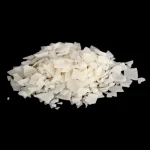
Calcium chloride is produced through several industrial processes, the most common being the Solvay process, where limestone (calcium carbonate) reacts with sodium chloride brine and ammonia. The resulting material is a white, crystalline solid with a unique hygroscopic property — it aggressively attracts moisture from the air and surrounding environment.
This hygroscopic nature is what makes calcium chloride fundamentally different from other deicers. Unlike sodium chloride, which simply lowers the freezing point of water, calcium chloride actively pulls moisture from the air to initiate the brining process. The manufacturing process yields different product grades, with 94-97% purity pellets being the standard for bulk ice melt applications.
What Makes Calcium Chloride Exothermic?
The performance advantage of calcium chloride stems from its exothermic dissolution reaction. When dry calcium chloride pellets contact ice or snow, they dissolve and release a significant amount of heat. This heat generation is measurable: calcium chloride releases approximately 3.8 kilocalories per mole when dissolved, compared to sodium chloride's 0.9 kilocalories per mole.
This fourfold difference in heat release explains why calcium chloride works effectively at temperatures where other deicers fail. The heat generated melts ice rapidly upon contact, creating a concentrated brine solution that prevents re-freezing. This mechanism is particularly valuable in cold storage facilities and unheated warehouse loading docks, where ambient temperatures often drop below the effective range of rock salt.
Calcium Chloride vs Magnesium Chloride: Which Performs Better?
Both calcium and magnesium chloride are hygroscopic deicers that generate heat upon dissolution, but their performance characteristics differ in ways that matter for bulk purchasing decisions. A direct comparison reveals why calcium chloride is often preferred for high-traffic commercial applications.
| Performance Factor | Calcium Chloride (CaCl₂) | Magnesium Chloride (MgCl₂) |
|---|---|---|
| Effective Temperature | Down to -25°F (-32°C) | Down to 5°F (-15°C) |
| Exothermic Heat Release | 3.8 kcal/mol | 1.4 kcal/mol |
| Ice Melt Rate at 15°F | Melts 2× more ice in first 20 min | Standard melting rate |
| Corrosivity to Mild Steel | Moderate (when used with corrosion inhibitors) | Lower (naturally less corrosive) |
| Residue | Can leave white powder residue | Can leave oily film on floors |
| Cost per Ton (Bulk) | Higher (30-50% premium) | Lower |
When Should You Use Calcium Chloride Over Rock Salt?
Temperature Thresholds Where Rock Salt Fails
Rock salt (sodium chloride) dominates the deicing market due to its low cost and wide availability. However, its performance drops significantly as temperatures fall. Sodium chloride becomes ineffective below 15°F (-9°C), as the eutectic point of a salt-water mixture is reached and the brining process stops. Below this temperature, applying rock salt is essentially spreading inert gravel on ice.
For locations that experience sustained periods of sub-zero temperatures, calcium chloride provides reliable deicing performance. Municipal road crews in northern states and Canadian provinces often maintain a separate stockpile of calcium chloride-treated salt or pure calcium chloride for extreme cold events. The bulk purchasing decision should be based on historical winter temperature data for the specific region and application site.
Ice Melting Speed Comparison in Critical Applications
Time-to-melt is a critical factor in applications where pedestrian or vehicle safety is immediately at risk. Independent testing at 15°F (-9°C) demonstrates that calcium chloride melts ice approximately twice as fast as magnesium chloride and eight times faster than rock salt within the first 20 minutes of application.
For hospital emergency entrances, airport walkways, and public transit platforms, this speed difference directly correlates to reduced slip-and-fall liability. Facilities with these high-risk areas should consider the total cost of risk, not just the per-ton price of deicer, when making bulk purchasing decisions.
Why Does Calcium Chloride Cause Concrete Scaling?
Understanding the Chemical Incompatibility
Concrete scaling is frequently, but incorrectly, attributed solely to chemical attack from deicers. The American Concrete Institute (ACI) reports that "the primary cause of scaling is not the chemical interaction between deicers and cement paste, but rather the physical stresses caused by repeated freeze-thaw cycles in saturated concrete." Calcium chloride does not chemically attack sound, properly air-entrained concrete.
The mechanism works as follows: deicers melt ice and snow, creating water that can penetrate the concrete surface. If this water re-freezes within the concrete pores, it expands by approximately 9%, generating hydraulic pressure that fractures the surface. This damage is most common in poorly air-entrained concrete, concrete placed within the last 12 months, and surfaces with inadequate drainage. The solution is not avoiding calcium chloride, but ensuring proper concrete installation and maintenance.
Best Practices for Protecting Concrete with Deicers
The relationship between deicers and concrete is manageable with proper application techniques. Damage occurs primarily from over-application and use on vulnerable surfaces.
To protect concrete surfaces when applying calcium chloride:
- Apply at the manufacturer's recommended rate of 2-4 oz per square yard
- Remove slush and melted ice promptly to minimize water absorption
- Never apply deicers to concrete less than 12 months old
- Ensure surface drainage is adequate and functioning
- Use a spreader calibrated annually for accurate application rates
- Seal concrete surfaces every 2-3 years with a high-quality penetrating sealer
- Avoid applying deicer in piles; use a broadcast spreader for even distribution
How Does Calcium Chloride Impact Vegetation and Water?
Runoff Effects on Soil and Plant Health
Sodium chloride’s harmful effects on vegetation are well-documented, but calcium chloride presents a different risk profile. The USDA Forest Service has noted that "calcium is a secondary macronutrient essential for plant cell wall development, making calcium chloride runoff less phytotoxic than sodium-based deicers." Excess chloride ions, however, can still accumulate in soil and cause leaf scorch in sensitive species.
The concern for bulk buyers is not acute toxicity from a single application season, but rather the cumulative effect of chloride accumulation in soil over multiple years. Landscape architects and grounds maintenance teams should map sensitive plantings, such as evergreens and turfgrass within 10-15 feet of treated areas, and adjust application practices accordingly. Creating vegetative buffer zones and ensuring drainage away from ornamental beds are practical mitigation measures.
Water Quality and Environmental Runoff Management
Stormwater runoff from deicer-treated surfaces carries dissolved salts into the environment. The EPA has indicated that "chloride is a pollutant of concern in freshwater systems because it is toxic to aquatic life at high concentrations and is not removed by conventional stormwater treatment." A single ton of calcium chloride contains approximately 640 lbs of chloride ions that can potentially enter waterways.
Bulk purchasers are not helpless in the face of this environmental reality. Proper storage is a critical first step—bulk piles must be stored on impermeable pads and covered to prevent stormwater contact. Application precision is the second key factor. Calibrated spreaders and pavement temperature sensors reduce over-application, which directly limits the amount of chloride reaching waterways. Stormwater permits may require specific documentation of these best management practices.
Where Is Calcium Chloride Ice Melt Most Commonly Used?
High-Security and Critical Infrastructure Sites
Certain facilities tolerate no compromise on ice melt performance due to safety mandates or operational requirements. Airport runways, where the Federal Aviation Administration (FAA) specifies deicing materials and application timing, rely on calcium chloride blends for rapid clearing. Similarly, military installations with 24/7 operational readiness requirements stockpile calcium chloride for immediate response capability during winter storms.
These high-security applications share common characteristics: zero tolerance for icy conditions, mission-critical timelines, and operational procedures that dictate approved materials. The purchasing process for these sites typically involves a product specification sheet review and compliance documentation, which bulk sellers should have prepared in advance.
Commercial Retail and Logistics Centers
The retail and logistics sector manages a distinct winter safety liability challenge. High pedestrian traffic at shopping center entrances, combined with frequent door openings, creates microclimates where ice re-forms rapidly. Distribution center loading docks present another challenge: forklift traffic requires reliable traction, and traditional rock salt can corrode metal dock plates and forklift components over time.
Property management companies often standardize on a single deicer specification across their entire portfolio. This creates an opportunity for bulk sales with annual contract purchasing. The pitch to these buyers is straightforward: product consistency across multiple sites, reliable supply chain delivery ahead of storm events, and reduced liability through proven performance. Bulk pricing tiers for quantities of 5, 10, and 20 tons are standard, with delivered pricing to each site.
What to Look for When Buying Ice Melt in Bulk
Pellet Form and Product Consistency
The physical form of bulk ice melt directly impacts application accuracy and performance. Calcium chloride pellets should be uniform in size, typically 1/8 inch to 1/4 inch in diameter, to ensure consistent spread patterns from mechanical spreaders. Inconsistent particle sizes lead to uneven application, which wastes product and creates spotty deicing coverage.
Product purity is equally critical. High-quality bulk calcium chloride typically meets an ASTM D98 standard of 90% minimum calcium chloride content, with some suppliers offering 94-97% purity. The balance comprises water of crystallization and minor inert materials. Requesting a certificate of analysis with each bulk delivery provides quality assurance documentation for your safety and procurement records.
Storage Requirements and Shelf Life
Calcium chloride's hygroscopic nature, which powers its deicing performance, also dictates its storage requirements. It will absorb moisture from air and harden into a solid mass if stored improperly. Bulk purchasers must invest in suitable storage infrastructure before delivery.
Essential storage requirements for bulk ice melt:
- Covered storage on an impermeable concrete pad to prevent groundwater contamination
- Capacity for the full bulk delivery volume plus 10-15% buffer space for material handling
- Indoor or covered storage with minimal air exchange to control humidity exposure
- Secure, lockable access to prevent unauthorized use and contamination
- Spill containment measures compliant with local stormwater regulations
- Sufficient turning radius for bulk delivery vehicles (typically 53-foot trailers)
When stored correctly in sealed packaging or covered piles, calcium chloride has a functional shelf life of 18-24 months. Once a bulk bag or supersack is opened, the product should be consumed within the same winter season. Purchasing should be matched to a single season's projected usage to avoid storage degradation.
Conclusion
Finding reliable answers to ice melt FAQs before committing to a bulk purchase transforms a reactive winter expense into a strategic facility management investment. Calcium chloride's exothermic heat generation gives it unmatched low-temperature performance, with effective melting down to -25°F and melt rates significantly faster than rock salt alternatives. The trade-offs—higher upfront cost per ton and the need for proper storage infrastructure—must be weighed against the safety and operational benefits.
The key takeaway for any bulk buyer is that per-ton price is the wrong metric for comparing deicing options. A total cost framework that accounts for application rates, effective temperature ranges, surface compatibility, and risk reduction provides a more accurate picture. Understanding how chloride-based deicers interact with concrete, vegetation, and aquatic systems allows for responsible, documented application practices that satisfy environmental compliance requirements.
For thorough application training and site-specific spreading rates, consult your state's transportation department winter maintenance guidelines, which provide region-specific calibration tables and storm response protocols based on your local climate conditions.
FAQs
What is calcium chloride ice melt made of?
Calcium chloride ice melt is a salt compound derived from natural brine or produced through the Solvay process. It appears as white, odorless pellets or flakes. Unlike rock salt, which is primarily sodium chloride, calcium chloride is a hygroscopic material that attracts moisture from its surroundings.
- Its chemical formula is CaCl₂.
- It contains 94-97% active ingredient in commercial grades.
- The remaining percentage is water and trace minerals.
- It generates heat when dissolved, a property called exothermic reaction.
How does calcium chloride melt ice so effectively?
Calcium chloride melts ice through an exothermic reaction. When the dry pellets make contact with frozen surfaces, they rapidly dissolve and release heat. This simultaneous action of heat generation and brine formation provides a melt speed advantage over other materials.
- Melts ice 2-5 times faster than rock salt at comparable temperatures.
- Remains effective down to -25°F (-32°C).
- Creates a brine that prevents re-freezing for extended periods.
Is calcium chloride safe for pets and animal paws?
Calcium chloride can be irritating to pet paws, particularly if the pellets are dry and sharp. However, it is generally considered less toxic than sodium chloride if small amounts are ingested from licking paws. Standard post-walk paw care mitigates most risks.
- It can cause dryness and cracking with repeated exposure.
- Wipe paws with a damp cloth after outdoor walks.
- Many veterinarians recommend using paw balm as a protective barrier.
Can calcium chloride damage new concrete surfaces?
Yes, calcium chloride and all other deicers can contribute to surface scaling on new concrete. The danger is highest during the first winter after placement because the concrete is still hydrating and more porous. The damage mechanism is primarily physical from freeze-thaw cycles, not a direct chemical attack.
- The American Concrete Institute (ACI) advises against any deicer use on concrete less than 12 months old.
- The freeze-thaw cycle of absorbed water causes the damage.
- Use clean sand for traction on new concrete surfaces instead.
What temperature is too cold for calcium chloride to work?
The practical low-temperature limit for calcium chloride is approximately -25°F (-32°C). This is its eutectic point, the temperature at which it can no longer form a liquid brine. Below this threshold, the material will not melt ice effectively on its own.
- Rock salt becomes ineffective at approximately 15°F (-9°C).
- Performance does slow down as the temperature approaches -25°F.
- Applying on warmer, sun-exposed surfaces during a cold snap yields better results.
How should I store bulk calcium chloride ice melt?
Bulk calcium chloride must be stored in a dry, covered location on an impermeable surface. Because it aggressively absorbs moisture from the air, any humidity exposure will cause it to clump together and harden into a solid, unusable mass.
- Store indoors or under a waterproof tarp on an impermeable pad.
- Ensure bulk bags are completely sealed when not in use.
- Plan to use open supersacks within the same winter season.
Is calcium chloride ice melt corrosive to vehicles?
Yes, calcium chloride is corrosive to metals, including vehicle components. All chloride-based deicers accelerate the oxidation process that causes rust. However, the rate of corrosion can be managed and is a known factor in vehicle maintenance for winter climates.
- It is more corrosive to steel than magnesium chloride.
- Many commercial formulas include corrosion inhibitors to mitigate the effect.
- Regular undercarriage washing during winter removes accumulated salt residue.
How much ice melt do I need for a commercial parking lot?
The application rate for a commercial parking lot depends on the surface area and the pavement temperature. A standard pre-treatment or anti-icing rate is different from a de-icing rate used after a snowstorm. Accurate square footage calculation is the essential first step.
- Typical de-icing rate: 2-4 oz per square yard.
- One ton will cover roughly 8,000 to 16,000 square yards at that rate.
- Use a calibrated broadcast spreader to ensure even coverage and prevent waste.
- Heavier applications are generally not more effective and increase runoff.
What is the difference between calcium chloride flakes and pellets?
The main difference between flakes and pellets is the surface area and melt speed. Flakes have a higher surface area, so they dissolve and generate heat more rapidly for a quick initial melt. Pellets have a lower surface area, dissolving slower and providing a longer residual action.
- Flakes provide a very fast initial melting punch.
- Pellets are better for sustained de-icing and penetrating thick ice.
- Most professional users prefer the combination or a pellet form for bulk applications.
How long does bulk calcium chloride last in storage?
When stored perfectly—in a cool, dry, sealed environment—calcium chloride can remain effective for approximately 18-24 months. The key variable is moisture. Any exposure to humidity will start to degrade the product by causing clumping and eventually solidifying the entire mass.
- Sealed, unopened packaging is essential for long-term viability.
- An opened supersack should be used within one winter season.
- Once hardened, the material loses most of its practical spreading utility.