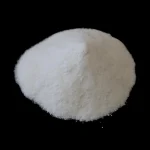
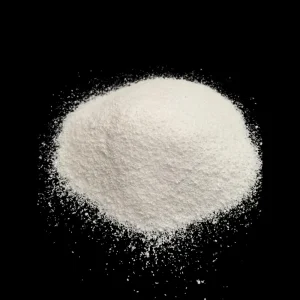
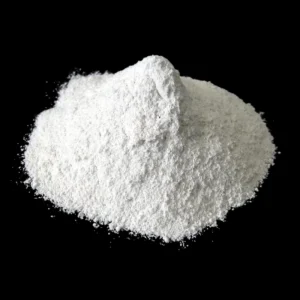
Soda ash
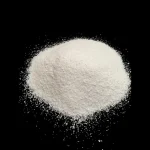
Dense soda ash
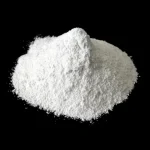
Light soda ash
Soda ash
Dense soda ash
Light soda ash
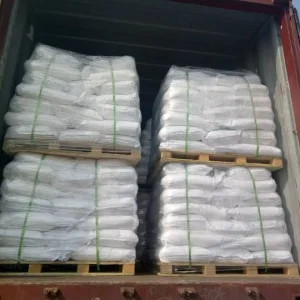
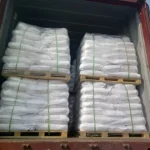
25kg-packing-palletizing
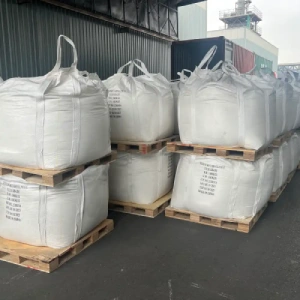
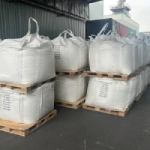
bigbags-packing-palletizing
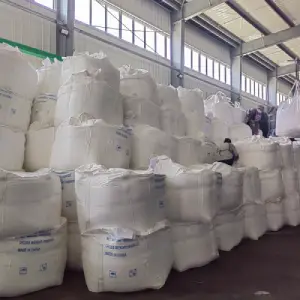
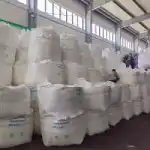
Warehouse

Soda Ash (Na₂CO₃) 497-19-8

Model NO. Soda ash
CAS No. 497-19-8
Formula Na₂CO₃
Payment L/C, T/T, D/P, D/A, etc.
Production capacity 20000 t/y
Customization Available
Certification CE, RoHS, ISO, SGS, Halal
Will reply within 24h!
Contact Us

$ Request a Quote

Request a Sample

Ask a Question

Request a Document

⚡Quick Reply
Contact Us

Overview

XRD Chemical is a professional Soda Ash manufacturer and supplier in China, offering high-purity sodium carbonate in both dense and light forms for glass manufacturing, detergent production, chemical processing, and industrial applications.

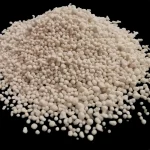
Soda ash, chemically known as sodium carbonate (Na₂CO₃), is a white, odorless powder or granular solid with a molecular weight of 105.99 g/mol. It is one of the most important industrial chemicals by volume, produced primarily through the Solvay process or from natural trona ore deposits. The two main commercial forms are light soda ash, which is a fine powder with lower bulk density, and dense soda ash, which has larger granules and higher bulk density for reduced dusting during handling and transportation.

The primary application of soda ash is in glass manufacturing, where it serves as a flux to lower the melting temperature of silica, accounting for approximately 50% of global consumption. It is also a key raw material in detergent and soap production, where it acts as a builder and water softener. Additional applications include water treatment for pH adjustment, chemical manufacturing as a source of sodium for producing various sodium compounds, pulp and paper processing, and textile processing. Light soda ash dissolves more quickly and is preferred for chemical and detergent applications, while dense soda ash is preferred for glass manufacturing due to its lower dusting and better handling characteristics.

Why Choose XRD Soda Ash:

• 99.2% Na₂CO₃ purity, meeting industrial grade specifications
• Dense and light forms available for different application needs
• Essential raw material for glass manufacturing — lowers silica melting temperature
• Effective pH adjuster and water softener for detergents and water treatment
• Dense soda ash: lower dusting, ideal for glass production
• Light soda ash: faster dissolution, ideal for chemical and detergent use
• 20,000-ton annual capacity ensures supply stability
• Free samples available for evaluation
• COA and MSDS documents available for download
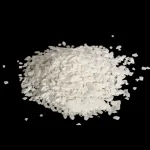
Details

HS Code 2836.20
Synonym Sodium carbonate, Disodium carbonate, Washing soda, Soda crystals
Forms Available Dense soda ash (low porosity, for glass manufacturing), Light soda ash (powdery, for detergents and chemicals), Monohydrate (Na₂CO₃·H₂O), Decahydrate (Na₂CO₃·10H₂O, "washing soda")
Density 2.54 g/cm³ (anhydrous, solid), 1.1–1.3 g/cm³ (light soda ash, bulk density)
Purity ≥99% (industrial grade), ≥99.5% (food/pharmaceutical grade, E500)
Molecular Weight 105.99 g/mol (anhydrous)
Appearance White, odorless powder or granules (anhydrous), Transparent crystals (decahydrate form)
Grades Technical grade (industrial uses), Food grade (E500) (baking, food additive), Pharmaceutical grade (high purity), Reagent grade (lab use)
Packing Options 25KG, Big bags, Palletizing, Customization

Applications

Food additiveMiningGlass manufacturingDetergents & soapsChemicalsMetallurgy

FAQ

Q What is Soda Ash?

Soda Ash, chemically known as sodium carbonate (Na₂CO₃), is a white, odorless powder or granular solid with a molecular weight of 105.99 g/mol. It is one of the most important industrial chemicals by volume, produced primarily through the Solvay process or from natural trona ore. It is available in two main forms: light soda ash (fine powder) and dense soda ash (larger granules).

Q What is the difference between light and dense soda ash?

Light soda ash is a fine powder with lower bulk density, dissolves faster, and is preferred for chemical manufacturing, detergent production, and applications requiring rapid dissolution. Dense soda ash has larger granules with higher bulk density, produces less dust during handling, and is the preferred form for glass manufacturing where dust control is important. Both forms have the same chemical purity.

Q How is soda ash used in glass manufacturing?

Soda ash serves as a flux in glass manufacturing, lowering the melting temperature of silica from approximately 1,700°C to around 800°C. This significantly reduces energy consumption and production costs. Soda ash typically comprises 12-15% of the glass batch by weight. Dense soda ash is preferred in this application due to lower dusting and better batch uniformity.

Q How is soda ash used in water treatment?

In water treatment, soda ash is used for pH adjustment and water softening. It raises the pH of acidic water and precipitates calcium and magnesium ions as insoluble carbonates, reducing water hardness. It is widely used in municipal drinking water treatment, swimming pool pH control, and industrial process water conditioning.

Q What are the other industrial applications of soda ash?

Beyond glass and detergents, soda ash is used in the production of various sodium compounds including sodium bicarbonate, sodium silicates, and sodium phosphates. It is used in pulp and paper processing, textile processing, petroleum refining, and as a flux in metallurgy. It is also used in flue gas desulfurization to remove sulfur dioxide from industrial emissions.

Documents

COA-Soda ash-Dense soda ash-Food.pdf
COA-Soda ash-Dense soda ash-Industrial.pdf
COA-Soda ash-Light soda ash-Food.pdf
COA-Soda ash-Light soda ash-Industrial.pdf
MSDS-Soda Ash Dense.pdf

Featured Products

Calcium magnesium acetate - CaMg₂(CH₃COO)₆

Calcium magnesium acetate

Formula: CaMg₂(CH₃COO)₆

CAS No.: 76123-46-1

HS Code: 2915.29.9090

Calcium chloride - CaCl₂

Calcium chloride

Formula: CaCl₂

CAS No.: 10043-52-4

HS Code: 2827.20

Soda ash - Na₂CO₃

Soda ash

Formula: Na₂CO₃

CAS No.: 497-19-8

HS Code: 2836.20

Sodium metabisulfite - Na₂S₂O₅

Sodium metabisulfite

Formula: Na₂S₂O₅

CAS No.: 7681-57-4

HS Code: 2832.10