The industrial chemical distribution landscape is increasingly competitive. Distributors sourcing bulk calcium chloride constantly navigate a minefield of price volatility, intricate logistics, and inconsistent product quality. Traditional procurement tactics—simply chasing the lowest per-ton price—often backfire. They expose businesses to hidden costs like demurrage charges from delayed shipments, customer rejections due to subpar purity, or inventory spoilage from improper storage.
What separates a strategic buyer from a transactional one in this market? The answer lies in a holistic evaluation framework. Value in calcium chloride procurement isn't just about cost; it’s a calculus involving purity grades, logistical timing, supplier reliability, and total cost of ownership. A myopic focus on the upfront price tag is the fastest route to margin erosion.
This guide provides a comprehensive, vendor-neutral purchasing framework for distributors. We will deconstruct the key factors that impact your bottom line, from technical specifications and market dynamics to supplier vetting protocols and long-term partnership strategies. The goal is to equip you with the decision-making tools to secure a supply chain that is both cost-effective and resilient.
Key Takeaways
- Purity Isn't Uniform: Bulk calcium chloride is typically sold at 94-97% purity, but specific industrial applications demand strict limits on impurities like magnesium and alkali metal chlorides to prevent equipment failure.
- Logistics Dictate True Cost: Freight and last-mile delivery can constitute 30-50% of the landed cost for bulk calcium chloride, making proximity to a supplier's production hub or terminal a major competitive advantage.
- Seasonal Contracting Is a Trap: Ad-hoc winter buying for de-icing exposes distributors to 40-60% price spikes; a portfolio approach blending annual contracts with spot purchases optimizes price stability and flexibility.
- Supplier Audits Are Non-Negotiable: A supplier's quality certificate is not a guarantee. Verifying their production process (natural brine vs. synthetic Solvay) and third-party testing protocols is essential to prevent costly liability claims.
- Sustainability Is a New Lever: Construction and dust control end-users are increasingly specifying calcium chloride with a lower carbon footprint, creating a premium market segment for distributors who can verify their supply chain’s environmental profile.
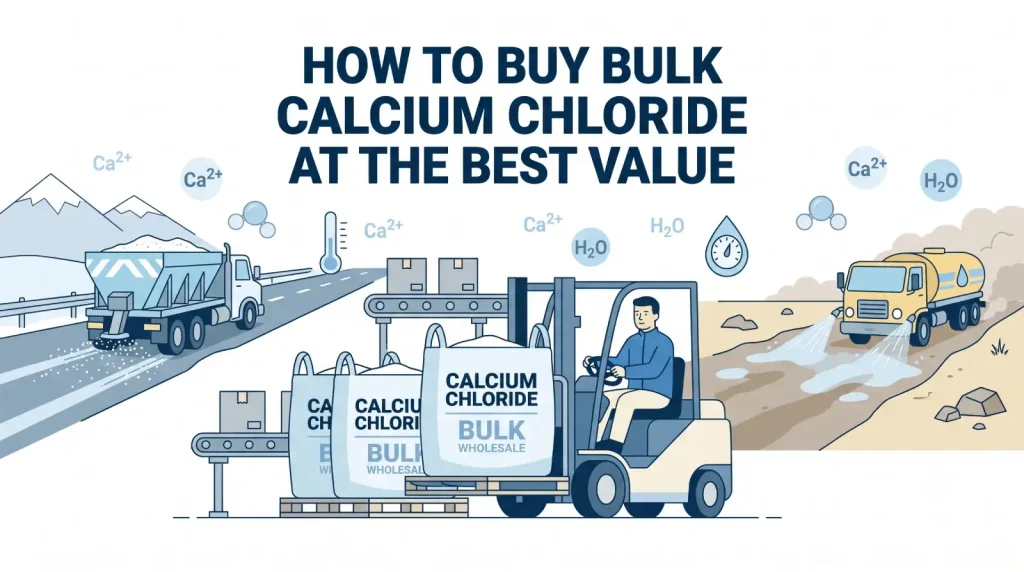
What Is the Foundational Chemistry of Calcium Chloride?
A granular understanding of the product itself is the first step to purchasing it intelligently. Calcium chloride (CaCl₂) is a highly versatile, inorganic salt compound. It is produced through two primary routes: the direct neutralization of naturally occurring brine or as a by-product of the Solvay process for sodium carbonate manufacturing.
The compound's industrial value stems from three key properties. First, it is extremely hygroscopic, meaning it aggressively attracts and retains moisture from the air. This makes it a superior dust control agent and de-icer. Second, its dissolution in water is highly exothermic, releasing significant heat—a critical feature for concrete acceleration in cold weather. Third, it depresses the freezing point of water far more effectively than sodium chloride, maintaining performance down to -25°F (-32°C). These inherent characteristics dictate its application and, consequently, the quality metrics a distributor must monitor.
Why Is a Total Cost of Ownership Model Critical for Bulk Purchasing?
The single most common error in bulk calcium chloride procurement is using the purchase price per ton as the primary decision metric. A rigorous total cost of ownership model uncovers the true financial impact of a sourcing decision. The per-ton price is merely the visible tip of the iceberg.
Logistics often represents the largest hidden cost. The product’s hygroscopic nature demands specialized, moisture-proof transportation and storage. A distributor located far from a supplier’s terminal may incur freight costs that completely negate a lower factory-gate price. Furthermore, quality failures carry catastrophic costs. One shipment with off-spec purity or excessive impurities can lead to a full product recall, the loss of a key customer, or significant liability for infrastructure damage. Supplier reliability is another cost factor; a supplier who misses a delivery window during the peak de-icing season forces the distributor into the spot market, where prices can be ruinous. A proper TCO model assigns a weighted value to purity, logistics, and supply assurance, guiding you toward the true best value.
How to Calculate Your Total Landed Cost
Distributors must build a financial model that compares suppliers on an equal footing. A supplier’s ex-works price is just the starting point. A comprehensive landed cost calculation incorporates all expenses required to get the product to your warehouse, ready for sale.
| Cost Component | Description | Why It Matters |
|---|---|---|
| Base Price (EXW/FOB) | The supplier's price for the product, often quoted per short ton. | This is your negotiating baseline, but it means nothing in isolation. |
| Inbound Freight & Logistics | Full truckload, railcar, or intermodal transport from the source to your facility. | For a dense, heavy commodity, freight can easily be 30-50% of the final cost. |
| Demurrage & Detention | Penalty charges for failing to load/unload railcars or trucks within the allowed time frame. | The hygroscopic nature of the product requires efficient, planned handling; delays are costly. |
| Quality Assurance & Testing | Costs for third-party lab analysis to verify purity, assay, and impurity levels of each batch. | A $500 test can save you from accepting a $25,000 load of sub-par material. |
| Inventory Carrying Cost | Capital tied up, storage, insurance, and product degradation risk during warehousing. | Calcium chloride is corrosive and prone to caking, making long-term storage a calculable risk. |
What Qualifies as a Best-Value Supplier Beyond Pricing?
A best-value supplier is defined by transparency and a partnership mindset. They don't just sell product; they provide market intelligence, consistent quality, and logistical flexibility. Look for suppliers who openly share Certificates of Analysis (COA) for each production batch and are willing to collaborate on a third-party testing protocol.
Operational excellence is another hallmark. A supplier who manages a diversified network of production plants and terminals is better positioned to reroute shipments during a supply disruption. Their customer service responsiveness should be tested during the vetting phase. Do they provide a single point of contact who understands your business? Can they offer flexible packaging solutions, from supersacks to direct pneumatic trailer discharge, that align with your operational setup? A best-value supplier is ultimately a strategic ally who stabilizes your supply chain, allowing you to confidently serve your own customers.
Supplier Evaluation & Vetting Checklist
Use this checklist as a structured framework for evaluating potential sources of bulk calcium chloride. A "No" answer on any critical item requires documented justification and a formal risk mitigation plan.
- [ ] Request a Master Certificate of Analysis (COA): Verify the product meets the specified purity (e.g., 94-97%) and test for key impurities like magnesium (MgCl₂), sodium (NaCl), and water insolubles.
- [ ] Audit the Production Process: Ascertain whether the material is sourced from natural brine, the Solvay process, or another method, as this impacts impurity profiles.
- [ ] Verify Logistics & Packaging Capabilities: Confirm the supplier can handle your volume (full truckload, railcar), offer required packaging (50-lb bags, 2000-lb supersacks, bulk), and meet delivery timelines.
- [ ] Request a Contingency & Supply Assurance Plan: Document the supplier’s protocol for plant shutdowns, logistical disruptions, or force majeure events that could impact their supply to you.
- [ ] Conduct a Financial Stability Review: Obtain a business credit report (e.g., Dun & Bradstreet) and request trade references from other chemical distributors to validate the supplier’s market reliability.
- [ ] Assess Regulatory and Safety Compliance: Ensure the supplier’s Safety Data Sheet (SDS) is current, and their product labels comply with GHS standards and any relevant regional regulations.
- [ ] Test the Customer Service Model: Place a sample order and evaluate the full sales cycle: ease of ordering, communication frequency, document accuracy, and post-order follow-up.
- [ ] Negotiate a Trial Agreement: Begin with a single-truckload spot purchase. Use this trial to verify the product’s real-world performance, packaging integrity, and on-time delivery before committing to a contract.
How Do Product Forms and Packaging Impact Your Procurement Strategy?
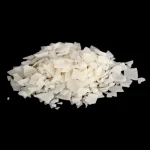
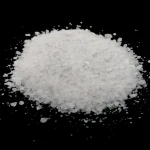
The physical form and packaging of calcium chloride are not merely logistical afterthoughts; they are direct cost drivers and operational decisions. The two dominant forms are flakes (typically 77-80% CaCl₂) and pellets (typically 94-97% CaCl₂). Pellets, with their higher purity and controlled surface area, command a premium and are ideal for dust control and oilfield applications. Flakes are often the economical choice for de-icing, concrete acceleration, and some food-grade processes.
Packaging must align with your downstream customers’ needs and your own handling capabilities. The options create a clear cost-value hierarchy. Traditional 50-lb bags serve small contractor markets but have high labor costs for palletizing. 2000-3000 lb flexible intermediate bulk containers (FIBCs) or supersacks reduce handling costs and are favored by mid-sized industrial accounts. True bulk shipments, delivered via pneumatic truck into on-site silos, offer the lowest per-unit logistics cost but require significant capital investment and steady product turnover. A strategic distributor aligns their procurement across these formats to maximize volume discounts while efficiently serving diverse market segments.
Why Does Seasonality Demand a Dynamic Sourcing Strategy?
The bulk calcium chloride market is defined by extreme, weather-driven seasonality. Global demand for de-icing products surges in Q3 and Q4, peaking before winter. This predictable cycle causes raw material costs and, critically, transportation capacity to tighten dramatically. A distributor who sources only on a spot basis during this peak is at the mercy of sellers and freight carriers.
A more robust strategy involves blending procurement methods. An annual contract covering a baseline volume (perhaps 60-70% of projected needs) secures a stable price and guaranteed supply. This contract becomes the bedrock of your inventory. The remaining demand can then be fulfilled with tactical spot purchases, allowing you to capitalize on market dips or cover unforecasted customer demand spikes. Additionally, evaluating a supplier's terminal network is a powerful mitigation tactic. Partnering with a producer who has storage terminals near your operations allows for just-in-time inventory replenishment, reducing your own carrying costs and providing a buffer against supply chain shocks.
How Can Distributors Build a Sustainable Calcium Chloride Supply Chain?
Sustainability is moving from a buzzword to a contractual requirement in industrial procurement. A calcium chloride supply chain with a verifiably lower carbon footprint can unlock new business with environmentally conscious clients in the construction and road maintenance sectors, often at a premium price.
Sourcing for a Lower Carbon Footprint
The production method is the primary differentiator. Natural brine-derived calcium chloride has an inherently lower carbon intensity compared to synthetically produced material from the energy-intensive Solvay process. A distributor can gain a significant advantage by requesting a product-specific carbon footprint analysis from a brine-sourced supplier. Transportation is another major leverage point. Sourcing from a regional terminal network, rather than shipping across the continent, dramatically reduces Scope 3 emissions. When presenting options to your customers, you can articulate the choice as a standard offering with a baseline environmental profile versus a premium, documented lower-carbon option. This transforms sustainability into a value-added sales argument, not just an abstract corporate goal.
FAQs
What is the typical purity of bulk calcium chloride?
Industrial-grade bulk calcium chloride is most commonly available in a purity range of 94-97% as calcium chloride dihydrate (CaCl₂·2H₂O). This is the standard specification for the pellet form. The assay indicates the total concentration of calcium chloride. However, a complete analysis of impurities like magnesium chloride, sodium chloride, and water insolubles is critical for many specific applications.
How does the Solvay process calcium chloride differ from brine-derived product?
The difference lies in the impurity profile and environmental footprint. The Solvay process produces calcium chloride as a by-product of soda ash manufacturing. This material can contain higher levels of alkali metal impurities like sodium and potassium. In contrast, direct brine production involves purifying and concentrating naturally occurring, high-calcium subsurface brines. Brine-derived calcium chloride typically has a lower carbon footprint and a more consistent impurity profile, which is often preferred for food-grade and high-purity industrial applications.
Is bulk calcium chloride safe to handle and store?
Yes, bulk calcium chloride is safe when standard industrial chemical handling procedures are meticulously followed. The key risks are moisture reactivity, corrosivity, and heat generation during dissolution. It must be stored in a dry, well-ventilated area in containers resistant to acid corrosion, such as plastic, stainless steel, or fiberglass. Personnel must use PPE including chemical-splash goggles, impervious gloves, and protective clothing to prevent skin and eye irritation from its hygroscopic and exothermic properties.
What are the primary industrial applications for calcium chloride?
The demand for calcium chloride spans a wide range of critical industries. It is a key raw material in the following segments:
- Dust Control & Road Base Stabilization: It absorbs atmospheric moisture, keeping unpaved surfaces damp and dust-free while binding fines.
- De-icing & Anti-icing: It melts ice significantly faster and at lower temperatures than rock salt (sodium chloride) by generating heat upon contact with water.
- Oil & Gas: It serves as a weighting agent in completion brines and a key component in drilling muds to control formation pressure.
- Concrete Acceleration: It speeds up the cement hydration process, allowing construction to proceed safely in cold weather by reducing the set time.
What is the shelf life of calcium chloride?
Under proper storage conditions—specifically, in a dry, cool environment, tightly sealed in its original moisture-proof packaging—calcium chloride has an indefinite chemical shelf life. It is a stable, non-degrading compound. However, the practical shelf life is determined by physical degradation. If the packaging is compromised, the product will aggressively absorb atmospheric moisture, leading to hardening, caking, and a non-free-flowing, unusable mass.
How should I compare bulk vs. packaged pricing for calcium chloride?
A direct per-ton price comparison between bulk and packaged calcium chloride is meaningless without a total cost analysis. While a true pneumatic bulk shipment will have the lowest per-unit price for the raw material, it necessitates a multi-thousand-dollar capital investment in a storage silo. Packaged goods in bags or supersacks carry a higher product price due to materials and labor but provide inventory flexibility and eliminate the risk of cross-contamination in shared silos. The decision is entirely based on a specific product's turnover rate and the customer’s receiving infrastructure.
What drives calcium chloride market price volatility?
The price of bulk calcium chloride is influenced by several interconnected factors. A primary driver is the seasonal surge in demand from the de-icing and cold-weather construction sectors. This is compounded by fluctuations in the natural gas and energy markets, which directly impact the cost of both brine processing and synthetic production via the Solvay process. Tightness in the chemical freight and railcar market, particularly in the fall, can cause landed prices to spike more dramatically than the product cost alone would suggest.
What is the difference between calcium chloride flakes and pellets?
The distinction is primarily about purity, surface area, and dissolution rate. Flakes typically contain 77-80% calcium chloride and have an irregular, high surface-area shape that promotes rapid dissolution. This makes them a cost-effective choice for high-volume uses like road de-icing. Pellets are a more refined, denser product with a 94-97% purity. Their controlled, uniform shape minimizes dusting and provides a slower, more predictable dissolution rate, which is essential for precise applications in oilfield fluids and industrial dust control.
How do I choose a reliable calcium chloride distributor?
Selecting a reliable distributor involves evaluating their logistical network and technical competence. Prioritize partners who demonstrate logistics strength by operating multiple terminals across key regions, which ensures supply redundancy and reduces your inbound freight costs. A top-tier distributor must also provide a detailed Certificate of Analysis (COA) for every batch and source from producers with transparent, verifiable supply chains and a long-term production outlook.
What quality tests should be performed on incoming bulk calcium chloride?
Incoming quality assurance must go beyond a simple purity assay. A standard testing protocol for a new or critical shipment should include a panel of tests to prevent application-specific failures:
- Full Assay (Purity): Verify the percentage of CaCl₂ aligns with the Certificate of Analysis, typically by EDTA titration.
- Alkalinity: Quantify the level of hydroxide ion as Ca(OH)₂ to ensure it meets the specification limit for your application.
- Magnesium Chloride Content: Measure MgCl₂ levels, as this is a common impurity that can cause scaling and compromise oilfield fluid performance.
- Water Insolubles: Test the gravimetric level of insoluble matter, which can clog spray nozzles in dust control and de-icing equipment, leading to operational downtime.
Conclusion
The path to buying bulk calcium chloride at the best value is a continuous process of strategic evaluation, not a one-off transaction. The central theme remains that a low per-ton price is a hollow victory if it’s accompanied by quality deficiencies, logistical nightmares, and supply unreliability. A successful procurement strategy must integrate a rigorous total cost of ownership model, a scientific approach to verifying product purity and impurity profiles, and a dynamic sourcing plan that blends annual contracts with spot purchases to navigate extreme market seasonality.
The industry is evolving, with sustainability and supply chain transparency becoming new competitive levers for the prepared distributor. The key is to act on these insights. Apply a total landed cost model to your next sourcing decision. Use the vetting checklist to audit your current and prospective suppliers. By transforming your procurement practice from reactive buying to a proactive, data-driven supply chain management function, you can secure a durable competitive edge for your distribution business.