
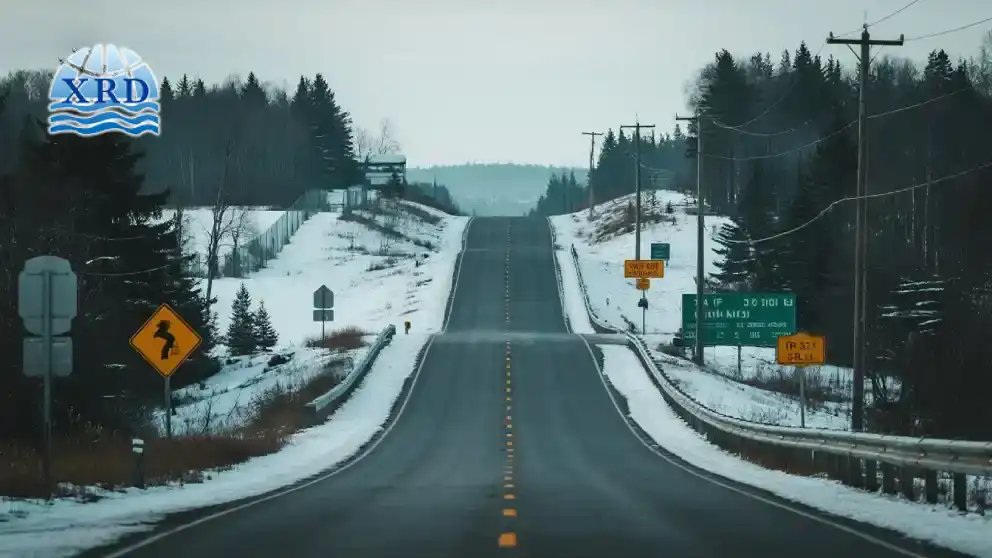
Why Extreme Cold Events Are Changing Winter Maintenance Strategies
Extreme Cold Is No Longer an Exception
In recent years, extreme cold events have shifted from rare disruptions to recurring operational challenges. Polar vortex outbreaks, record-breaking low temperatures, and rapid freeze–thaw cycles increasingly affect transportation networks and public infrastructure.
For infrastructure operators, the question is no longer if extreme cold will occur, but how systems perform when it does. Traditional winter practices designed for moderate climates are now being tested under harsher conditions. This has pushed renewed attention toward extreme cold winter maintenance strategies that remain effective when temperatures fall well below historical norms.
Within this context, calcium chloride for winter road maintenance is gaining renewed relevance—not as a new material, but as one whose physical properties align with modern resilience requirements.
Why Extreme Cold Exposes Weak Points in Infrastructure
Extreme cold does more than freeze surfaces; it amplifies existing system vulnerabilities.
Common stress points include:
- Rapid refreezing after deicing
- Loss of chemical effectiveness at low temperatures
- Mechanical stress from repeated freeze–thaw expansion
- Increased labor demand due to frequent reapplication
Below −10 °C (14 °F), many conventional deicing materials lose effectiveness quickly. This creates a cycle of melting, refreezing, and repeated application that increases cost, risk, and operational complexity—especially in winter road deicing in extreme temperatures.
Infrastructure Resilience Requires More Than Snow Removal
Modern infrastructure planning emphasizes resilience rather than reaction. In winter operations, resilience focuses on maintaining surface safety and functionality throughout prolonged cold events.
From a system perspective, resilience-based winter maintenance aims to:
- Reduce refreezing frequency
- Extend effective treatment duration
- Minimize emergency response cycles
- Protect infrastructure assets from cold-related damage
This shifts winter materials from a consumable commodity to a strategic component of infrastructure resilience in extreme cold.
Where Calcium Chloride Fits into Extreme Cold Conditions
Calcium chloride differs from traditional road salts in several performance-critical ways.
Key characteristics include:
-
Low effective temperature range
Calcium chloride deicing performance in extreme cold remains reliable down to approximately −30 °C (−22 °F), well below sodium chloride's effective limit. -
Hygroscopic behavior
Calcium chloride absorbs moisture from the air, helping maintain a liquid brine layer that resists overnight refreezing. -
Exothermic dissolution
When dissolving, calcium chloride releases heat, accelerating ice penetration and supporting faster surface activation.
These properties make calcium chloride especially relevant where refreezing risk—not snowfall volume—is the primary concern.
Refreezing: The Hidden Risk in Winter Operations
One of the most dangerous winter conditions occurs after initial snow removal. Meltwater that refreezes overnight often creates invisible ice layers, particularly on bridges, ramps, and elevated roadways.
From a risk-management perspective, reducing refreezing risk in winter infrastructure directly affects:
- Accident rates
- Liability exposure
- Emergency maintenance frequency
- Crew fatigue and equipment strain
Materials that slow or prevent refreezing improve predictability and operational control under extreme conditions.
Operational Efficiency Under Extreme Conditions
Extended cold events place pressure on both material performance and operational logistics. Longer storms and colder nights reduce the margin for error.
Infrastructure operators increasingly evaluate winter treatments based on:
- Duration of effectiveness
- Reapplication intervals
- Labor efficiency
- Total lifecycle cost rather than unit price
In this framework, calcium chloride vs sodium chloride deicing is not simply a cost comparison, but a performance-based decision tied to extreme cold reliability.
Environmental and Material Considerations
Repeated freeze–thaw cycles combined with aggressive reapplication can accelerate surface degradation and corrosion. Reducing application frequency helps limit mechanical wear, particularly on critical infrastructure such as bridges and airport pavements.
By maintaining effectiveness over longer periods, calcium chloride can indirectly reduce cumulative stress on treated surfaces when used as part of a balanced winter maintenance strategy.
Extreme Cold Is Reshaping Winter Maintenance Decisions
As extreme cold events expand into regions previously considered moderate, agencies and operators are reassessing long-standing assumptions.
The discussion is shifting from "what melts ice" to "what maintains control under stress." In that conversation, calcium chloride for winter road maintenance represents a resilience-oriented approach rather than a reactive one.
Planning for the Cold That Comes Next
Extreme cold is no longer an edge case—it is a planning condition.
Effective winter maintenance now depends on understanding how materials behave under sustained stress. Calcium chloride deicing performance in extreme cold supports this shift by addressing one of winter operations' most persistent challenges: refreezing.
In an era of climate variability, winter maintenance decisions are increasingly driven by performance, predictability, and long-term system reliability.