
Introduction: Challenges of Oily Wastewater and the Role of Calcium Chloride
Industrial sectors such as petrochemical processing, metal machining, and food production generate large volumes of oily wastewater. These effluents often contain emulsified oil, where tiny oil droplets are stabilized in water by surfactants, forming a persistent and difficult-to-treat mixture.
Unlike free-floating oil, emulsified oil cannot be effectively removed by gravity separation alone. The stability of these emulsions is primarily due to electrostatic repulsion and protective interfacial films around oil droplets.
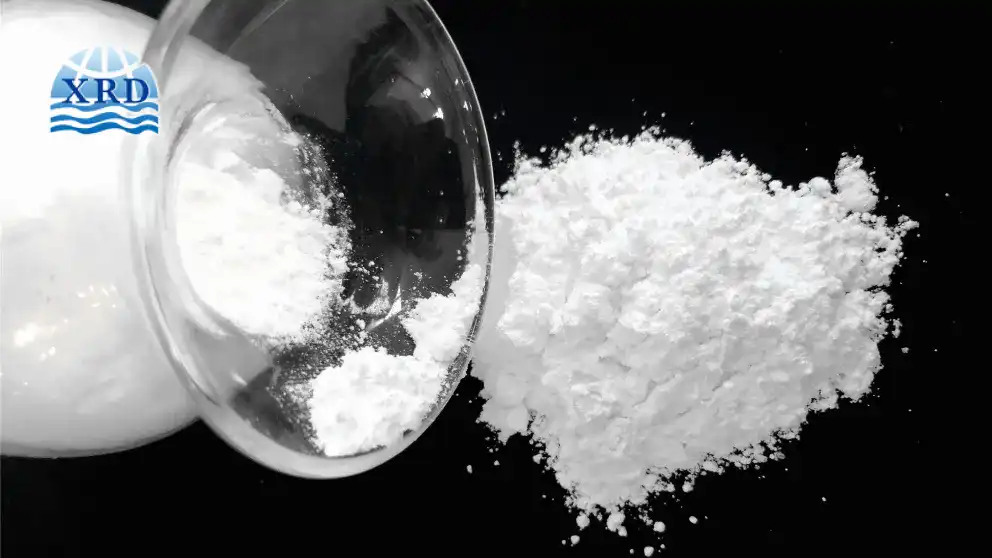
This is where calcium chloride (CaCl₂) plays a critical role. As a widely used inorganic salt demulsifier, it helps destabilize emulsions and significantly improves oil-water separation efficiency in industrial wastewater treatment.
Core Mechanisms: How Calcium Chloride Breaks Emulsions
Charge Neutralization
Oil droplets in wastewater typically carry a negative surface charge, which prevents them from coalescing. When calcium chloride dissolves, it releases Ca²⁺ ions, which neutralize these negative charges.
This reduces electrostatic repulsion between droplets, allowing them to come closer and merge into larger oil globules.
Electrical Double Layer Compression
In emulsified systems, each oil droplet is surrounded by an electrical double layer that stabilizes it. The addition of calcium chloride increases the ionic strength of the solution, compressing this double layer.
As a result:
- Droplets collide more easily
- Coalescence is enhanced
- Phase separation becomes faster
Surfactant Displacement and Calcium Soap Formation
Many emulsions are stabilized by surfactants such as fatty acid salts (e.g., carboxylates). Calcium ions react with these compounds to form insoluble calcium soaps.
This reaction:
- Destroys the protective film around oil droplets
- Releases trapped oil
- Accelerates oil-water separation
Four Key Advantages of Using Calcium Chloride
Rapid Demulsification
Compared to standalone organic flocculants, calcium chloride acts quickly by targeting the root causes of emulsion stability. This leads to faster phase separation and improved process efficiency.
Cost-Effectiveness
Calcium chloride is a bulk industrial chemical with relatively low cost. In addition:
- It reduces the need for expensive specialty chemicals
- It enhances sludge dewatering performance
- It lowers overall treatment costs
Broad Applicability
Calcium chloride performs well across a wide range of wastewater types, including:
- High-strength emulsified cutting fluids
- Oily wastewater from refineries
- Surfactant-rich effluents from cleaning processes
Environmental Compatibility
Properly dosed calcium chloride:
- Produces clear effluent with reduced oil content
- Has minimal toxicity to downstream biological treatment systems
- Supports stable operation of WWTP processes
Practical Optimization: How to Maximize Treatment Efficiency
Optimal pH Control
The effectiveness of calcium chloride is influenced by pH:
- Neutral to mildly alkaline conditions (pH 7–9) are typically ideal
- Higher pH promotes precipitation reactions and improves demulsification
- Extremely high pH should be avoided to prevent scaling issues
Dosage Determination
The key principle is “optimal dosing”, not overdosing.
Recommended approach:
- Conduct jar tests to determine the optimal dosage
- Observe floc formation, settling rate, and clarity
- Avoid excessive dosing, which may cause re-stabilization or increased salinity
Synergistic Use with Flocculants
Calcium chloride is often combined with:
- PAM (polyacrylamide) – enhances floc growth and settling
- PAC (polyaluminum chloride) – improves charge neutralization and coagulation
This combined approach provides:
- Stronger, larger flocs
- Faster separation
- Better effluent quality
Industry Applications
Metal Processing Industry
In machining operations, wastewater containing cutting fluids and lubricants forms stable emulsions. Calcium chloride effectively breaks these emulsions, enabling oil removal and reuse or discharge compliance.
Refining and Petrochemical Industry
Oily wastewater from refineries contains complex hydrocarbons and surfactants. Calcium chloride helps destabilize these systems, improving primary separation and downstream treatment efficiency.
Detergent and Leather Industry
Wastewater rich in surfactants is particularly difficult to treat. Calcium chloride reacts with these compounds, making it highly effective for:
- Laundry wastewater
- Leather processing effluents
Conclusion and Future Outlook
Key Takeaways
Calcium chloride is a powerful, economical, and versatile demulsifier that significantly enhances oil-water separation in industrial effluent. Its effectiveness lies in:
- Charge neutralization
- Double layer compression
- Surfactant disruption
Emerging Trends
Future developments in wastewater treatment include:
- Automated dosing systems for precise chemical control
- Integration with smart monitoring technologies
- Development of greener and hybrid chemical formulations
Actionable Recommendations
To maximize results, industries should:
- Select the appropriate form (solid vs. liquid CaCl₂) based on operational needs
- Perform lab-scale testing before full-scale application
- Combine calcium chloride with suitable coagulants/flocculants for optimal performance
By understanding both the science and application strategies, industries can fully leverage calcium chloride to achieve efficient, cost-effective, and sustainable oily wastewater treatment.