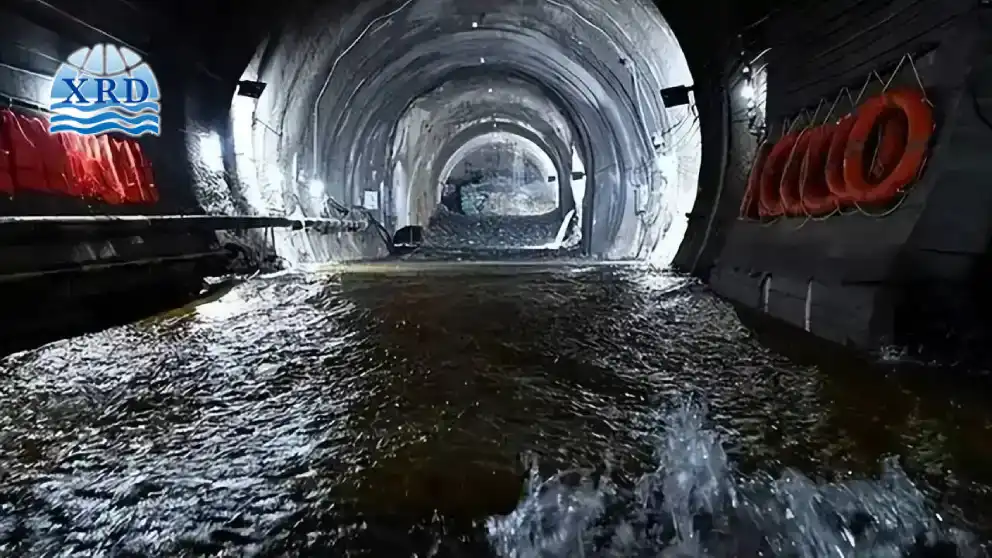
Mine water is often perceived as a simple byproduct of mining operations—something to be drained, neutralized, and discharged. In reality, mine water is a chemically active system where oxidation reactions quietly drive equipment damage, scaling, treatment instability, and long-term environmental risk.
Among all chemical control strategies, reducing agents are frequently underestimated. Often labeled merely as dechlorination or oxygen-scavenging chemicals, they actually play a far more central role in mine water management than most operators realize.
The Oxidative Nature of Mine Water
Mine water commonly contains elevated levels of dissolved oxygen and oxidized metal species such as ferric iron (Fe³⁺) and manganese (Mn⁴⁺). These oxidizing agents accelerate corrosion, promote metal precipitation, and disrupt downstream treatment processes.
Left unmanaged, oxidation becomes a silent driver of:
- Premature failure of pipelines, pumps, and valves
- Severe scaling and blockage in conveyance systems
- Instability in membrane and biological treatment units
This is where reducing agents move from being “optional additives” to core process chemicals.
Neutralizing Oxidants to Protect Infrastructure
Reducing agents such as sodium sulfite, sodium metabisulfite, and ferrous sulfate actively react with dissolved oxygen and high-valence metal ions, converting them into lower-oxidation, less aggressive forms.
By lowering the overall redox potential of mine water, reducing agents:
- Suppress electrochemical corrosion of steel and alloy components
- Reduce oxidative stress on pumps, heat exchangers, and treatment vessels
- Extend the operational life of critical equipment
In high-flow mine drainage systems, this corrosion control alone can translate into significant reductions in maintenance and replacement costs.
Preventing Metal Precipitation and Scaling
Oxidative conditions favor the transformation of soluble ferrous iron (Fe²⁺) and manganous manganese (Mn²⁺) into insoluble ferric and manganic hydroxides. These precipitates accumulate rapidly, leading to:
- Pipe fouling and flow restriction
- Wellbore and gallery scaling
- Increased sludge handling requirements
Reducing agents stabilize iron and manganese in their reduced, soluble states, delaying or preventing oxidation-driven precipitation. The result is smoother hydraulics, cleaner infrastructure, and more predictable system performance.
Enabling Coupled Nitrogen and Sulfur Cycling for Remediation
In sulfate-rich mine water, reducing agents play a less visible—but even more powerful—role in biological treatment systems.
By creating a favorable redox environment, they support the activity of sulfate-reducing bacteria (SRB), which convert sulfate (SO₄²⁻) into sulfide (S²⁻). These sulfides can then serve as electron donors for autotrophic denitrification, reducing nitrate (NO₃⁻) to harmless nitrogen gas (N₂).
This “hidden sulfur cycle” enables:
- Effective nitrate removal without external organic carbon
- Stable nitrogen control in low-carbon, oligotrophic mine water
- A shift from passive treatment to biologically driven ecological restoration
For underground and remote mining sites, this low-input, low-carbon pathway is particularly valuable.
Safeguarding Downstream Treatment Processes
Advanced treatment technologies such as reverse osmosis (RO) are highly sensitive to oxidants. Residual chlorine, ozone, or other oxidizing species can irreversibly damage polyamide membranes, leading to rapid performance loss.
Proper dosing of reducing agents:
- Eliminates residual oxidants before membrane contact
- Preserves membrane integrity and flux stability
- Reduces membrane replacement frequency and operating costs
In this context, reducing agents act as a protective barrier between raw mine water chemistry and high-value treatment assets.
Why Reducing Agents Matter More Than You Think
Traditionally, reducing agents have been viewed as simple chemical safeguards—tools for removing oxygen or chlorine. Modern mine water research and field practice tell a different story.
Reducing agents are multifunctional control levers:
- They protect equipment and infrastructure
- Control scaling and metal behavior
- Stabilize advanced treatment systems
- Activate coupled microbial nitrogen–sulfur pathways
In carbon-limited underground environments, their ability to drive autotrophic processes makes them not just effective—but economically and environmentally strategic.
A Strategic Chemical, Not a Supporting One
Reducing agents sit at the intersection of corrosion control, scaling prevention, pollution removal, and ecological restoration. Their value extends far beyond a single redox reaction.
In modern mine water treatment, reducing agents are not auxiliary chemicals. They are core system enablers—quietly determining whether a treatment strategy merely survives or truly performs.
Understanding their role is the first step toward more resilient, efficient, and sustainable mine water management.