
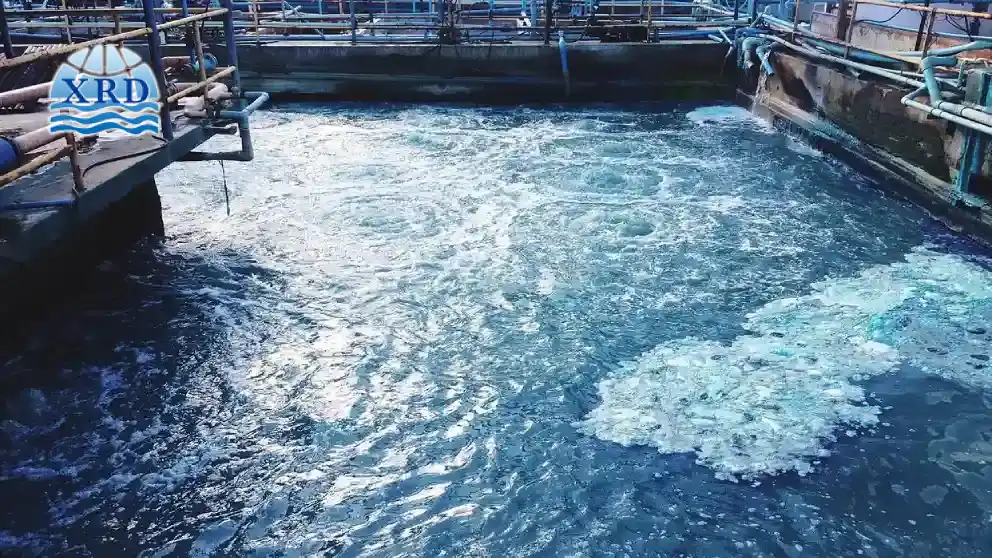
Industrial Fluoride Wastewater: Risks and Regulatory Pressure
High-strength fluoride wastewater is widely generated in industries such as semiconductor manufacturing, photovoltaics, aluminum processing, and phosphate chemicals. These effluents often contain fluoride concentrations far exceeding environmental discharge limits.
Excess fluoride in water bodies can lead to severe ecological toxicity and long-term human health issues, particularly skeletal fluorosis caused by chronic exposure. As a result, regulatory frameworks across many regions have tightened discharge limits—often requiring total fluoride concentrations below 10 mg/L, and in some advanced industrial zones, even below 1 mg/L.
This regulatory pressure drives the need for reliable, scalable, and cost-effective fluoride removal technologies.
Principle of Calcium Chloride Precipitation for Fluoride Removal
The calcium chloride precipitation method is based on a straightforward chemical reaction:
When calcium ions are introduced into fluoride-containing wastewater, they react with fluoride ions to form calcium fluoride (CaF₂), an insoluble precipitate.
Key Properties of Calcium Fluoride
- Chemical formula: CaF₂
- Solubility product (Ksp): ~3.9 × 10⁻¹¹ (25°C)
- Characteristics: It has low solubility, high stability, and settles easily.
The low solubility of CaF₂ makes it highly suitable for precipitation-based removal.
Why Choose Calcium Chloride?
Compared with other fluoride removal methods:
- Versus lime (Ca(OH)₂): Faster dissolution, more controllable dosing
- Versus aluminum salts adsorption: Lower cost for high-fluoride wastewater
- Versus advanced adsorbents: More economical for bulk removal
Calcium chloride offers a strong balance between efficiency, cost, and operational simplicity.
Key Factors Affecting Fluoride Removal Efficiency
The performance of the calcium chloride precipitation process is highly sensitive to several operational parameters. Optimizing these factors is critical for achieving stable and low residual fluoride levels.
pH Control: The Foundation of Reaction Stability
pH significantly influences both fluoride speciation and calcium precipitation behavior.
- Optimal pH range: 6.5–8.5
- At low pH (<6): HF formation reduces free F⁻ concentration, lowering reaction efficiency
- At high pH (>9): Competing precipitation (e.g., CaCO₃) may consume Ca²⁺
Maintaining a neutral to mildly alkaline environment ensures maximum availability of fluoride ions and minimizes side reactions.
Calcium-to-Fluoride Ratio (Ca/F Ratio)
The theoretical molar ratio for the reaction is:
However, in real wastewater systems:
- Recommended practical ratio: 1.2–1.5 times theoretical dosage
- Excess calcium compensates for:
- Side reactions with sulfate or phosphate
- Incomplete mixing
- Kinetic limitations
Higher Ca/F ratios generally reduce residual fluoride but increase sludge production and cost, requiring careful optimization.
Reaction Time and Mixing Intensity
Efficient fluoride removal depends on proper crystal formation dynamics:
-
Rapid mixing (flash mixing):
- Ensures uniform distribution of Ca²⁺
- Typical time: 1–3 minutes
-
Slow mixing (flocculation):
- Promotes crystal growth and aggregation
- Typical time: 15–30 minutes
Insufficient mixing leads to poor nucleation, while excessive shear can break formed flocs, reducing settling efficiency.
Interference from Coexisting Ions
Industrial wastewater rarely contains only fluoride. Common interfering ions include:
- SO₄²⁻ (sulfate): Competes with fluoride for Ca²⁺
- PO₄³⁻ (phosphate): Forms highly stable calcium phosphate
- CO₃²⁻ (carbonate): Leads to CaCO₃ precipitation
These ions reduce the availability of free calcium ions, thereby decreasing fluoride removal efficiency.
Mitigation strategies:
- Increase CaCl₂ dosage
- Pre-remove interfering ions if concentrations are high
- Use staged dosing or two-step precipitation
Standard Process Flow of Calcium Chloride Fluoride Removal
A typical industrial application includes the following stages:
Pre-treatment
- Equalization tank balances flow and concentration
- pH adjustment prepares optimal reaction conditions
Reaction Stage
- Precise dosing of calcium chloride
- Two-stage precipitation improves removal efficiency
Coagulation and Sedimentation
- Addition of PAC or PAM enhances floc formation
- Improves solid-liquid separation and reduces turbidity
Advanced Treatment
For ultra-low discharge requirements (<1 mg/L):
- Ion exchange resins
- Specialized defluorination adsorbents
- Membrane polishing (in some cases)
Practical Applications and Economic Analysis
Industry Case Example
In a semiconductor manufacturing facility:
- Influent fluoride: 50–120 mg/L
- After CaCl₂ treatment: reduced to 5–10 mg/L
- After polishing: <1 mg/L
This demonstrates the effectiveness of calcium precipitation as a primary removal step.
Cost Considerations
- Chemical cost: Calcium chloride is relatively low-cost and widely available
- Sludge handling: Major operational expense due to CaF₂ sludge generation
- Energy consumption: Low compared to membrane systems
Sludge Reuse Potential
Calcium fluoride sludge can potentially be reused as:
- Flux in cement manufacturing
- Additive in metallurgical processes
This can partially offset disposal costs and improve sustainability.
Challenges and Future Trends
Current Limitations
- High sludge production
- Difficulty achieving <1 mg/L fluoride using calcium salts alone
- Sensitivity to water matrix complexity
Emerging Technologies
-
Fluidized Bed Crystallization (FBC):
- Produces larger, more recoverable CaF₂ crystals
- Reduces sludge volume
- Hybrid systems combining precipitation + adsorption are gaining traction for high-standard discharge scenarios.
Conclusion
Calcium chloride precipitation remains a cost-effective and industrially proven method for fluoride removal from wastewater. While it may not achieve ultra-low discharge limits alone, it serves as a critical primary treatment step.
With proper control of pH, Ca/F ratio, mixing conditions, and interference management, this method provides reliable performance across a wide range of industrial applications—cementing its role as a foundational technology in fluoride wastewater treatment.