
Introduction to Oily Wastewater and Emulsification
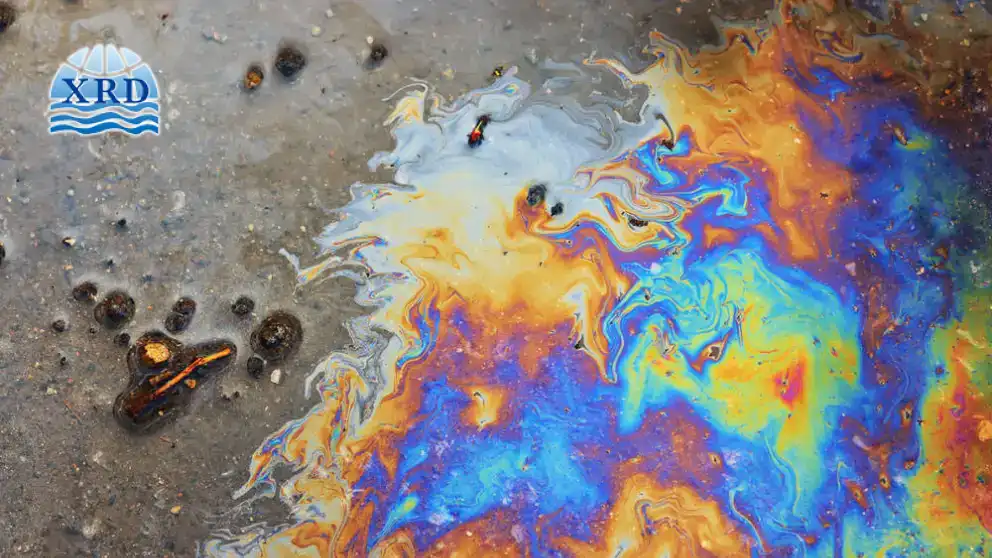
Oily wastewater is a common challenge across multiple industries, including petroleum extraction, metal machining, automotive manufacturing, and food processing. These waste streams often contain finely dispersed oil droplets stabilized in water, forming what is known as oil-in-water (O/W) emulsions.
Unlike free oil that can be removed by gravity separation, emulsified oil is highly stable due to the presence of surfactants and mechanical shear forces during production. These factors prevent oil droplets from coalescing, making conventional separation methods ineffective.
To address this, chemical demulsification becomes essential. Among various options, calcium chloride (CaCl₂) stands out as a cost-effective and highly efficient solution for destabilizing emulsions and enabling rapid oil-water separation.
The Science of Emulsion Breaking (Demulsification)
Why Emulsions Are Stable
The stability of oil-water emulsions is mainly governed by:
- Surface-active agents (surfactants): These reduce interfacial tension and form a protective film around oil droplets
- Electrical double layer: Negatively charged oil droplets repel each other
- Zeta potential: A key indicator of electrostatic stability preventing coalescence
How Calcium Chloride Works
Calcium chloride breaks emulsions through multiple mechanisms:
1. Charge Neutralization
Divalent calcium ions (Ca²⁺) neutralize the negative surface charge of oil droplets, reducing electrostatic repulsion and allowing droplets to come closer.
2. Salting-Out Effect
Calcium chloride reduces the solubility of surfactants in water, weakening their ability to stabilize emulsions.
3. Bridging and Flocculation
Calcium ions promote aggregation by forming bridges between droplets, leading to larger flocs that separate more easily.
Benefits of Using Calcium Chloride (CaCl₂)
Cost-Effectiveness
Compared to organic demulsifiers, calcium chloride is significantly more economical, especially for large-scale industrial applications.
Versatility
It performs well across a wide range of oily wastewater types, including:
- Synthetic emulsions
- Cutting fluids
- High-COD industrial effluents
Operational Simplicity
Calcium chloride is easy to:
- Store (solid or liquid form)
- Dissolve in water
- Dose using standard chemical feeding systems
Environmental Compatibility
Unlike some aluminum or iron salts, calcium chloride generally has less impact on downstream biological treatment processes when properly dosed.
Step-by-Step Guide to the Treatment Process
1. Pre-Treatment (pH Adjustment)
Adjusting pH is critical for optimal performance. Calcium chloride typically works best under neutral to slightly acidic conditions (pH 5.5–7.5).
2. Chemical Dosing
- Conduct jar tests to determine optimal dosage
- Typical dosing ranges depend on oil concentration and emulsion stability
3. Mixing and Reaction
- Rapid mixing (G-value high): Ensures uniform dispersion of CaCl₂
- Slow mixing (flocculation stage): Promotes growth of larger oil flocs
4. Separation
After floc formation, separation can be achieved via:
- Dissolved Air Flotation (DAF)
- Gravity sedimentation
The treated water should then be evaluated for residual oil content, turbidity, and COD.
Comparison with Other Chemical Methods
Calcium Chloride vs. Aluminum Salts (Alum / PAC)
- Lower sludge production in many cases
- Less sensitivity to pH fluctuations
- Reduced risk of aluminum residuals impacting downstream processes
Calcium Chloride vs. Magnesium Salts
- Calcium salts are generally more effective in destabilizing certain surfactant-stabilized emulsions
- Magnesium may perform better in specific high-alkalinity systems
Synergistic Use with PAM
Combining calcium chloride with polyacrylamide (PAM) can:
- Accelerate floc formation
- Improve separation efficiency
- Enhance sludge dewaterability
Optimizing Industrial Applications and Conclusion
Key Factors for Success
- Temperature: Higher temperatures improve reaction kinetics
- Mixing intensity: Proper control of shear forces is essential
- Influent oil concentration: Higher loads require optimized dosing strategies
Practical Applications
In industries such as metal processing and automotive manufacturing, calcium chloride has demonstrated:
- Rapid emulsion breaking
- Improved oil removal efficiency
- Reduced operational costs
Future Trends
With increasing regulatory pressure, industries are moving toward:
- Zero Liquid Discharge (ZLD) systems
- Integrated chemical + membrane treatment solutions
- More sustainable and low-sludge chemical programs
Conclusion
Calcium chloride has proven to be a foundational chemical in oily wastewater treatment. Its ability to effectively destabilize emulsions, combined with low cost and operational simplicity, makes it a preferred choice for engineers seeking reliable and scalable demulsification solutions.
As industries continue to demand higher efficiency and sustainability, calcium chloride will remain a key component in advanced wastewater treatment strategies.