
Introduction: Why Redox Control Matters in Mining Water Systems
Tailings ponds and open pit water systems often contain oxidized, highly mobile, and toxic contaminants generated during ore processing and long-term exposure to air and water. Among these, hexavalent chromium (Cr⁶⁺) and cyanide (CN⁻) pose particularly high environmental and regulatory risks due to their toxicity, persistence, and tendency to migrate with groundwater.
In such systems, oxidation–reduction potential (ORP / Eh) is not just a monitoring parameter—it directly determines contaminant speciation, toxicity, and removal feasibility.
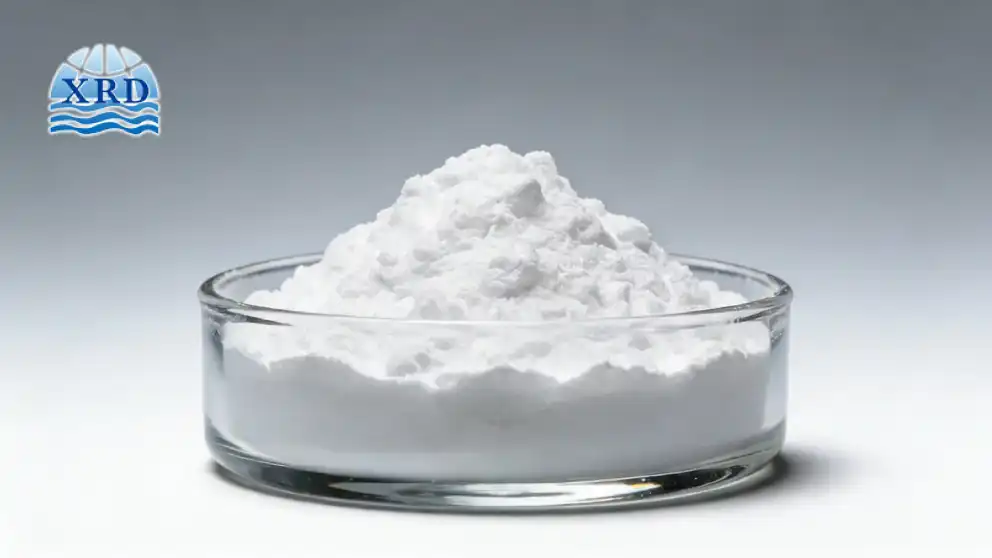
Sodium metabisulfite (Na₂S₂O₅) is widely used in mining water treatment as a powerful and controllable reducing agent to stabilize redox conditions and convert hazardous oxidized species into safer, removable forms.
Chemical Profile of Sodium Metabisulfite in Water Treatment
Sodium metabisulfite is a sulfur-based reducing agent that hydrolyzes in water to form bisulfite (HSO₃⁻) and, under acidic conditions, sulfur dioxide (SO₂). These species exhibit strong electron-donating capability, making sodium metabisulfite highly effective for redox-driven detoxification processes.
Key characteristics relevant to tailings and pit water treatment include:
- Strong reducing power under controlled pH
- Rapid reaction kinetics with oxidized contaminants
- Lower cost compared with advanced oxidation or adsorption systems
- Ability to fine-tune system ORP without introducing heavy metals
Reduction of Hexavalent Chromium (Cr⁶⁺) to Trivalent Chromium (Cr³⁺)
Why Cr⁶⁺ Is a Critical Concern
Hexavalent chromium is highly toxic, carcinogenic, and readily soluble, making it difficult to control once released into mine water. In contrast, trivalent chromium (Cr³⁺) has significantly lower toxicity and can be efficiently removed via precipitation.
Reaction Mechanism and Operating Conditions
Under acidic conditions (typically pH 2–4), sodium metabisulfite reduces Cr⁶⁺ (commonly present as dichromate, Cr₂O₇²⁻) to Cr³⁺. During the reaction, metabisulfite is oxidized to sulfate.
Overall ionic reaction:
3S₂O₅²⁻ + 2Cr₂O₇²⁻ + 10H⁺ → 6SO₄²⁻ + 4Cr³⁺ + 5H₂O
This reaction proceeds rapidly and reliably when pH and dosage are properly controlled.
Performance Advantages
Compared with sodium sulfite, sodium metabisulfite generates SO₂ / HSO₃⁻ species with higher reactivity in acidic environments, allowing:
- High removal efficiency (>99% Cr⁶⁺ reduction reported)
- Effective operation over a broader pH window
- Lower reagent consumption for equivalent redox control
Treatment of Cyanide-Containing Tailings Slurry
Cyanide Challenges in Gold and Base Metal Mining
Cyanide is commonly used in gold extraction and may persist in tailings water as free cyanide or weakly complexed forms. Without proper treatment, cyanide poses acute toxicity risks to aquatic ecosystems.
Role of Sodium Metabisulfite in Cyanide Detoxification
In alkaline conditions, sodium metabisulfite works synergistically with dissolved oxygen to regulate ORP and promote the conversion of cyanide (CN⁻) into less toxic species such as cyanate (OCN⁻), which can further decompose into CO₂ and N₂.
Unlike direct oxidation systems, sodium metabisulfite moderates the redox environment, preventing uncontrolled reactions while still driving detoxification forward.
Typical Operating Parameters
- pH: approximately 10.0–10.5
- Dosage example: ~4.0 g/L Na₂S₂O₅
- Reported performance: reduction of cyanide from 165 mg/L to ~0.105 mg/L, meeting discharge standards
This approach is particularly attractive for remote or large-volume tailings systems where simplicity and chemical robustness are critical.
The Importance of pH Control in Redox Stabilization
pH control is the single most critical factor governing sodium metabisulfite performance:
-
Cr⁶⁺ reduction: Requires acidic conditions (pH 2–4)
- If pH < 2, excessive decomposition to SO₂ gas occurs, leading to reagent loss and safety concerns
- Cyanide treatment: Requires alkaline conditions (around pH 10) to ensure reaction selectivity and prevent HCN volatilization
Effective treatment systems always integrate pH adjustment and ORP monitoring alongside chemical dosing.
Post-Treatment Considerations: From Reduction to Removal
It is important to note that sodium metabisulfite does not physically remove metals from water. Instead, it converts contaminants into forms that can be removed downstream.
For chromium treatment, this means:
- Reduce Cr⁶⁺ to Cr³⁺ under acidic conditions
- Raise pH to ~8–9
- Precipitate Cr³⁺ as Cr(OH)₃
- Remove solids via clarification, thickening, or filtration
Without this second step, reduced metals will remain in solution.
Why Sodium Metabisulfite Is Widely Used in Mining Water Treatment
From an engineering and cost perspective, sodium metabisulfite offers a balanced combination of:
- High redox efficiency
- Predictable reaction behavior
- Compatibility with existing pH adjustment and clarification systems
- Lower capital and operating costs compared with advanced treatment technologies
When applied with proper process control, it becomes a reliable tool for stabilizing redox conditions and mitigating environmental risk in tailings ponds and pit water systems.
Conclusion
Sodium metabisulfite plays a critical role in modern mining water treatment by precisely controlling oxidation–reduction conditions. Whether reducing toxic Cr⁶⁺ to removable Cr³⁺ or facilitating cyanide detoxification under alkaline conditions, its effectiveness depends on correct pH management, dosage control, and downstream treatment integration.
For operations seeking a cost-effective, proven, and flexible redox control strategy, sodium metabisulfite remains one of the most practical chemical solutions available for tailings and pit water treatment.