
Across municipal and industrial wastewater treatment plants, sludge dewatering has quietly become one of the fastest-rising operating cost centers. Higher disposal fees, stricter environmental standards, volatile energy prices, and persistent technical bottlenecks are pushing sludge handling costs upward year after year.
Yet in many facilities, the response remains reactive—higher polymer dosage, higher pressure, longer cycles—often worsening the very problems operators are trying to solve.
In reality, polymer selection and conditioning strategy sit at the center of sludge dewatering economics. When optimized correctly, they do far more than improve cake dryness: they reduce energy demand, stabilize operation, and unlock downstream disposal or reuse options.
This article breaks down why dewatering costs keep rising and how smarter polymer selection can reverse the trend.
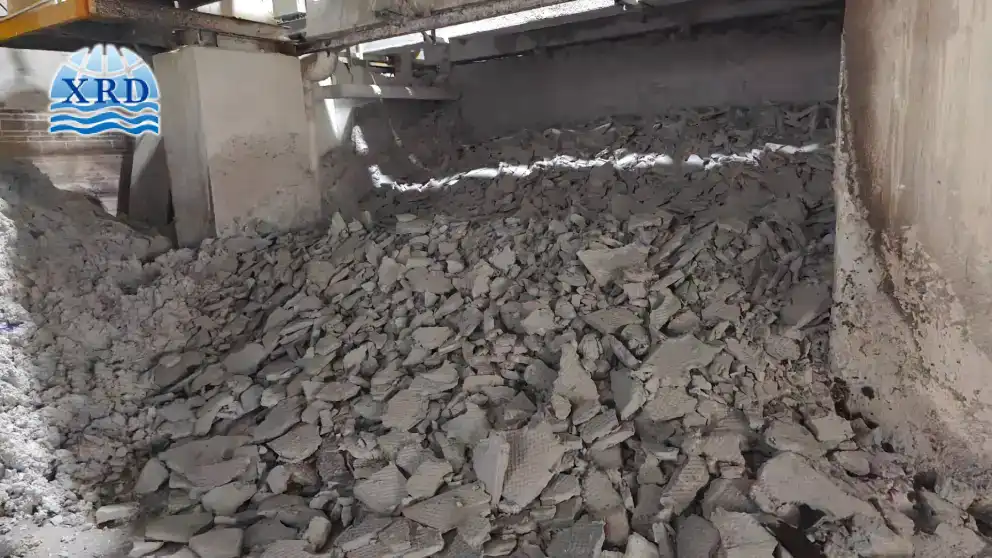
Why Sludge Dewatering Costs Keep Rising
1. More Sludge, Higher Standards
Urbanization, expanded sewer networks, and plant upgrades have dramatically increased sludge production. At the same time, regulatory requirements for sludge stabilization, disposal, and resource recovery have tightened.
Facilities are no longer judged solely on whether sludge is removed—but on how dry, how stable, and how reusable the final cake is. Meeting these standards often requires upgraded equipment, higher pressures, and more intensive conditioning, all of which increase capital and operating costs.
2. Energy and Chemical Price Pressure
Mechanical dewatering and thermal drying are energy-intensive processes. Fluctuating electricity and fuel prices directly translate into higher cost per ton of sludge handled.
On the chemical side, traditional conditioners—especially cationic polyacrylamide (CPAM)—are sensitive to raw material price swings. Simply increasing dosage to chase better cake dryness may improve short-term results but quickly inflates chemical spend without proportional performance gains.
3. Structural Limits of Conventional Conditioning
Relying solely on standard polymers creates several hidden cost drivers:
- Overdosing traps water inside dense flocs, increasing cake moisture
- Filtrate quality deteriorates, raising the load on downstream treatment
- Cake structure remains weak, limiting reuse options such as land application or building materials
- Press cycles lengthen, increasing energy consumption and equipment wear
In many cases, higher chemical cost is only the visible part of a much larger inefficiency.
4. The Legacy of “Water First, Sludge Later”
Historically, sludge management received less attention than liquid treatment. Many plants are still catching up—retrofitting systems, upgrading presses, and rebuilding operational know-how.
These necessary investments are real, but how polymers are selected and applied determines whether those investments pay off or underperform.
How Smarter Polymer Selection Fixes the Cost Problem
1. Match the Polymer to the Sludge — Not the Other Way Around
Sludge is not a uniform material. Its dewatering behavior depends on:
- Organic content
- Surface charge
- Particle size distribution
- Biological activity
Activated sludge with high organic content behaves like a hydrophilic colloid, binding water tightly. In these cases, cationic polymers with appropriate charge density are required to neutralize surface charges and form permeable floc structures.
Laboratory jar tests and pilot trials should focus not only on cake dryness, but also on:
- Filtrate clarity
- Floc strength under shear
- Press cycle time
This prevents “false optimization” driven by appearance alone.
2. Optimize Dosage with Process Feedback
More polymer does not equal better dewatering.
Modern plants increasingly use:
- Online solids and flow monitoring
- Filtrate turbidity feedback
- Automated dosing control
Dynamic dosage adjustment ensures the polymer dose responds to real sludge conditions, minimizing chemical consumption while maintaining stable operation.
This alone can reduce polymer usage significantly without sacrificing performance.
3. Move Toward High-Efficiency and Composite Conditioners
Advanced conditioning strategies are gaining traction:
- Composite systems combining inorganic coagulants (iron or aluminum salts) with lower polymer doses
- Bio-chemical conditioning, where biological pretreatment disrupts sludge structure before chemical flocculation
These approaches:
- Release bound water more effectively
- Reduce total chemical demand
- Improve cake permeability and press throughput
The result is lower energy consumption and shorter cycle times, not just drier cake.
4. Align Polymer Choice with the Final Disposal Path
Polymer selection should never be isolated from downstream use:
- Land application requires low-toxicity, biodegradable conditioners
- Building material or co-processing requires polymers that do not interfere with combustion or solidification
- Incineration benefits from polymers that improve calorific value rather than dilute it
A polymer that maximizes press performance but limits disposal options may increase total lifecycle cost, even if dewatering looks “successful” on paper.
5. Combine Chemical Optimization with Advanced Dewatering Technologies
When properly conditioned, sludge becomes far more responsive to advanced processes such as:
- High-pressure membrane filter presses
- Electro-dewatering
- Two-stage mechanical + thermal systems
Effective polymer conditioning lowers specific resistance, allowing:
- Lower operating pressure
- Shorter press times
- Reduced energy input per ton
The synergy between chemistry and mechanics is where the biggest cost reductions occur.
Looking Ahead: From Cost Control to Value Creation
Sludge dewatering is no longer just about meeting disposal limits. It is increasingly about controlling energy use, minimizing chemical dependency, and enabling resource recovery.
Future trends point toward:
- Smarter, data-driven polymer dosing
- Environmentally compatible conditioning agents
- Integration with AI-assisted dewatering control systems
Plants that treat polymer selection as a strategic process variable, rather than a consumable expense, will be best positioned to stabilize costs and improve long-term sustainability.
Conclusion
Rising sludge dewatering costs are driven by larger volumes, stricter regulations, higher energy prices, and the limitations of conventional conditioning strategies.
The solution is not cheaper chemicals—but smarter polymer selection and application.
By:
- Precisely matching polymers to sludge characteristics
- Optimizing dosage with real-time feedback
- Adopting high-efficiency composite and bio-chemical approaches
- Aligning conditioning with final disposal or reuse pathways
facilities can reduce total operating cost, improve reliability, and turn sludge handling from a financial burden into a controllable, optimized process.