
In municipal wastewater treatment plants, sudden fluctuations in influent flow or composition — commonly known as shock loads — can destabilize biological systems within hours.
One of the most critical parameters affected during shock events is pH. When pH drops too quickly or rises beyond optimal limits, nitrification slows, denitrification collapses, sludge floc structure weakens, and effluent compliance becomes at risk.
Two widely used alkalinity sources — Sodium Bicarbonate (NaHCO₃) and Soda Ash (Na₂CO₃) — are frequently applied to stabilize pH. While both provide alkalinity, their chemical behavior, buffering capacity, and operational roles differ significantly.
Understanding when and how to use each chemical is key to maintaining process stability during shock loading.
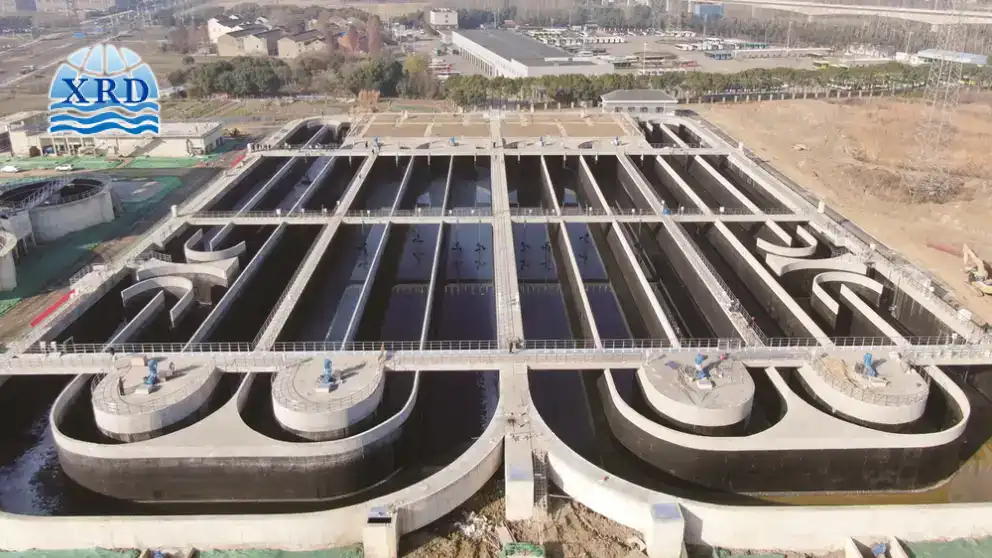
Why pH Stability Matters During Shock Loads
Biological wastewater treatment processes typically operate best within a narrow pH range:
- Activated sludge: 6.5 – 8.0
- Nitrification: 7.0 – 8.2
- Denitrification: 6.8 – 7.5
When influent contains:
- Industrial acidic discharge
- High sulfate or ammonia oxidation loads
- Low-alkalinity stormwater dilution
- Fermentation byproducts
The system may experience rapid pH decline.
For every 1 mg of NH₄⁺-N oxidized during nitrification, approximately 7.14 mg of alkalinity (as CaCO₃) is consumed. Without sufficient buffering capacity, nitrification can collapse within a short period.
This is where alkalinity supplementation becomes essential.
Sodium Bicarbonate (NaHCO₃): The Controlled Buffer
Sodium bicarbonate is a mild alkali and an excellent buffering agent. It is particularly effective for maintaining biological stability rather than aggressively raising pH.
Key Advantages
1. Gentle pH Adjustment
NaHCO₃ reacts moderately with acids. It increases pH gradually without causing overshoot, making it safe for sensitive microbial systems.
Unlike strong bases such as NaOH, bicarbonate does not create sudden pH spikes that can shock nitrifying bacteria.
2. Strong Buffering Capacity (pH 6.5–8.5)
The HCO₃⁻ / CO₃²⁻ equilibrium system provides buffering around neutral pH — precisely where biological treatment operates.
This buffering action:
- Resists sudden acid swings
- Stabilizes microbial metabolism
- Maintains consistent sludge settleability
3. Supports Biological Nitrogen Removal
Denitrifying bacteria require alkalinity to convert nitrate into nitrogen gas. Sodium bicarbonate directly supplies usable bicarbonate alkalinity.
4. Operational Safety
- Lower corrosivity than strong alkalis
- Safer handling and storage
- Suitable for continuous dosing
Best Use Scenario
- Routine operation
- Mild pH fluctuations
- Alkalinity deficiency in nitrification systems
- Biological nutrient removal processes
In most municipal plants, sodium bicarbonate serves as the primary stabilizing agent.
Soda Ash (Na₂CO₃): The Rapid pH Corrector
Soda ash is a stronger alkali than sodium bicarbonate. It is more effective for rapid neutralization of severe acidic conditions.
Key Advantages
1. Faster pH Elevation
Na₂CO₃ neutralizes strong acids more efficiently than NaHCO₃. It is suitable when influent pH drops below 5.5–6.0 due to industrial discharge or unexpected contamination.
2. Enhances Coagulation Performance
By increasing pH and alkalinity, soda ash can:
- Improve aluminum or ferric coagulant efficiency
- Promote floc formation
- Improve suspended solids removal
3. Heavy Metal Precipitation
Carbonate ions can react with certain metal ions (e.g., Ca²⁺, Mg²⁺, Pb²⁺, Zn²⁺) to form insoluble carbonates, assisting in:
- Water softening
- Partial heavy metal removal
Limitations
- Buffering range mainly effective above pH 8.5
- Risk of pH overshoot near neutral conditions
- Requires tighter dosing control
Best Use Scenario
- Severe acidic shock loads
- Emergency pH correction
- Pretreatment systems with heavy metal concerns
Soda ash is often used as a corrective agent, not a fine-control buffer.
Shock Load Management Strategy: Combined Approach
In real municipal operations, the most effective strategy is often integrated dosing.
Scenario 1: Routine Stability & Minor Fluctuations
Primary dosing: Sodium Bicarbonate
- Maintain alkalinity reserve
- Keep pH within 6.8–7.5
- Protect nitrification
Scenario 2: Sudden Acidic Discharge (pH < 5.5)
Step 1: Apply Soda Ash for rapid correction
Step 2: Transition to Sodium Bicarbonate for stabilization
This two-stage approach:
- Quickly restores safe pH range
- Prevents overshoot
- Rebuilds buffering capacity
Scenario 3: Chronic Alkalinity Deficiency in BNR Systems
Continuous low-dose Sodium Bicarbonate supplementation is recommended to maintain stable denitrification.
Operational Considerations
When selecting between NaHCO₃ and Na₂CO₃, consider:
- Influent pH level
- Alkalinity demand (mg/L as CaCO₃)
- Nitrification loading rate
- Chemical feed system control precision
- Cost per equivalent alkalinity
- Storage and safety constraints
Overdosing either chemical can lead to:
- Elevated effluent pH
- Poor settling
- Scaling in pipes
- Process imbalance
Jar testing and real-time alkalinity monitoring are strongly recommended during shock events.
Practical Comparison
| Parameter | Sodium Bicarbonate | Soda Ash |
|---|---|---|
| Chemical Strength | Mild | Moderate |
| Speed of pH Rise | Gradual | Faster |
| Buffering Range | 6.5–8.5 | 8.5–10.5 |
| Biological Safety | Very High | Moderate |
| Best For | Stabilization | Emergency correction |
| Risk of Overshoot | Low | Medium |
Final Insight: Buffer vs Booster
In municipal wastewater shock load management:
- Sodium Bicarbonate is the buffer — maintaining stability and protecting biology.
- Soda Ash is the booster — correcting severe acidity when fast action is required.
The goal is not simply raising pH, but maintaining process resilience.
Plants that design alkalinity management proactively — rather than reactively — experience:
- More stable nitrification
- Better sludge settleability
- Lower chemical waste
- Improved compliance margins
Shock loads are inevitable. Instability is not.
Strategic alkalinity management makes the difference.