
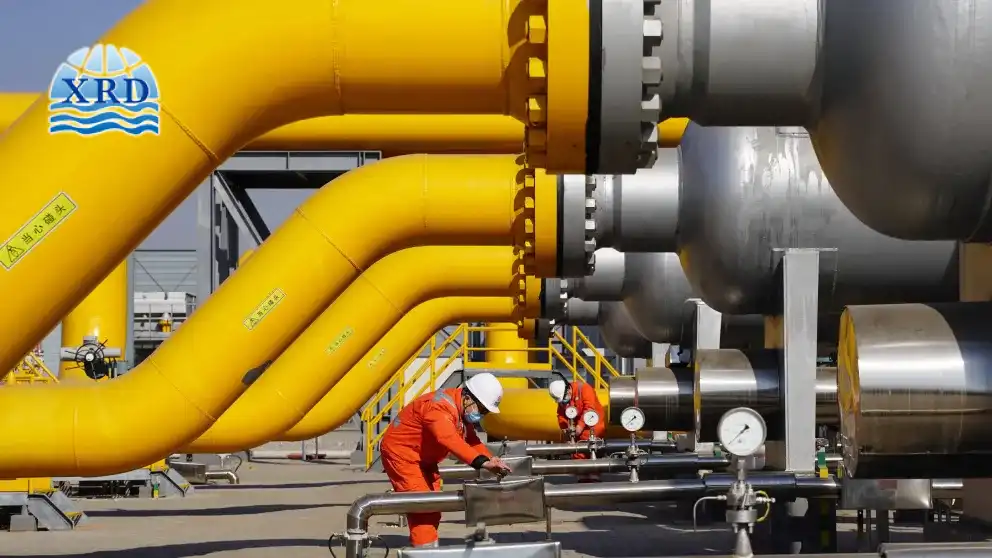
Industrial gas systems are becoming increasingly sensitive to moisture contamination. Whether in natural gas transportation, hydrogen purification, or cryogenic air separation, even trace levels of water vapor can trigger corrosion, hydrate blockage, catalyst poisoning, or catastrophic shutdowns. As industries pursue lower energy consumption and higher operational reliability, calcium chloride drying technology is emerging as a highly efficient and cost-effective solution for deep gas dehydration.
This article explores how high-performance calcium chloride desiccants are redefining gas drying across multiple industries, from upstream natural gas gathering stations to fuel-cell-grade hydrogen purification systems.
The Lifeline of Industrial Gas Drying: Why Deep Dehydration Is Non-Negotiable
The Fatal Consequences of Excess Moisture
Natural Gas Pipelines: Hydrate Formation and Corrosion Risks
In natural gas transmission systems, water vapor becomes extremely dangerous under high-pressure and low-temperature conditions. Moisture combines with methane and other hydrocarbons to form gas hydrates — ice-like crystalline structures capable of blocking pipelines, valves, and separators.
Beyond hydrate plugging, dissolved acidic gases such as H₂S and CO₂ create corrosive acidic condensates that attack pipelines, compressors, and storage vessels. Without effective gas dehydration, operators face severe maintenance costs, production downtime, and safety hazards.
Fuel Hydrogen: Moisture as a Hidden Contaminant
Hydrogen applications demand exceptionally low moisture levels. In proton exchange membrane (PEM) fuel cells, excessive water vapor can poison membrane performance and reduce electrochemical efficiency.
For hydrogen refueling stations operating at 45 MPa or 90 MPa, moisture also threatens compressor seals, storage cylinders, and metal liners through corrosion and embrittlement. Deep hydrogen drying is therefore essential for both operational reliability and safety compliance.
Air Separation Plants: The Silent Threat of Ice Blockage
Cryogenic air separation units (ASUs) are highly vulnerable to moisture intrusion. Water vapor entering cryogenic heat exchangers freezes instantly, causing ice blockage and process shutdowns.
Additionally, molecular sieve adsorbents inside purification systems suffer from “water poisoning,” reducing their ability to remove CO₂ and hydrocarbons efficiently. Reliable pre-drying is critical to maintaining long-term ASU stability.
The Bottlenecks of Traditional Drying Technologies
Molecular Sieves: Ultra-Low Dew Point at a High Cost
Molecular sieves can achieve extremely deep dew points, but their disadvantages are substantial:
- High regeneration energy consumption
- Frequent switching cycles
- Significant pressure drop losses
- High initial investment costs
In many industrial scenarios, operators struggle to balance drying performance with operational efficiency.
Silica Gel and Activated Alumina: Limited Capacity
Silica gel and activated alumina are economical options, but they suffer from several limitations:
- Lower moisture adsorption capacity
- Reduced performance under high humidity
- Mechanical degradation when exposed to liquid water
- Frequent replacement requirements
These drawbacks become increasingly problematic in large-scale continuous gas processing systems.
The Breakthrough Value of Calcium Chloride Desiccants
Calcium chloride is reshaping industrial dehydration strategies by offering a unique balance between cost efficiency, moisture capacity, and operational simplicity.
Its major advantages include:
- Extremely high hygroscopic capacity
- Low regeneration temperature requirements
- Strong tolerance to fluctuating humidity loads
- Natural deliquescent behavior for aggressive water capture
- Lower overall energy consumption
As industries seek energy-efficient gas drying technologies, calcium chloride is becoming a preferred solution for both standalone drying systems and hybrid dehydration processes.
Technical Insights: The Core Mechanism and Advantages of Calcium Chloride Drying
From Deliquescence to Chemical Absorption
Calcium chloride removes moisture through both physical absorption and chemical hydration reactions.
Anhydrous calcium chloride readily absorbs water vapor and converts into hydrated forms such as:
- Calcium chloride dihydrate
- Calcium chloride tetrahydrate
- Calcium chloride hexahydrate
Eventually, continued moisture absorption forms concentrated brine solutions through deliquescence.
This multi-stage absorption process gives calcium chloride a significantly higher moisture holding capacity than many conventional desiccants.
Calcium Chloride vs Molecular Sieve vs Activated Alumina
| Parameter | Calcium Chloride | Molecular Sieve | Activated Alumina |
|---|---|---|---|
| Moisture Capacity | Very High | Medium | Medium |
| Achievable Dew Point | Moderate to Deep | Ultra-Deep | Moderate |
| Regeneration Temperature | 180–200°C | 250–320°C | 200–250°C |
| Mechanical Strength | Moderate | High | High |
| Liquid Water Tolerance | Excellent | Poor | Limited |
| Relative Cost | Low | High | Medium |
The Unique Role of Calcium Chloride in Hybrid Drying Systems
One of the most effective industrial configurations combines calcium chloride pre-drying with downstream temperature swing adsorption (TSA).
In this arrangement:
- Calcium chloride removes the bulk moisture load.
- Molecular sieves handle final ultra-low dew point polishing.
- Adsorbent life is dramatically extended.
- Energy consumption is significantly reduced.
This “protective pre-dehydration layer” concept is becoming increasingly important in LNG plants and hydrogen purification systems.
Environmental and Economic Benefits
Calcium chloride offers attractive sustainability advantages:
- Non-toxic and odorless
- Relatively simple waste handling
- Lower regeneration energy demand
- Reduced carbon footprint through waste heat utilization
Many facilities can regenerate calcium chloride using existing industrial waste heat streams, improving overall plant energy efficiency.
Application Scenario 1: Natural Gas Purification and Transportation
Three-Stage Protection at Wellheads and Gathering Stations
Hydrate Prevention, Corrosion Control, and Blockage Mitigation
Low-pressure and marginal gas wells often require compact, maintenance-light dehydration systems.
Calcium chloride packed-bed dryers provide:
- Hydrate prevention
- Corrosion protection
- Pipeline blockage mitigation
In some applications, they can partially replace or supplement glycol injection systems while operating without complex power infrastructure.
Front-End Deep Drying for LNG Liquefaction Plants
Why LNG Requires Ultra-Low Dew Points
LNG production requires extremely low pressure dew points, often below -40°C.
A hybrid dehydration process using calcium chloride and molecular sieves delivers major advantages:
- Bulk water removal by calcium chloride
- Protection of expensive molecular sieve beds
- Extended sieve service life by 2–3 times
- Reduced regeneration frequency
This significantly lowers total operating costs in LNG pretreatment systems.
Adaptability for Skid-Mounted and Unmanned Stations
Calcium chloride dryers are especially suitable for:
- Remote gas wells
- Offshore platforms
- Unmanned gathering stations
- Modular skid-mounted systems
Their simple structure and long maintenance intervals reduce operational complexity in difficult environments.
Application Scenario 2: Hydrogen Drying for Industrial and Fuel Cell Applications
Primary Drying for Byproduct Hydrogen and Reformer Hydrogen
High Moisture and Acidic Impurity Handling
Hydrogen generated from chlor-alkali processes or methanol reforming often contains large amounts of moisture and acidic impurities.
Calcium chloride performs exceptionally well as a primary drying medium because of:
- High moisture capacity
- Strong acid tolerance
- Stable operation under fluctuating gas compositions
Pre-Dehydration Before PSA Hydrogen Purification
Protecting Downstream Catalysts and Adsorbents
Pressure swing adsorption (PSA) systems are highly sensitive to moisture contamination.
Calcium chloride pre-drying helps:
- Reduce water load entering PSA units
- Capture trace chloride contaminants
- Protect downstream noble metal catalysts
- Improve PSA efficiency and longevity
This hybrid approach improves both hydrogen purity and equipment reliability.
Dew Point Protection for Hydrogen Refueling Compressors
At ultra-high pressures, water vapor becomes extremely dangerous.
Calcium chloride dryers help reduce:
- Compressor power consumption
- Pressure drop losses
- Corrosion risks in storage cylinders
- Seal degradation under high-pressure cycling
Their low-pressure-drop characteristics are particularly valuable in hydrogen fueling infrastructure.
Application Scenario 3: Air Separation and Cryogenic Safety Protection
Combined Moisture and CO₂ Removal Strategy
Reducing the Burden on Molecular Sieves
Large cryogenic ASUs increasingly use calcium chloride as a front-end pre-drying layer before molecular sieve purifiers.
This strategy allows:
- Calcium chloride to absorb most inlet moisture
- Molecular sieves to focus on CO₂ removal
- Reduced adsorbent regeneration costs
- Longer molecular sieve operating cycles
In some systems, calcium chloride removes up to 80% of incoming water vapor before the gas reaches the purification unit.
Preferred Solution for Portable and Mobile ASUs
Portable oxygen generators and mobile air separation systems require lightweight and energy-efficient drying solutions.
Calcium chloride dryers provide:
- Heater-free operation options
- Regenerable structures
- Compact equipment size
- Lower system complexity
These benefits are particularly useful in field hospitals, mining operations, and high-altitude oxygen supply vehicles.
Reliable Performance in Humid and Coastal Regions
High-humidity environments create severe challenges for compressor intake systems.
Calcium chloride drying systems help stabilize operations in:
- Coastal industrial zones
- Tropical climates
- Rainy-season environments
- High salt-fog regions
Their strong moisture absorption capacity provides critical protection for downstream cryogenic equipment.
Selection, Regeneration, and Optimization of Calcium Chloride Drying Systems
Choosing the Right Calcium Chloride Form
Granular Calcium Chloride
Advantages include:
- Lower pressure drop
- Suitable for long gas flow paths
- Better gas distribution
Spherical Calcium Chloride
Advantages include:
- Higher surface area
- Improved gas-solid contact efficiency
- Faster moisture absorption kinetics
Selecting the correct particle structure directly affects drying efficiency and operational stability.
The Simplified Rules of TSA Regeneration
Efficient regeneration is essential for maximizing desiccant lifespan.
Recommended practices include:
- Regeneration temperature: 180–200°C
- Controlled heating curves
- Proper regeneration gas flow management
- Avoiding excessive drying that may cause bed hardening
Using industrial waste heat for regeneration can significantly reduce operating costs.
Troubleshooting Common Operational Problems
Monitoring Calcium Chloride Loss
Brine carryover may cause gradual desiccant loss.
Operators should monitor:
- Outlet chloride concentration
- Pressure drop fluctuations
- Moisture breakthrough trends
Diagnosing Channeling and Gas Short-Circuiting
Bed channeling reduces contact efficiency and creates uneven drying performance.
Common solutions include:
- Repacking the desiccant bed
- Improving gas distribution design
- Replacing degraded packing materials
Routine monitoring is critical for long-term system stability.
Future Trends and Industry Outlook
Research into composite calcium chloride desiccants is accelerating.
Emerging developments include:
- Enhanced mechanical stability
- Improved regeneration efficiency
- Composite carrier-supported calcium chloride
- Hybrid adsorption technologies
These innovations are expected to further expand calcium chloride applications in hydrogen energy, LNG infrastructure, and next-generation industrial gas processing.