
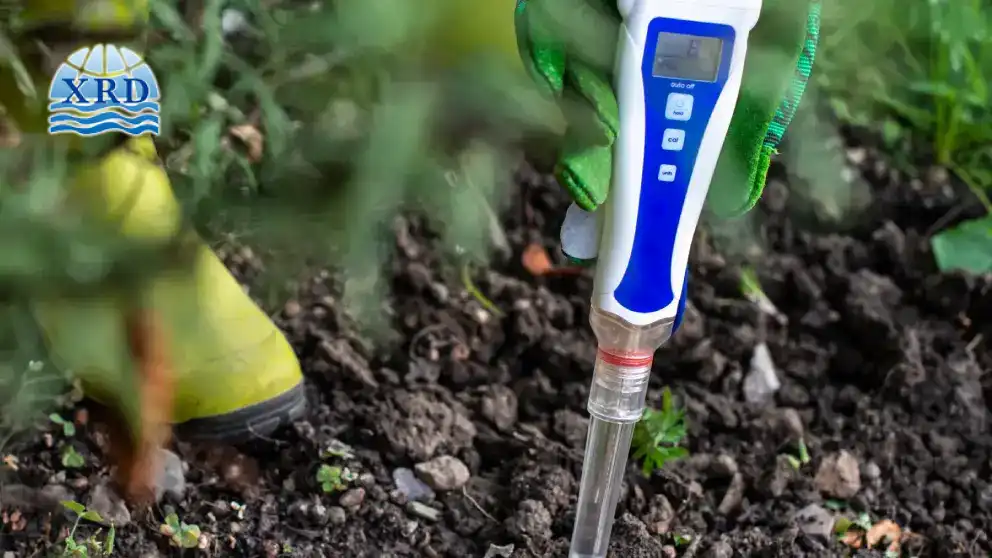
Saline-alkali agricultural land is one of the most underestimated barriers to global food security. Across arid and semi-arid regions, salt accumulation and sodium dominance gradually turn once-productive farmland into compacted, poorly drained, and low-yielding soil. While traditional remediation methods such as flooding, drainage engineering, and organic amendments remain useful, they often require high capital investment, large water inputs, or extended treatment cycles.
Among chemical soil amendments, calcium chloride has gained increasing attention as a fast-acting calcium source capable of improving saline-sodic soils through both chemical displacement and physical soil restructuring. More than simply supplying calcium nutrition, calcium chloride helps unlock sodium-damaged soils and restore agricultural productivity.
The Silent Crisis of Saline-Alkali Land: Farmland Locked by Salt
The Global Scale of Soil Salinization
Soil salinization affects agricultural production worldwide. According to data from the Food and Agriculture Organization (FAO), approximately 833 million hectares of land are affected by salinity globally. Large portions of arable and potentially arable land in countries such as China, India, Australia, and regions across the Middle East suffer from varying degrees of salt stress.
In China alone, saline-alkali land represents a major untapped agricultural resource. With proper soil reclamation strategies, millions of hectares of underutilized land could be converted into productive farmland, contributing significantly to grain security and rural economic development.
The Double Damage of Saline-Alkali Soils
Saline-alkali soils damage crops through two major mechanisms.
Osmotic Stress: Physiological Drought
High salt concentrations in the soil solution increase osmotic pressure, making it difficult for plant roots to absorb water. Even when soil moisture is physically present, crops behave as though they are under drought conditions.
This phenomenon, often called physiological drought, results in:
- Poor seed germination
- Wilting despite irrigation
- Stunted root development
- Reduced biomass accumulation
Ion Toxicity from Sodium and Chloride
Excessive sodium and chloride ions directly interfere with plant metabolism.
High sodium levels can:
- Damage root cell membranes
- Disrupt potassium uptake
- Inhibit enzyme activity
- Cause nutrient imbalance
Meanwhile, excessive chloride accumulation may cause leaf burn, premature senescence, and reduced photosynthetic efficiency in sensitive crops.
Collapse of Soil Physical Structure
The most destructive long-term impact of saline-alkali soils is structural degradation.
Sodium ions cause soil colloids to disperse, destroying aggregate stability. Once stable soil particles break apart:
- Soil becomes compacted and crusted
- Water infiltration declines sharply
- Aeration deteriorates
- Root penetration becomes difficult
The result is dense, hard soil with poor permeability and weak biological activity.
Limitations of Traditional Soil Reclamation Methods
Common saline soil management approaches include:
- Flood irrigation for salt leaching
- Subsurface drainage installation
- Organic matter incorporation
- Deep tillage and soil mixing
Although effective in certain conditions, these methods have limitations:
- High water consumption
- Expensive infrastructure requirements
- Slow remediation speed
- Limited effectiveness in severe sodic soils
These limitations highlight the importance of calcium-based chemical amendments.
Why Calcium Matters
Calcium is fundamental to correcting saline-alkali soil problems because it directly addresses sodium dominance on soil exchange sites.
Among available calcium sources, calcium chloride offers rapid solubility, immediate calcium availability, and efficient sodium displacement.
The Chemical Key: How Calcium Chloride Unlocks Sodium-Damaged Soil
Understanding Cation Exchange Capacity (CEC)
Soil particles carry negative charges that attract positively charged ions such as:
- Calcium (Ca²⁺)
- Magnesium (Mg²⁺)
- Potassium (K⁺)
- Sodium (Na⁺)
This holding capacity is known as cation exchange capacity (CEC).
In saline-sodic soils, sodium occupies excessive exchange sites, destabilizing soil structure.
Calcium-Sodium Exchange Mechanism
Calcium chloride works through ion exchange.
Because calcium is divalent (Ca²⁺) while sodium is monovalent (Na⁺), calcium has stronger electrostatic attraction to soil colloids.
When calcium chloride dissolves:
- It releases highly soluble Ca²⁺ ions
- Calcium replaces exchangeable sodium on soil particles
- Sodium is displaced into soil solution
Simplified reaction:
2Na–Soil + CaCl₂ → Ca–Soil + 2NaCl
This process effectively removes sodium from the soil exchange complex.
Sodium Removal Through Leaching
After displacement, sodium enters the soil solution as soluble salts.
With sufficient irrigation or rainfall:
- Sodium salts move downward through the soil profile
- Excess salts are leached below the root zone
This completes the reclamation cycle.
Without adequate leaching, sodium displacement alone is incomplete, which is why irrigation management is critical after calcium chloride application.
Calcium Chloride vs. Gypsum
Gypsum is a traditional amendment for saline-sodic soils, but calcium chloride offers several advantages.
| Property | Calcium Chloride | Gypsum |
|---|---|---|
| Solubility | Very high | Low |
| Speed of calcium release | Immediate | Slow |
| Low-temperature performance | Excellent | Moderate |
| Low-moisture efficiency | High | Lower |
Because calcium chloride dissolves rapidly, it is particularly effective in:
- Dry climates
- Cold conditions
- Low-water environments
- Drip irrigation systems
Mild Influence on Soil pH
Unlike lime materials, calcium chloride is a neutral salt.
Benefits include:
- Minimal pH disruption
- Lower risk of over-alkalization
- Better compatibility with pH-sensitive crops
This makes it suitable for targeted reclamation strategies.
Soil Structure Reconstruction: Bringing Compacted Soil Back to Life
From Dispersion to Aggregation
Sodium causes soil colloids to disperse into fine particles.
Calcium reverses this effect by forming cation bridges between negatively charged particles.
This promotes:
- Flocculation
- Microaggregate formation
- Stable soil structure development
Physical Improvements in Soil
As aggregates reform, soil physical properties improve significantly.
Increased Porosity
Better aggregation creates pore spaces that:
- Improve oxygen diffusion
- Support root respiration
- Encourage microbial activity
Improved Water Infiltration
Water enters soil more efficiently, reducing:
- Surface runoff
- Waterlogging
- Evaporative salt accumulation
Enhanced Hydraulic Conductivity
Improved pore continuity facilitates:
- Downward salt movement
- Better irrigation efficiency
Reduction of Surface Crusting
Calcium treatment reduces hard surface crust formation.
Benefits include:
- Easier seedling emergence
- Lower germination failure rates
- Improved stand establishment
Long-Term Soil Resilience
Repeated calcium chloride application, combined with organic matter inputs, can gradually rebuild the plow layer.
Over time, soils gain:
- Better anti-compaction capacity
- Greater water stability
- Improved cultivation performance
Crop Response: From Root Health to Yield Improvement
Better Root Zone Environment
Higher calcium availability supports:
- Root tip integrity
- Cell wall stability
- Reduced sodium toxicity
Healthy roots can better tolerate saline conditions.
Improved Nutrient Uptake
Calcium helps suppress excessive sodium uptake while improving access to:
- Nitrogen
- Phosphorus
- Potassium
- Micronutrients
Improved soil structure also allows roots to explore larger soil volume.
Reduced Physiological Disorders
Adequate calcium supply reduces salt-induced calcium deficiency disorders such as:
- Blossom end rot in tomato
- Tip burn in leafy vegetables
- Internal browning in Chinese cabbage
Field Performance Evidence
Field trials in saline soils commonly report:
Wheat in Saline Fields
- Higher germination rates
- Better tiller establishment
- Increased grain yield
Cotton and Maize
- Greater root biomass
- Improved salt tolerance
- Higher dry matter accumulation
Greenhouse Vegetables
Tomato and cucumber production systems often show:
- Higher marketable fruit ratio
- Lower physiological defect rates
- Improved fruit firmness
Beyond Salt Removal
Calcium chloride does more than remove sodium. It creates a healthier rhizosphere that supports stronger crop growth and higher resilience.
Practical Field Guide: How to Apply Calcium Chloride for Soil Reclamation
Conduct Soil Testing First
Before application, measure:
- pH
- Electrical conductivity (EC)
- Exchangeable sodium percentage (ESP)
- Cation exchange capacity (CEC)
These indicators determine suitability and dosage.
Application Rate Guidelines
Dosage depends on sodicity severity.
General reference rates:
- Mild saline-alkali soil: 50–100 kg/mu
- Moderate saline-alkali soil: 100–200 kg/mu
- Severe saline-alkali soil: 200–300+ kg/mu
Actual rates should be calculated using sodium reduction targets and gypsum equivalent formulas.
Best Timing
Recommended application periods:
- Before autumn plowing
- Early spring land preparation
- Pre-plant basal fertilization stage
For drip-irrigated crops, split applications via fertigation are highly effective.
Application Methods
Broadcast and Incorporation
Suitable for base application:
- Uniform spreading
- Soil mixing by tillage
Solution Irrigation or Drip Application
Fastest action:
- Dissolve calcium chloride in irrigation water
- Deliver directly into root zone
Band or Spot Placement
Efficient localized treatment:
- Lower material use
- Targeted root zone improvement
Essential Supporting Measures
Calcium chloride must be combined with:
- Adequate irrigation for salt leaching
- Organic fertilizer addition for long-term stability
Without leaching, sodium remains in the system.
Safety Considerations
Calcium chloride is mildly corrosive.
Precautions:
- Rinse metal equipment after use
- Wear gloves during handling
- Avoid prolonged skin exposure to concentrated solutions
Long-Term Benefits and Future Prospects
Cost and Efficiency Comparison
Compared with gypsum, organic amendments, and desulfurized gypsum, calcium chloride offers:
- Faster reclamation
- Higher calcium availability
- Lower treatment lag time
This often translates into quicker economic returns.
Multi-Year Return on Investment
Over 3–5 years, reclaimed saline fields can transition from:
- Low-yield land → medium productivity → stable high-yield farmland
This significantly improves land asset value.
Environmental Compatibility
Calcium chloride reclamation:
- Produces no harmful byproducts
- Does not introduce additional sodium load
- Supports sustainable agricultural practices
A Practical Solution for Sustainable Agriculture
Calcium chloride offers a scientifically clear and operationally simple pathway for saline-alkali land improvement.
Its advantages include:
- Rapid sodium displacement
- Structural soil repair
- Improved crop performance
- Scalable field application
For growers, agronomists, and agricultural development programs, small-scale field trials are strongly recommended to validate application strategies under local soil conditions.
Saline-alkali land is not dead land—it is land waiting for the right chemistry. With proper calcium management, previously unproductive fields can be brought back into sustainable agricultural production.