
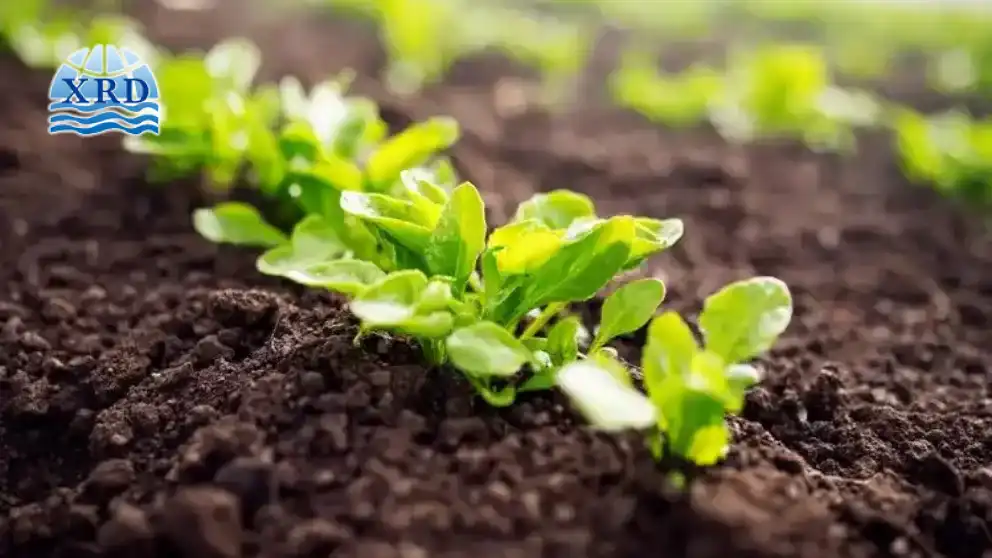
The “Structural Disease” of Sodic Soils: Why Hard, Compacted Soil and Poor Drainage Hurt Plant Growth
For many growers, sodic soil feels like an invisible enemy. After irrigation, water pools on the surface instead of soaking in. Once dry, the soil hardens into a dense crust that is difficult to break apart. Roots struggle to penetrate deeper layers, nutrient uptake becomes inefficient, and crop performance declines.
This problem is especially common in sodic or alkaline soils, where excessive sodium dominates the soil exchange complex. Under normal conditions, calcium and magnesium help soil particles bind into stable aggregates, creating pores for air and water movement. In sodic soils, however, sodium ions displace these beneficial cations.
Because sodium has a larger hydrated radius and weaker bonding properties, it causes soil clay particles to disperse rather than aggregate. The dispersed particles clog pore spaces, collapse soil structure, and reduce permeability. The result is a compacted, poorly aerated soil profile with weak infiltration and restricted root development.
Traditional soil amendments such as gypsum and elemental sulfur are often recommended for sodic soil remediation. While effective in some cases, they come with limitations. Gypsum has relatively low solubility, which slows calcium availability, while sulfur requires microbial oxidation before acidification occurs, making it temperature-dependent and slower to act. In regions where rapid improvement is needed, growers increasingly seek faster and more soluble alternatives.
Reconsidering Calcium Chloride: From Industrial Salt to Soil Structure Amendment
The word “salt” often triggers concern among growers dealing with saline or alkaline soils. However, not all salts behave the same way in soil systems. Calcium chloride, when applied appropriately, is not a contributor to sodicity—in fact, it can help reverse sodium-induced structural damage.
The effectiveness of calcium chloride lies in its highly soluble calcium content. Once dissolved, calcium ions are immediately available to interact with soil colloids.
Its action can be understood in four steps:
Ion exchange and sodium displacement
Calcium ions rapidly replace sodium ions attached to clay and organic matter surfaces. This reduces the dispersive effect of sodium and initiates flocculation.
Soil particle aggregation
As sodium is displaced, fine particles begin to re-aggregate into stable crumbs or granules. This restores soil aggregation and improves mechanical stability.
Pore space recovery
Rebuilt aggregates reopen blocked pores, increasing infiltration, drainage, and oxygen diffusion into the root zone.
Long-term sodium removal
Once sodium is displaced into the soil solution, irrigation or rainfall can leach it below the root zone—provided drainage is sufficient.
Compared with gypsum, calcium chloride offers significantly faster results because of its superior water solubility. Unlike sulfur-based amendments, it does not rely on microbial conversion, making it effective even in cool conditions or during early spring soil preparation.
Practical Application Guide: How to Use Calcium Chloride in Different Soil Management Scenarios
Before application, it is critical to confirm that the soil problem is truly sodicity rather than simply high pH. Calcium chloride is most suitable for:
- Sodic soils with high exchangeable sodium percentage (ESP)
- Soils showing dispersion, crusting, and poor infiltration
- Alkaline soils affected by sodium accumulation from irrigation water
It is less appropriate for naturally calcareous soils that already contain high calcium carbonate but suffer from unrelated nutrient issues.
Application Rate Estimation
The ideal application rate depends on soil texture, sodium levels, and cation exchange capacity (CEC). Laboratory soil analysis is the most accurate method.
As a general field guideline:
- Light sodicity: 100–300 kg/ha
- Moderate sodicity: 300–600 kg/ha
- Severe structural issues: split applications based on monitoring
A “small-dose, repeated-application” strategy is generally safer and more effective than a single heavy dose.
Best Application Methods
Pre-plant incorporation
Apply before tillage or seasonal soil preparation. Spread evenly, incorporate into the topsoil, and irrigate thoroughly.
Fertigation or drip irrigation injection
Dissolve calcium chloride and inject into irrigation systems for rapid root-zone correction. This method is highly efficient for orchards, vegetables, and greenhouse systems.
Soil drench or flushing treatment
Useful for severe localized compaction or crusting issues.
Important Irrigation Requirement
Calcium chloride is only part of the solution. Without sufficient irrigation and drainage, displaced sodium remains in the root zone and may reaccumulate. Proper leaching is essential for lasting improvement.
It is also important to clarify that calcium chloride is primarily a soil amendment in this context—not a foliar fertilizer solution.
Beyond Breaking Compaction: Additional Benefits of Calcium Chloride in Sodic Soil Systems
The benefits of calcium chloride extend beyond physical structure repair.
Improved Nutrient Availability
By displacing sodium from exchange sites, calcium opens adsorption capacity for other nutrients such as:
- Potassium
- Phosphorus
- Magnesium
- Micronutrients including zinc and iron
This improves fertilizer efficiency and reduces nutrient lock-up.
Reduced Soil-Borne Disease Pressure
Poorly structured sodic soils often create anaerobic conditions favorable to root pathogens.
Improved aeration helps suppress harmful anaerobic microorganisms while promoting healthier root-zone microbial balance. Calcium also strengthens root cell walls, improving plant resistance to physiological disorders and disease stress.
Better Crop Quality and Yield
In sodic vegetable production systems, calcium chloride application has been associated with:
- Stronger root growth
- Reduced fruit cracking in tomatoes
- Improved tuber development in potatoes
- Higher water-use efficiency
- Increased marketable yield
For crops grown in degraded alkaline soils, restoring root-zone structure often leads to both yield and quality gains.
Common Mistakes and Safety Precautions When Using Calcium Chloride
Despite its benefits, calcium chloride is not a universal soil cure.
Common Misconceptions to Avoid
It is not a pH-lowering acidifier
Calcium chloride does not significantly acidify highly calcareous soils. It addresses sodium-related structure problems, not all alkaline conditions.
More is not better
Excessive application can increase salt concentration and cause osmotic stress. Controlled rates are essential.
Do not mix indiscriminately
Avoid mixing concentrated calcium chloride with fertilizers containing:
- Sulfates
- Phosphates
These combinations may cause precipitation and reduce effectiveness.
Safe Handling Practices
Because calcium chloride is hygroscopic and irritating in concentrated form:
- Store in sealed, moisture-proof containers
- Wear gloves and dust protection during handling
- Wash equipment after use to prevent corrosion or residue buildup
Building Long-Term Soil Health: Combining Chemical Correction with Integrated Soil Management
Calcium chloride works best as a rapid-response tool—an “emergency doctor” for sodic soil structure problems.
However, long-term soil resilience requires broader management strategies.
| Strategy | Practical Measures | Expected Benefits |
|---|---|---|
| Chemical amendment | Calcium chloride, gypsum as needed | Sodium displacement, aggregation recovery |
| Physical improvement | Deep ripping, subsoiling, mulching | Reduced compaction, better infiltration |
| Biological enhancement | Compost, manure, microbial inoculants | Improved aggregation and microbial activity |
| Agronomic management | Cover crops, crop rotation, irrigation control | Reduced degradation and sustained soil function |
After structural recovery, growers should transition toward sustainable maintenance through:
- Organic matter addition
- Green manure incorporation
- Improved irrigation water management
- Periodic soil testing
Monitoring sodium levels, pH, and infiltration rates over time helps prevent recurrence and supports a healthier soil ecosystem.
Conclusion
Sodic soils are fundamentally a structural problem caused by sodium imbalance. Calcium chloride offers a fast, highly soluble, and efficient way to restore soil aggregation, improve infiltration, and reopen root-zone functionality.
When used correctly alongside irrigation, drainage, and long-term soil health practices, calcium chloride can serve as a powerful tool for reclaiming compacted sodic soils and improving crop productivity.
Rather than viewing it simply as an industrial salt, growers should recognize calcium chloride as a targeted soil management solution with practical value in modern alkaline soil remediation.