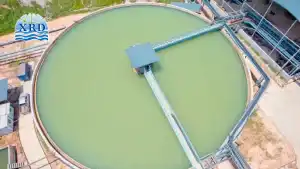
Primary clarifiers are a critical frontline unit in municipal wastewater treatment plants. Positioned upstream of biological treatment, their role is deceptively simple: separate settleable solids from water using gravity. In practice, however, poor primary clarification is one of the earliest warning signs of upstream coagulation failure and downstream process instability.
When a primary clarifier underperforms, operators often focus on hydraulic loading or mechanical faults. While these factors matter, experience shows that ineffective coagulation and floc formation remain the most common root cause. Understanding how coagulation failures propagate into primary clarifier problems is essential for stable plant operation.
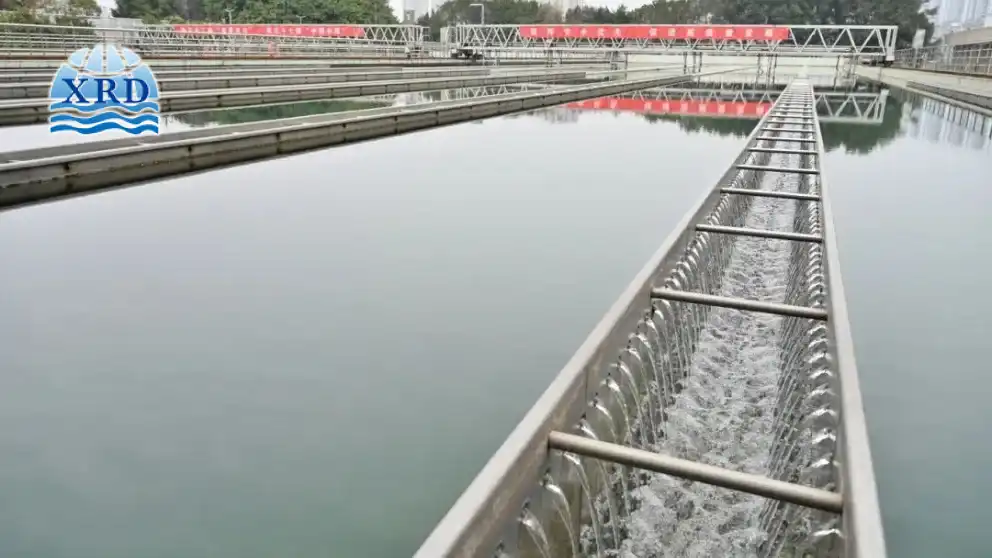
The Role of Primary Clarifiers in Municipal Wastewater Treatment
Primary clarifiers remove settleable suspended solids, grit, fibers, organic debris, and part of the particulate COD load before wastewater enters biological reactors. By reducing turbidity and organic loading, they:
- Protect downstream aeration systems and membranes
- Reduce sludge bulking risks in biological treatment
- Improve overall plant stability and effluent compliance
Depending on plant design, primary clarifiers may be horizontal-flow, vertical-flow, or radial-flow types. Regardless of configuration, their performance depends heavily on upstream coagulation quality when fine or colloidal solids dominate the influent.
Symptoms of Underperforming Primary Clarifiers
When coagulation fails or becomes unstable, primary clarifier problems usually appear in three observable ways.
1. Effluent Quality Deterioration
- Turbid primary effluent
- Elevated suspended solids (SS)
- Low COD removal efficiency
Fine particles that fail to agglomerate into dense flocs remain suspended and are easily carried over with the effluent, directly impacting downstream biological units.
2. Sludge Settling and Floating Abnormalities
- Slow or incomplete sludge settling
- Loose, fluffy sludge blankets
- Sludge flotation or chunk-like sludge rising to the surface
Sludge flotation may result from:
- Excessive sludge retention leading to anaerobic gas formation
- High oil and grease content reducing sludge density
- Poorly formed flocs that trap gas easily
3. Mechanical and Operational Signals
- Excessive sludge accumulation at the tank bottom
- Scraper vibration, slipping, or abnormal noise
- Frequent scraper chain failure or overload trips
These mechanical symptoms are often secondary consequences, not primary causes.
Root Cause Analysis: Why Coagulation Failure Undermines Primary Clarification
1. Influent Water Quality Variability
Primary clarifiers are highly sensitive to sudden changes in influent characteristics:
- High suspended solids loading beyond design capacity
- pH fluctuations outside optimal coagulation ranges
- Low water temperature (<10 °C) reducing hydrolysis and particle collision
- High oil, grease, surfactants, or soluble organics coating particle surfaces
- Low turbidity conditions, where particle collision probability is insufficient
Without adjustment, these changes can instantly degrade coagulation efficiency.
2. Coagulant and Flocculant Mismanagement
Coagulation-related failures usually fall into four categories:
-
Underdosing
Flocs remain small, weak, and slow-settling -
Overdosing
Colloids re-stabilize; oversized flocs fracture under shear -
Incorrect coagulant type
For example, aluminum sulfate performing poorly under low temperature or unstable pH, where polymerized aluminum (PAC) or iron salts would be more robust -
Improper flocculant (PAM) application
Inadequate dissolution or missing bridging effect prevents floc growth
A key diagnostic sign is poor floc visibility in the coagulation basin: flocs appear dusty, fragmented, or absent altogether.
3. Hydraulic and Process Parameter Constraints
Even well-formed flocs will fail if hydraulic conditions are unfavorable:
- Excessive surface loading rate
- Insufficient hydraulic retention time
- Short-circuiting caused by uneven influent distribution
- Inappropriate tank geometry for actual flow patterns
In such cases, flocs simply do not remain in the clarifier long enough to settle.
4. Sludge Removal and Maintenance Issues
Sludge-related problems amplify coagulation failures:
- Delayed or insufficient sludge withdrawal
- Sludge blanket buildup interfering with new floc settling
- Anaerobic conditions producing nitrogen or methane gas
- Scraper malfunction preventing timely sludge removal
Poor sludge management often converts a coagulation issue into a persistent clarifier failure.
5. Systemic Interference Factors
Less obvious but critical contributors include:
- Return sludge backflow from secondary treatment, introducing nitrates that trigger denitrification gas formation
- High algae or dissolved organic matter, requiring pre-oxidation or alternative coagulant selection
These factors must be ruled out before purely mechanical solutions are attempted.
A Practical Diagnostic Sequence for Operators
When primary clarification performance declines, a structured approach prevents misdiagnosis:
-
Evaluate coagulation first
Check coagulant type, dose, and flocculant application -
Verify influent conditions
pH, temperature, turbidity, COD, oil and grease -
Inspect hydraulics and equipment
Scraper operation, sludge withdrawal frequency -
Assess system-wide interactions
Return flows, upstream chemical interference
Only after coagulation stability is confirmed should structural or design limitations be considered.
Corrective and Optimization Strategies
1. Improving Settling Performance
- Optimize coagulant and flocculant dosage through jar testing
- Adjust chemical selection based on temperature and pH
- Stabilize upstream pH and alkalinity to support hydrolysis
2. Controlling Sludge Flotation
- Increase sludge withdrawal frequency and volume
- Prevent excessive sludge residence time
- Monitor influent oil and grease spikes
3. Preventing Excessive Sludge Accumulation
- Link sludge withdrawal rate to influent suspended solids loading
- Monitor scraper motion consistency as an early warning indicator
4. Strengthening Operational Management
- Establish primary clarifier operation logs
- Implement seasonal adjustment protocols (e.g., winter low-temperature strategy)
- Prepare emergency bypass or standby capacity
Conclusion
Primary clarifier underperformance is rarely an isolated unit failure. In most municipal wastewater treatment plants, it is a direct reflection of upstream coagulation instability. Whether caused by water quality fluctuations, improper chemical dosing, or inadequate sludge management, coagulation failure compromises solid–liquid separation at its most fundamental level.
By adopting a “source control – process adjustment – equipment maintenance” mindset, operators can restore primary clarifier performance and protect downstream biological treatment systems. Stable coagulation is not merely a chemical issue—it is the foundation of reliable primary treatment.