
Construction dust is no longer simply a housekeeping issue—it directly affects project schedules, regulatory compliance, worker health, neighboring communities, and operational costs.
For project managers, procurement teams, and environmental compliance officers, the challenge is clear: achieve fast, cost-effective dust control while meeting environmental standards.
Among multiple dust control approaches, calcium chloride dust suppression has become one of the most widely adopted methods for construction road dust control, temporary haul roads, and open work areas due to its long-lasting performance and favorable economics.
Why Choose Calcium Chloride as a Construction Dust Suppressant?
Moisture Attraction and Deliquescence: The Science Behind Dust Control
Calcium chloride (CaCl₂) is highly hygroscopic, meaning it naturally attracts moisture from surrounding air.
When applied to construction roads or exposed soil surfaces, calcium chloride creates a moisture-retaining layer that helps:
- Keep surface particles damp for extended periods
- Prevent loose fines from becoming airborne
- Reduce PM2.5 and visible dust generation
- Stabilize the upper surface layer
Unlike ordinary water, which evaporates rapidly, calcium chloride continues drawing atmospheric moisture to maintain effectiveness.
Surface Binding Effect: Turning Fine Dust into Stable Aggregates
Dust particles become airborne primarily because they remain dry and loosely packed.
Calcium chloride solution reduces this tendency by:
- Increasing particle cohesion
- Enhancing capillary bonding
- Creating larger, heavier particle clusters
The result is a stabilized surface that resists traffic-induced dust rebound.
Calcium Chloride vs Traditional Water Spraying
| Criteria | Water Spraying | Calcium Chloride Dust Control |
|---|---|---|
| Effective Duration | ~30 minutes–few hours | Several days |
| Water Consumption | High | Reduced |
| Labor Requirement | Frequent | Lower |
| Mud Formation Risk | High | Lower |
| Dust Rebound | Rapid | Controlled |
Repeated watering often leads to excessive moisture accumulation, muddy conditions, and increased maintenance frequency.
Environmental Compliance Considerations
Construction projects increasingly face stricter airborne dust regulations.
Properly controlled calcium chloride application may support compliance efforts by:
- Reducing fugitive dust emissions
- Lowering water consumption
- Minimizing repeated vehicle passes
At typical operational concentrations, calcium chloride is generally considered low in plant toxicity when used appropriately and managed to avoid runoff accumulation. Site-specific environmental assessments remain recommended.
Four Core Construction Site Applications
Temporary Unpaved Roads and Traffic Corridors
Heavy equipment traffic continuously breaks surface crusts and generates dust.
Calcium chloride helps maintain surface moisture and reduces repeated re-grading requirements.
Typical use cases:
- Temporary access roads
- Internal logistics routes
- Aggregate transport lanes
Excavation and Backfill Operations
Large exposed soil areas become major dust sources during dry seasons.
Applying calcium chloride creates a thin stabilized surface layer that helps reduce wind erosion and vehicle disturbance.
Aggregate Stockyards and Crushing Areas
Dust generation intensifies at:
- Conveyor transfer points
- Aggregate unloading zones
- Screening systems
Fine mist spraying with calcium chloride solution can improve localized suppression performance.
Demolition and Blasting Projects
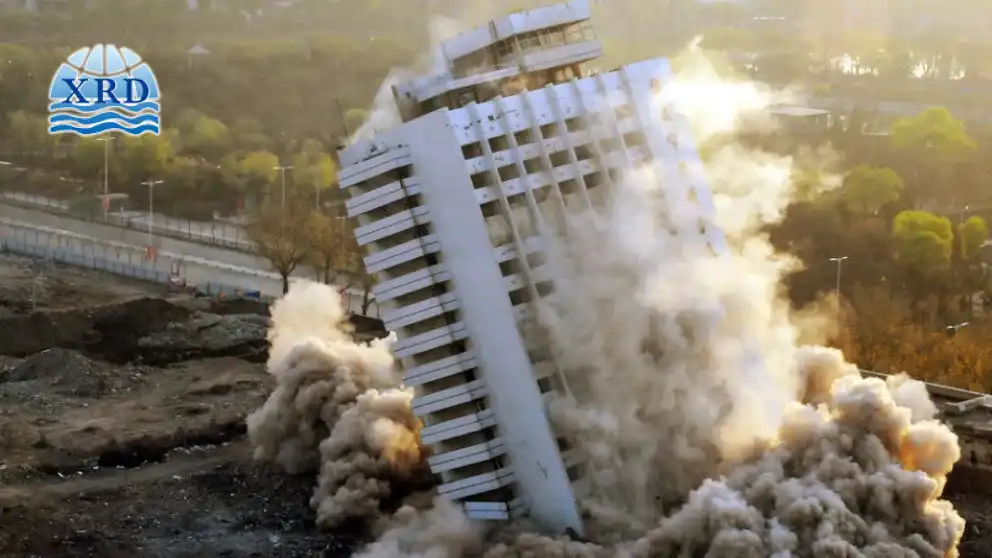
Pre-treatment before demolition can significantly reduce short-duration dust spikes and improve surrounding air conditions.
Complete Construction Process for Calcium Chloride Dust Suppressant Application
Material Selection: Flake or Powder? Dihydrate or Anhydrous?
Selection depends on budget, dissolution speed, and application frequency.
74%–77% Calcium Chloride (Flake / Dihydrate)
- Cost-effective
- Suitable for routine road treatment
- Moderate dissolution speed
90%–94% Calcium Chloride (Powder / Anhydrous)
- Fast dissolving
- Higher concentration capability
- Suitable for rapid deployment
Recommendation:
- Long road coverage → Flake calcium chloride
- Fast preparation and emergency control → Powder calcium chloride
Mixing Ratio: Recommended Calcium Chloride Solution Concentration
One of the most searched implementation questions is:
What is the ideal calcium chloride spray ratio?
For construction dust suppression:
Recommended solution concentration: 20%–30%
Example preparation:
- 200–300 kg calcium chloride
- Add water until total volume reaches 1,000 L
Mixing tips:
- Add chemical gradually
- Continuous agitation improves dissolution
- Warm water shortens mixing time
Spraying Equipment and Application Parameters
Equipment selection impacts coverage efficiency.
Basic spray truck
- Flexible deployment
- Suitable for medium sites
Professional mist cannon system
- Larger coverage
- Better atomization
Typical application rate:
1.5–2.5 liters per square meter
Suggested application frequency:
| Area Type | Frequency |
|---|---|
| Heavy truck lanes | Every 3–5 days |
| General work zones | Weekly |
| Dry & windy periods | Increase frequency |
Cost–Benefit and ROI Analysis
Total Cost Comparison
Example: Dust suppression on a 1 km unpaved construction road.
| Cost Item | Water Spraying | Calcium Chloride |
|---|---|---|
| Labor | High | Moderate |
| Water | High | Low |
| Fuel | High | Reduced |
| Material | Low | Moderate |
| Maintenance | High | Lower |
Although calcium chloride requires material investment, total operating cost may decrease due to reduced application frequency.
Hidden Cost Reduction
Indirect benefits often exceed chemical costs.
Potential savings include:
- Reduced risk of regulatory penalties
- Fewer production interruptions
- Lower tire wear
- Reduced equipment cleaning
- Improved worker visibility and safety
When evaluating calcium chloride dihydrate price, procurement decisions should focus on total treatment cost rather than unit price alone.
FAQ: Common Questions and Mistakes to Avoid
Do construction sites need reapplication during rainy seasons?
Light rainfall may extend effectiveness.
After heavy wash-off events, inspect surface conditions and reapply if visible dust returns.
Will calcium chloride corrode equipment or vehicle chassis?
At normal dust control concentrations, risks are manageable.
Good practices include:
- Avoid excessive concentration
- Rinse sensitive equipment periodically
- Use corrosion inhibitors only when justified
Does calcium chloride work during winter construction?
Yes.
Calcium chloride provides dual benefits:
- Dust suppression
- Freeze resistance and deicing support
Will treated roads become slippery?
Overapplication may create sticky or slick surfaces.
Maintain proper concentration and avoid oversaturation.
Build a Cleaner, More Compliant Construction Site
Effective construction dust management requires more than periodic watering.
A properly designed calcium chloride dust suppression program can help construction teams achieve:
- Longer-lasting dust reduction
- Lower water usage
- Better operational efficiency
- Improved environmental compliance
Whether managing temporary roads, excavation zones, or aggregate yards, selecting the right concentration, application schedule, and material grade can significantly improve performance and ROI.
Need a customized formulation or project evaluation? Contact us to request a sample program or download the Construction Site Dust Control Technical Guide.