
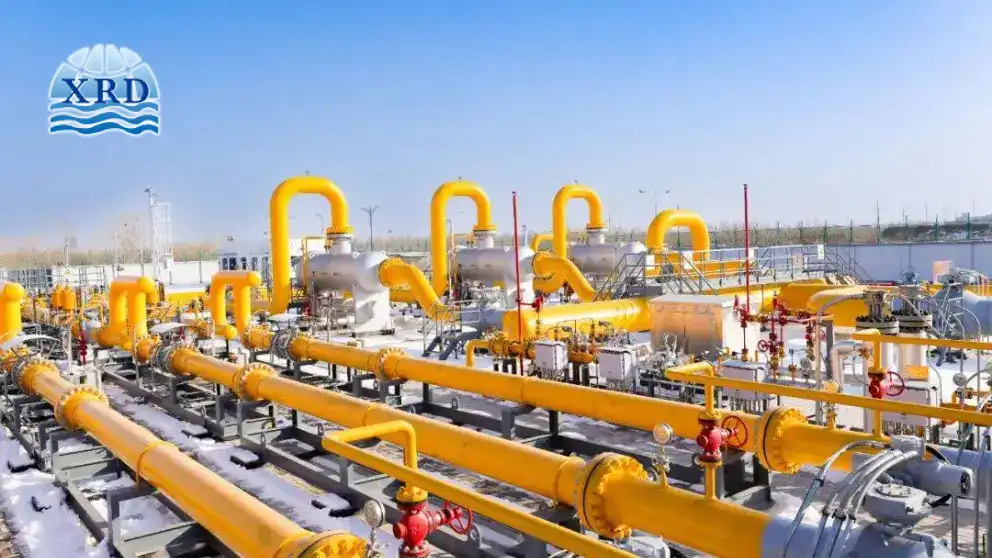
Industrial gas systems are often judged by pressure, purity, and flow stability—but moisture is the silent variable that can undermine all three. Even trace water vapor can trigger corrosion, freezing, catalyst poisoning, and product contamination, turning a seemingly minor issue into a costly operational risk. While advanced dehydration technologies like molecular sieves and glycol units dominate large-scale applications, calcium chloride (CaCl₂) remains a highly practical and economical drying medium in many industrial scenarios. Its strong hygroscopicity, operational simplicity, and low capital requirements make it particularly attractive for decentralized or moderate-duty gas drying systems.
This article explores how to design an efficient industrial gas drying system using calcium chloride, from moisture capture mechanisms to reactor configuration, auxiliary system engineering, performance optimization, and economic feasibility.
The Critical Role of Moisture Control in Industrial Gas Systems
The Hidden Costs of Wet Gas
Moisture contamination in gas streams causes damage far beyond simple condensation. In pipelines, water reacts with acidic gases such as CO₂ or H₂S to form corrosive acids, accelerating internal corrosion and reducing equipment lifespan. In cold environments, condensed water can freeze inside valves, regulators, and instrumentation lines, leading to blockages or catastrophic shutdowns.
Moisture is equally dangerous in catalytic systems. Many catalysts used in ammonia synthesis, hydrogen purification, and petrochemical reactions are highly moisture-sensitive. Even ppm-level water intrusion can deactivate active sites or alter reaction selectivity.
Additionally, product quality often depends on ultra-dry gas conditions. Semiconductor manufacturing, specialty chemicals, and compressed instrument air systems require strict dew point control to prevent contamination, oxidation, or process instability.
Industry Applications Where Dry Gas Is Non-Negotiable
Dry gas is essential across multiple industrial sectors:
- Natural gas processing: pipeline specifications often require water dew points below -40°C.
- Ammonia and fertilizer production: hydrogen and nitrogen feed gases must be moisture-controlled to protect catalysts.
- Electronic-grade gases: moisture limits can fall below 1 ppm.
- Instrument air systems: dew points commonly range from -20°C to -40°C.
- Chlorine drying: chlor-alkali plants require ultra-dry chlorine to minimize corrosion and downstream reactions.
In these environments, moisture control is not an optimization step—it is a process prerequisite.
Comparing Gas Dehydration Technologies
Common industrial gas drying technologies include:
| Technology | Strengths | Limitations |
|---|---|---|
| Molecular sieve adsorption | Ultra-low dew point, regenerable | High CAPEX, complex regeneration |
| Activated alumina / silica gel | Moderate drying, regenerable | Lower water capacity |
| Glycol absorption | High-volume continuous drying | Solvent handling complexity |
| Refrigeration/condensation | Bulk water removal | Limited deep drying |
| Calcium chloride drying | Low cost, high moisture uptake, simple operation | Limited ultra-low dew point capability |
Calcium chloride performs best in moderate-to-deep drying applications where cost efficiency outweighs extreme dryness requirements.
Why Calcium Chloride Deserves Serious Consideration
Calcium chloride offers several engineering advantages:
- High moisture absorption capacity through hydration and deliquescence
- Low raw material cost
- Simple fixed-bed or tower configurations
- Relatively manageable waste brine disposal
- Suitable for intermittent or medium-scale industrial systems
However, unlocking these benefits requires proper system design centered on mass transfer and phase management.
The Science of Dehydration: How CaCl₂ Captures and Holds Water
From Anhydrous Salt to Hydrated Brine
Calcium chloride absorbs moisture through a stepwise hydration pathway. Dry CaCl₂ first binds water molecules to form crystalline hydrates:
- CaCl₂·H₂O (monohydrate)
- CaCl₂·2H₂O (dihydrate)
- CaCl₂·4H₂O
- CaCl₂·6H₂O
As moisture loading increases further, the material undergoes deliquescence, dissolving into concentrated calcium chloride brine.
This dual mechanism—solid hydration followed by liquid absorption—gives calcium chloride unusually high total water uptake compared with many adsorbents.
Vapor Pressure Driving Force
Drying performance is governed by vapor pressure difference.
Water vapor transfers from gas phase to CaCl₂ because the vapor pressure above concentrated calcium chloride solution is significantly lower than that of humid gas. This gradient drives continuous moisture migration until equilibrium is approached.
Greater vapor pressure difference means faster drying kinetics.
Key influencing variables include:
- inlet gas humidity
- operating temperature
- salt concentration
- gas residence time
Static vs. Dynamic Drying Capacity
Theoretical maximum capacity assumes complete hydration and eventual brine formation.
In practice, usable capacity is lower because of:
- imperfect gas-solid contact
- channeling
- crust formation
- temperature rise
- incomplete bed utilization
Therefore, system designers should size based on effective working capacity, not laboratory maximums.
The Regeneration Question
Calcium chloride can be regenerated by heating to drive off absorbed water, though energy demand and material degradation must be considered.
Design tradeoff:
- Single-use systems: simpler, lower equipment complexity
- Regenerable systems: lower chemical consumption but higher CAPEX/OPEX
For many industrial users, disposable or partially recyclable systems remain economically favorable.
System Architecture: Configuring the Drying Bed for Maximum Efficiency
Reactor Type Selection
Fixed Bed Dryer
Best for:
- small to medium gas flowrates
- batch or semi-continuous operation
- simple installation
Advantages:
- low cost
- easy operation
- compact footprint
Moving or Fluidized Bed
Suitable for:
- continuous high-load drying
- automated media replacement/regeneration
Advantages:
- better solids utilization
- reduced localized saturation
Challenges:
- mechanical complexity
Spray Tower with CaCl₂ Solution
Uses calcium chloride brine sprayed directly into gas stream.
Suitable for:
- coarse dehydration
- large flow rates
Less effective for very low dew points but excellent for bulk moisture removal.
Critical Fixed-Bed Design Parameters
Tower Diameter and Superficial Velocity
Gas velocity must remain below flooding and entrainment limits.
Oversized velocity causes:
- pressure drop spikes
- liquid carryover
- poor contact efficiency
Typical design principle:
maintain uniform upward or downward flow without fluidizing granules.
Bed Height and Pressure Drop
Higher bed height improves moisture removal but increases resistance.
Design must balance:
- mass transfer zone length
- blower/compressor energy cost
Typical industrial beds use multiple shallow layers rather than one excessively deep packed zone.
Residence Time
Sufficient contact time is essential.
Undersized residence time results in:
- premature breakthrough
- underutilized drying media
Residence time depends on:
- gas flowrate
- humidity load
- target outlet dew point
Gas Distribution Uniformity
Poor inlet distribution causes channeling and localized saturation.
Recommended design features:
- perforated distribution plates
- diffuser cones
- equalizing plenums
Uniform flow maximizes bed utilization and extends service life.
Materials of Construction
Calcium chloride brine is corrosive, especially to carbon steel.
Preferred materials:
- 304 stainless steel for moderate duty
- 316 stainless steel for corrosive or chloride-intensive environments
- FRP or plastic-lined vessels for aggressive service
Proper materials selection prevents long-term corrosion failures.
Engineering the Complete System: Critical Auxiliary Components
Pre-Treatment Requirements
Install upstream separation equipment:
- knockout drums
- coalescing filters
- particulate filtration
Purpose:
- remove free liquids
- prevent salt contamination
- avoid bed plugging
Brine Collection and Handling
As CaCl₂ deliquesces, liquid brine accumulates.
Required design elements:
- bottom liquid collection tray
- sloped drain lines
- gas-tight liquid seal
- corrosion-resistant brine tank
Optional heat tracing may be needed in cold environments.
Mist Elimination
Outlet gas may entrain brine droplets.
Install demisters:
- wire mesh pads
- vane separators
This protects downstream equipment from salt contamination.
Instrumentation and Monitoring
Critical instruments:
- online dew point analyzer
- differential pressure transmitter
- temperature sensors
- bed weight/load monitoring (optional)
These enable predictive maintenance and breakthrough detection.
Dual-Tower Changeover Systems
For continuous operation, dual towers are preferred:
Tower A:
- active drying
Tower B:
- draining
- regeneration or media replacement
Automated switching ensures uninterrupted gas supply.
Optimizing Performance: Modeling, Common Pitfalls, and Maintenance
Predicting Breakthrough
Simple mass balance models estimate service life:
- inlet water load
- CaCl₂ working capacity
- safety factor
This predicts replacement intervals and avoids sudden moisture excursions.
Temperature Effects
Temperature is a double-edged sword.
Higher temperature:
- improves mass transfer kinetics
- reduces equilibrium water uptake
Recommended operating window:
- 20–35°C
If gas is hot, pre-cooling often improves overall drying performance.
Channeling and Crusting
Common fixed-bed issue:
- surface crust formation from localized brine accumulation
Consequences:
- pressure drop increase
- gas bypass
- reduced capacity
Mitigation strategies:
- pre-granulated CaCl₂ pellets
- layered packing
- periodic agitation or redistribution
Monitoring Bed Exhaustion
Indicators include:
- rising outlet dew point
- pressure drop changes
- bed weight increase
Breakthrough curves are especially useful for predictive maintenance.
Spent Brine Disposal
Spent calcium chloride brine may be:
- reused as dust suppressant
- sold for deicing applications (where regulations permit)
- treated and disposed according to local wastewater regulations
Waste strategy should be integrated into initial system design.
Economic Analysis and Future Trends in CaCl₂ Dehydration
Capital vs. Operating Cost
Compared with molecular sieve systems, calcium chloride drying offers:
Lower capital costs
- simpler vessels
- minimal regeneration hardware
Lower maintenance complexity
- fewer valves and automation loops
Tradeoff:
- recurring media consumption
For moderate-duty applications, total lifecycle cost is often highly competitive.
Case Example: Natural Gas Drying Station
A hypothetical 100 MMSCFD natural gas station using CaCl₂ drying may achieve:
- moderate CAPEX reduction versus sieve units
- acceptable pipeline dew point compliance
- rapid payback where gas quality specs are moderate
This is especially attractive for remote or temporary installations.
Emerging Hybrid Systems
New system concepts include:
- membrane pre-dehydration + CaCl₂ polishing
- waste heat regeneration loops
- solar-assisted regeneration
- staged drying towers
Hybridization improves sustainability and extends calcium chloride relevance.
Conclusion
Calcium chloride gas drying is a mature yet evolving dehydration technology that remains highly competitive in the right industrial context. Its combination of strong hygroscopicity, low cost, simple equipment requirements, and flexible deployment makes it especially valuable for moderate-duty gas drying applications where ultra-low dew points are unnecessary.
Successful system design depends on more than filling a tower with salt. Engineers must carefully integrate:
- gas pretreatment
- reactor sizing
- flow distribution
- brine management
- mist elimination
- monitoring and maintenance logic
When designed with sound mass transfer principles and operational discipline, a calcium chloride drying system can deliver reliable moisture control with excellent economic efficiency.
For engineers evaluating gas dehydration options, the key is not asking whether calcium chloride is “old-fashioned”—but whether it is the smartest solution for the specific moisture load, dew point target, and cost structure of the application.