
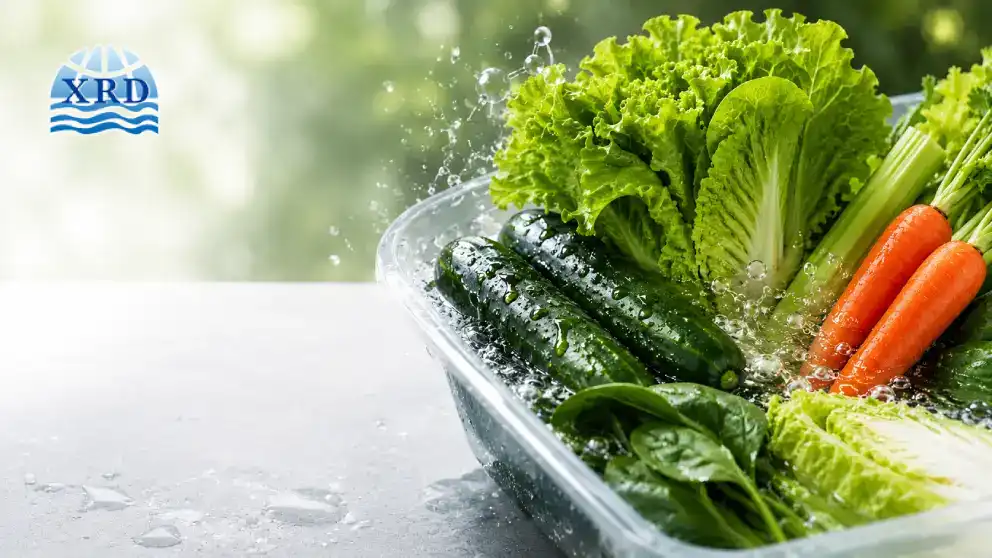
The Quiet Crisis of Fresh Produce Waste
After harvest, fresh produce remains biologically active. It breathes. It loses water. Its cells slowly break down.
This is a global problem.
- The FAO estimates that 14% of the world's food is lost between harvest and retail.
- Highly perishable produce—berries, leafy greens, stone fruits—suffers the most.
- Delicate crops can lose market value within days if not properly handled.
Why does this happen so fast? The core cause is softening.
- Inside every fruit and vegetable, pectin acts like "cement" between cell walls.
- After harvest, enzymes begin breaking this pectin down.
- Without that structural glue, tissues lose firmness. Fruits go mushy. Vegetables lose their crunch.
Commercial solutions like controlled atmosphere storage exist. But they require significant investment. Not everyone can afford them.
This raises an important question: Is there a low-cost, easy-to-apply treatment that actually works?
For growers, packers, and even home users, calcium chloride dips offer exactly that.
Why Calcium Works: The Science in Simple Terms
Calcium isn't just for bone health. After harvest, it plays a critical role in keeping produce firm and fresh.
When you dip produce in a calcium chloride solution, calcium ions enter the tissue and get to work in three ways.
It reinforces cell walls.
- Calcium ions bind to pectin molecules, forming cross-links.
- Scientists call this the "egg-box" structure.
- These cross-links stabilize the middle lamella—the glue between cells.
- The result: better texture, less softening, and improved resistance to transport damage.
It slows metabolism.
- Calcium stabilizes cell membranes, reducing leakage.
- When membranes stay intact, respiration slows down.
- In climacteric fruits like mangoes and avocados, this delays ethylene production.
- The result: slower ripening and better sugar-acid balance.
It fights browning and disease.
- Calcium suppresses polyphenol oxidase (PPO), the enzyme behind browning.
- Stronger cell walls also make it harder for fungi to invade.
- Common pathogens like Botrytis cinerea (grey mold) find it harder to take hold.
In short, the dip is not just a surface coating. It's a deep, physiological treatment that buys you extra time.
Proven Results Across Different Produce
Decades of research show the same pattern: calcium chloride dips work. But the effects vary by produce type.
Berries: Strawberries and Blueberries
- A 1–2% CaCl₂ dip can maintain firmness for 7–10 days at 4°C.
- Grey mold incidence can drop by up to 50%.
- Typical shelf life extension: 3–5 extra days.
Stone and Pome Fruits: Cherries, Fresh-Cut Apples
- Cherries: the dip preserves stem greenness and reduces fruit shrivel.
- Fresh-cut apples: when combined with ascorbic acid, the treatment prevents browning and maintains crispness far longer.
Tropical Fruits: Mangoes and Avocados
- The dip won't stop ripening, but it delays the peak.
- Results include better peel gloss, less skin wrinkling, and slower progression to overripe texture.
- For exporters, this means longer shipping windows and fewer transit losses.
Vegetables: Lettuce and Carrot Sticks
- Fresh-cut vegetables lose turgor rapidly.
- A cold calcium chloride dip can help restore that lost crispness.
- Common uses include lettuce recovery, carrot stick firming, and celery texture maintenance.
How to Do It Right: A Practical Guide
Success depends on getting the details right. Here's what matters most.
Start with food-grade material.
- Only use food-grade calcium chloride (typically CaCl₂·2H₂O).
- Industrial grades contain unsafe impurities.
- This is non-negotiable.
Follow the right parameters for your produce.
| Produce | CaCl₂ Concentration (% w/v) | Immersion Time | Key Post-Dip Step |
|---|---|---|---|
| Whole strawberries | 1.0 – 1.5% | 2–5 min | Thoroughly air-dry before cold storage |
| Fresh-cut apple slices | 0.5 – 1.0% | 1–2 min | Combine with 0.5% ascorbic acid; package immediately |
| Sweet cherries | 1.5 – 2.0% | 2–5 min | Ensure stem ends are submerged |
| Shredded lettuce | 0.5 – 1.0% | 1–3 min | Spin-dry to remove surface moisture |
| Whole mangoes | 2.0 – 3.0% | 5–10 min | Use a surfactant (0.01% Tween-20) for waxy skins |
Keep the solution cold.
- Maintain temperature between 0.5°C and 5°C.
- Cold solutions reduce metabolism and improve calcium uptake.
- As the tissue cools, internal air spaces create a vacuum that draws the solution in.
Consider a surfactant for waxy produce.
- A tiny amount (0.01–0.05%) of non-ionic surfactant breaks surface tension.
- This ensures even coverage on difficult surfaces like mango or avocado skin.
Never skip post-dip handling.
- Surface moisture invites mold.
- Drain thoroughly. Dry gently. Then move to cold storage.
- Skipping this step can cause water-soaked injury and faster decay—the exact opposite of your goal.
Common Pitfalls and How to Avoid Them
Even a simple treatment has its traps. Here are the ones to watch.
More is not better.
- The dose-response curve is an inverted U. Beyond a threshold, extra calcium causes damage.
- Under 1% may have weak effects. Over 3% risks salt toxicity, surface pitting, and bitter off-flavors.
- Stick to the recommended range for each crop.
Maturity matters.
- Partially ripe fruit absorbs calcium more effectively than fully ripe, senescent tissue.
- Late-stage fruit has already lost structural integrity. Treatment can't reverse that.
Never dip damaged produce.
- One infected fruit can contaminate the entire dip solution.
- The bath becomes a vector, spreading pathogens across the whole batch.
- Sort and cull before dipping.
Calcium chloride works best in combination.
- It is a powerful tool, but not a standalone magic bullet.
- Pair it with refrigeration, proper sanitation, and other compatible treatments.
- A proven synergistic formula for fresh-cut fruit:
| Component | Concentration | What It Does |
|---|---|---|
| Calcium Chloride (food grade) | 1.0% (10 g/L) | Cross-links pectin, maintains firmness |
| Ascorbic Acid | 0.5% (5 g/L) | Prevents oxidative browning |
| Citric Acid | 0.2% (2 g/L) | Lowers pH, inhibits PPO, mild antimicrobial |
| Cold potable water | Up to 1 L | Clean, safe solvent |
Check local regulations.
- All components listed are GRAS (Generally Recognized as Safe).
- But commercial operators must verify compliance with local food additive rules for fresh or minimally processed produce.
The Long-Term Payoff: Economics and Quality
Calcium chloride dipping isn't just about science. It makes business sense.
It costs almost nothing compared to alternatives.
- Food-grade calcium chloride costs cents per ton treated.
- Controlled atmosphere storage and advanced packaging require major capital.
- The return on investment is exceptionally high.
It improves consumer experience.
- Texture is one of the strongest drivers of repeat purchase.
- A firm grape. A crisp pre-cut apple. This is what consumers notice.
- Better texture means better brand perception and customer loyalty.
It reduces supply chain losses.
- For e-commerce and export, softening leads to returns and complaints.
- Reducing that softening directly lowers rejection rates and refund costs.
- The supply chain shifts from racing against spoilage to managing a more robust product.
A final word.
Calcium chloride dipping is one of post-harvest science's lowest-hanging fruits. Simple in concept. Grounded in solid physiology. Accessible to smallholders and large packers alike.
By understanding and applying this technique, we can make real progress in reducing food waste—one firm, crisp fruit at a time.