
The Hidden Cost of Humidity in Everyday Life
Excess humidity is more than just an inconvenience. In homes, offices, basements, and storage spaces, high moisture levels can quietly cause serious problems: mold growth, musty odors, damp walls, peeling paint, mildew on clothing, and even dust mite infestations. Closets become breeding grounds for mold, leather goods deteriorate, and stored items lose their quality over time.
As consumers search for effective moisture absorber products, one question becomes increasingly important: What actually determines the performance of a dehumidifier or moisture absorber?
The answer lies in the core active ingredient.
Among all moisture-absorbing materials available today, Calcium Chloride has become the preferred choice for professional-grade moisture absorber products because of its exceptional moisture absorption capacity, long-lasting performance, and reliability across different humidity conditions.
Understanding How Calcium Chloride Absorbs Moisture
The Science Behind Calcium Chloride’s Powerful Dehumidifying Ability
Unlike ordinary desiccants that only trap moisture physically, calcium chloride works through a unique combination of physical adsorption and chemical absorption.
Deliquescence: The “Self-Dissolving” Moisture Absorption Process
Calcium chloride is highly deliquescent, meaning it actively absorbs water vapor from the surrounding air until it eventually dissolves into the absorbed moisture, forming a concentrated saline solution.
As it absorbs humidity, calcium chloride gradually transforms through several hydrated states, including:
- Calcium chloride dihydrate
- Calcium chloride tetrahydrate
- Other hydrated forms
Eventually, the material liquefies completely, continuously pulling moisture from the air without releasing it back into the environment.
This process is fundamentally different from standard physical adsorbents.
Vapor Pressure Difference: Why Moisture Moves Toward Calcium Chloride
Another reason calcium chloride performs so efficiently is its extremely low surface vapor pressure.
In simple terms, moisture naturally moves from areas of higher vapor pressure (humid air) toward areas of lower vapor pressure (the calcium chloride surface). This creates a continuous “moisture migration effect,” allowing calcium chloride to keep drawing water vapor from the air efficiently.
The result is:
- Faster dehumidification
- Higher moisture absorption efficiency
- Stable long-term performance
- Effective operation even in cool or moderately dry conditions
This combination of deliquescence, chemical adsorption, and vapor pressure differential makes calcium chloride one of the most effective moisture absorber ingredients available today.
Calcium Chloride vs Other Moisture Absorbing Materials
Why Calcium Chloride Outperforms Traditional Desiccants
Not all moisture absorbers are created equal. Different materials use completely different mechanisms to remove humidity, and their performance varies significantly.
Calcium Chloride vs Silica Gel
Silica Gel: Physical Adsorption Only
Silica gel absorbs moisture through microscopic pores on its surface. While useful for small enclosed spaces or electronics packaging, its total absorption capacity is limited.
Typically, silica gel absorbs only about 30–40% of its own weight in water before reaching saturation.
In addition:
- High temperatures can cause moisture desorption
- Efficiency drops significantly in high humidity environments
- Reusability requires heating regeneration
Calcium Chloride: Multi-Times Higher Absorption Capacity
Calcium chloride can absorb over 300% of its own weight in moisture under suitable conditions.
Unlike silica gel, absorbed moisture becomes locked inside a liquid brine solution, greatly reducing the chance of re-releasing water into the air.
This makes calcium chloride ideal for:
- Closets
- Basements
- Storage rooms
- Bathrooms
- Shipping containers
- Long-term moisture control
Calcium Chloride vs Mineral Desiccants
Mineral-based desiccants such as montmorillonite clay are commonly used in food packaging and pharmaceuticals where only slight moisture protection is required.
However, their moisture absorption rate is relatively low, making them ineffective for larger residential or industrial dehumidification applications.
Calcium chloride offers:
- Much higher absorption efficiency
- Faster moisture collection
- Better performance in enclosed damp spaces
Calcium Chloride vs Quicklime
Quicklime (calcium oxide) is also highly hygroscopic, but it comes with major drawbacks:
- Strong alkalinity
- Corrosiveness
- Significant heat release during moisture absorption
- Safety concerns in household environments
Calcium chloride provides strong moisture control without the same aggressive chemical hazards, making it far more suitable for consumer moisture absorber products.
Key Advantages of Calcium Chloride Moisture Absorbers
Extremely High Moisture Absorption Capacity
Premium calcium chloride products can absorb several times their own weight in water, dramatically outperforming many competing materials.
Effective Across Wide Humidity Ranges
Calcium chloride continues working efficiently even in:
- Low-temperature environments
- Moderate humidity conditions
- Enclosed spaces with poor ventilation
Strong Water Retention
Once moisture is absorbed, the resulting solution remains stable and does not easily release water vapor back into the air.
Safe and Odor-Free Performance
High-purity calcium chloride does not emit harmful gases and can be safely incorporated into residential moisture absorber systems when used properly.
What Type of Calcium Chloride Works Best in Moisture Absorbers?
Shape and Structure Matter
The physical form of calcium chloride greatly affects its performance.
Flake Calcium Chloride
Flake-shaped calcium chloride offers:
- Large surface contact area
- Rapid initial moisture absorption
- Stable long-term performance
It is widely used in household dehumidifier boxes and hanging moisture bags.
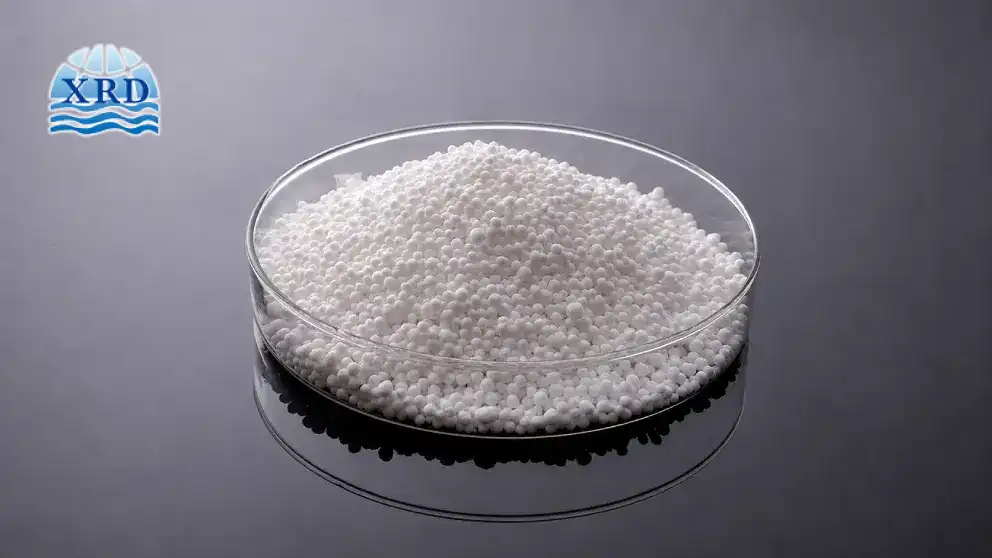
Pellet or Granular Calcium Chloride
Spherical pellets provide:
- Improved airflow between particles
- More uniform moisture absorption
- Reduced surface caking
This design allows moisture to penetrate deeper into the material rather than forming an outer liquid barrier too quickly.
Powdered Calcium Chloride
Powder forms absorb moisture rapidly at first but tend to cake and clump quickly, reducing long-term efficiency. They are generally less suitable for consumer moisture absorber products.
Why Purity Matters
High-purity calcium chloride typically delivers better dehumidification performance because it contains fewer impurities such as sodium chloride or insoluble residues.
Benefits of higher purity include:
- Faster moisture absorption
- Lower odor risk
- More stable deliquescence
- Cleaner liquid collection after absorption
This is why premium moisture absorber manufacturers prioritize refined calcium chloride raw materials.
How Modern Moisture Absorber Products Use Calcium Chloride
Today’s moisture absorbers combine calcium chloride with smart packaging systems for safer and more efficient performance.
Common product structures include:
- Breathable DuPont paper layers
- Nonwoven fabric membranes
- Leak-resistant collection chambers
- Hanging closet dehumidifier bags
- Integrated anti-spill moisture boxes
These designs allow water vapor to enter while securely containing the liquid brine formed during absorption.
Beyond Dehumidification: Additional Benefits of Calcium Chloride
Mold Prevention
Mold thrives in humid environments, especially when relative humidity exceeds 60%.
By continuously reducing moisture levels, calcium chloride helps create conditions where mold struggles to grow.
This makes calcium chloride moisture absorbers highly effective in:
- Wardrobes
- Shoe cabinets
- Basements
- Storage rooms
- Vehicles
Odor Reduction
Many premium products combine calcium chloride with:
- Activated carbon
- Fragrance particles
- Deodorizing agents
This enables dual-function performance:
- Moisture control
- Odor elimination
Clothing and Leather Protection
Hanging calcium chloride moisture bags help protect:
- Leather jackets
- Wool garments
- Silk fabrics
- Seasonal clothing
- Handbags and shoes
By reducing humidity, these products help prevent mildew, odor, and material degradation.
Common Applications of Calcium Chloride Moisture Absorbers
Calcium chloride-based products are widely used in:
- Bedroom closets
- Basement moisture control
- Garage storage
- RV and camper dehumidification
- Shipping containers
- Car interiors
- Warehouses
- Tool storage rooms
Popular product categories include:
- Calcium chloride mold prevention boxes
- Hanging closet dehumidifier bags
- Basement moisture absorbers
- Vehicle anti-fog moisture packs
How to Choose a High-Quality Calcium Chloride Moisture Absorber
Check the Calcium Chloride Particle Form
Choose products containing:
- Large flakes
- Uniform pellets
- Clean, well-formed granules
Avoid products with excessive powder or uneven particle size.
Examine the Breathable Packaging Material
Quality moisture absorbers use durable breathable membranes that:
- Allow moisture vapor to enter efficiently
- Prevent liquid leakage
- Maintain structural stability during long-term use
Evaluate the Water Collection Design
A well-designed moisture absorber should include:
- Large liquid storage capacity
- Leak-resistant construction
- Stable standing structure
- Anti-overflow protection
Common Misconceptions About Calcium Chloride Moisture Absorbers
“The Faster It Absorbs, the Better”
Not necessarily.
Extremely rapid reactions may indicate excessive impurities or unstable formulations. High-quality calcium chloride products focus on consistent, controlled, long-term absorption.
“The Collected Liquid Is Just Water”
The liquid collected inside the container is actually a highly concentrated calcium chloride solution.
While generally non-toxic, it should:
- Not be consumed
- Be disposed of through a drain with running water
- Be kept away from metal surfaces to minimize corrosion risks
“Is Calcium Chloride Toxic?”
Calcium chloride is widely considered safe when used correctly.
In fact, calcium chloride is even used in certain food-related applications, including:
- Tofu coagulants
- Food processing
- Mineral supplementation
However, household moisture absorber products should still be kept away from children and pets to prevent accidental ingestion.
Conclusion
The effectiveness of a moisture absorber product ultimately depends on the material inside it. Among all commonly used desiccants, calcium chloride stands out because of its unmatched combination of:
- Exceptional moisture absorption capacity
- Strong water-locking performance
- Wide environmental adaptability
- Long-lasting efficiency
- Safe and practical consumer applications
Whether used in closets, basements, storage areas, or vehicles, calcium chloride continues to be the industry-standard ingredient for powerful moisture control solutions.
As humidity problems become more common in modern living environments, calcium chloride-based moisture absorbers remain one of the most reliable and cost-effective ways to maintain a dry, clean, and comfortable space.