Industrial supply chain managers face a constant, invisible enemy: moisture. From shipping containers crossing oceans to warehouse storage in humid climates, uncontrolled humidity leads to mold, corrosion, and product degradation. A 2026 report by the International Union of Marine Insurance notes that condensation-related cargo damage, often called “container rain,” accounts for roughly 10% of all cargo insurance claims globally. The right moisture absorber is not just a commodity; it's a strategic choice for cargo protection.
The market offers two primary desiccant technologies: calcium chloride and silica gel. Each operates on fundamentally different principles and delivers vastly different results depending on the application. A common misconception is that all desiccants work the same way, and the cheapest option is the most cost-effective. In reality, a mismatch between the desiccant and the environment can lead to catastrophic product loss, making technical understanding crucial for procurement decisions.
This article provides a data-driven comparison of calcium chloride vs silica gel, tailored for logistics managers, industrial buyers, and quality control specialists. We break down the chemistry, performance metrics, cost implications, and ideal use cases to help you build a superior moisture control strategy.
Calcium chloride is a superior moisture absorber for high-humidity, long-duration industrial applications, but silica gel remains the better choice for low-humidity, high-temperature environments requiring reusability. The main factors dictating this choice are the ambient relative humidity of your specific supply chain, the required protection duration, and your operational cost model.
Key Takeaways
- Performance Gap: Calcium chloride absorbs up to 300% of its weight in moisture, compared to roughly 35% for silica gel, making it significantly more effective in high-humidity conditions above 60% RH.
- Humidity Control: Silica gel is the preferred desiccant for maintaining a specific low-humidity environment (below 40% RH), especially in sealed electronics packaging.
- Irreversibility is a Feature: Calcium chloride deliquesces into a gel, locking water away permanently with no risk of leakage back into the environment, a critical safety feature for cargo.
- Cost Model: While silica gel can be reactivated and reused, the energy and labor costs often outweigh the benefits for many single-trip supply chains, where calcium chloride’s higher upfront capacity offers better total cost of ownership.
- Safety First: Calcium chloride must be handled to avoid skin and eye irritation, while silica gel’s potential cobalt chloride indicator poses a carcinogenic risk, leading to its phase-out in many regions.
How Does Calcium Chloride Work as a Desiccant?
The Deliquescence Principle
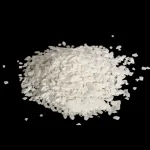
Unlike simple adsorbents, calcium chloride (CaCl₂) is a deliquescent salt. This means it draws moisture from the air through a process called hygroscopic absorption, eventually dissolving into the water it absorbs to form a brine. The driving force is its extremely low vapor pressure; it actively pulls water vapor molecules until an equilibrium is reached, often dissolving completely into a liquid or gel-like state.
Phase Change and Permanent Water Locking
The key mechanism is the phase change from solid to brine. As CaCl₂ absorbs water, it forms a hydrated salt gel. This process is irreversible under normal atmospheric conditions. The captured water is permanently locked into a chemical state and will not evaporate back into the air, regardless of temperature swings. This eliminates the risk of secondary condensation, a crucial advantage in shipping containers where the day-night temperature cycle creates a “pumping” effect in other desiccants.
How Does Silica Gel Work as a Desiccant?
The Adsorption Mechanism
Silica gel is a highly porous, amorphous form of silicon dioxide (SiO₂). It works not by a chemical reaction but by physical adsorption and capillary condensation. Its vast internal network of pores, with diameters averaging 2-3 nanometers, creates a massive surface area of about 800 square meters per gram. Water molecules physically adhere to this surface through van der Waals forces.
Equilibrium and Reversibility
Unlike calcium chloride, silica gel reaches a dynamic equilibrium with the surrounding air’s relative humidity. It adsorbs moisture until the vapor pressure in its pores equals the ambient vapor pressure. This process is reversible. When heated to approximately 120°C (248°F), the trapped water molecules gain enough energy to break free and evaporate, restoring the silica gel’s adsorption capacity. This reusability is its primary value proposition.
Calcium Chloride vs Silica Gel: A Head-to-Head Performance Comparison
The core of the calcium chloride vs silica gel debate lies in their performance under real-world industrial conditions. The following table breaks down the critical differences.
| Performance Metric | Calcium Chloride (CaCl₂) | Silica Gel (SiO₂) |
|---|---|---|
| Absorption Capacity at 90% RH | Up to 300% of its weight | 35-40% of its weight |
| Absorption Capacity at 50% RH | ~150% of its weight | 22-25% of its weight |
| Operating Principle | Deliquescence (chemical absorption) | Physical Adsorption |
| Optimal Humidity Range | 60% to 100% RH | 0% to 60% RH |
| Risk of Re-evaporation | None (irreversible liquid/gel lock) | High (moisture releases as temperature rises) |
| Effective Duration at 25°C, 80% RH | 60-90 days | 15-30 days |
| Reusability | No | Yes (requires 120°C heating) |
| Post-Absorption State | Brine or solid gel | Dry, solid beads (swollen) |
Why Does Absorption Capacity Matter for Cargo Protection?
Total absorption capacity directly dictates how long a desiccant can protect goods before saturation. In a 40-foot shipping container, a standard voyage from Shanghai to Rotterdam can take 40-50 days. A calcium chloride desiccant device containing 1 kg of active material can lock in roughly 2.5-3.0 kg of water over that journey. A silica gel unit of the same weight would be saturated within two weeks, leaving the cargo unprotected for the remaining voyage and highly vulnerable to container rain.
What Is the Molybdenum Effect and How Does It Affect Performance?
The "Molybdenum Effect" is a critical failure mode unique to silica gel in dynamic environments. As the temperature in a shipping container rises during the day, the silica gel’s equilibrium shifts, causing it to release previously adsorbed moisture back into the air. This moisture condenses on the cool container roof at night, raining down on the cargo. This pumping cycle actually accelerates cargo damage. Calcium chloride’s irreversible chemical lock completely sidesteps this failure mode.
Where Is Calcium Chloride the Superior Choice?
Calcium chloride’s performance profile makes it the superior choice for specific, high-stakes industrial applications where failure is not an option.
- Ocean Freight and Intermodal Transport: For any cargo moving through high-humidity zones (Southeast Asia, equatorial routes, monsoon season), the 90-100% RH inside a container demands the aggressive, irreversible action of calcium chloride.
- Bulk Agricultural Commodities: Grains, seeds, and animal feed are highly susceptible to mold and aflatoxin growth. Calcium chloride’s high capacity prevents moisture-related hot spots in large storage piles or silos, protecting both product quality and regulatory compliance.
- Metals and Machinery: Steel coils, automotive parts, and heavy machinery are prone to surface rust. The long-duration, no-re-evaporation guarantee of calcium chloride is critical for preventing costly corrosion during extended warehousing or intercontinental shipping.
- Wood and Paper Products: These materials naturally have a high moisture content and act as a source of humidity themselves. Calcium chloride is needed to rapidly absorb this outgassed moisture and prevent warping, delamination, or mold.
Where Is Silica Gel the Better Option?
Silica gel excels in controlled environments where precise, low-humidity maintenance is the primary goal, and reactivation is a practical part of the workflow.
- Electronics and High-Value Components: Integrated circuits, semiconductors, and precision instruments require a humidity level well below 40% to prevent oxidation and electrical shorts. Silica gel, especially in small, sealed packets, maintains this specific dry atmosphere without generating corrosive brine.
- Pharmaceuticals and Nutraceuticals: Many drugs and diagnostic kits are moisture-sensitive. Silica gel conforms to strict pharmacopeia standards (e.g., USP, EP) for packaging desiccants. Its predictable adsorption curve ensures the product’s stability profile is maintained throughout its shelf life.
- Optics and Camera Equipment: Lenses and optical components require a dry environment to prevent fungal growth on glass elements. In a reusable dry cabinet, silica gel dehumidifiers can be cycled indefinitely, providing a consistent, low-humidity storage solution.
What Are the Safety and Handling Risks?
Calcium Chloride Safety Profile
Calcium chloride is safe when handled properly. The key risks are its exothermic reaction with water and its irritant nature. When dissolving, it can generate significant heat, and the resulting brine is a strong irritant to skin and eyes. The solid form can also be harmful if ingested. However, it is not classified as a carcinogen or mutagen. The primary personal protective equipment (PPE) required includes nitrile gloves, safety glasses, and a dust mask for handling large quantities of powder. A key safety advantage is its containment: once absorbed, the contaminated brine stays locked in the desiccant packaging, minimizing a release risk.
Silica Gel Safety Profile
The base material, amorphous silica, is chemically inert and poses a minimal inhalation risk. The primary, well-documented hazard is the blue indicating silica gel. This type is impregnated with cobalt dichloride (cobalt(II) chloride or CoCl₂), which has been classified by the European Chemical Agency (ECHA) as a Category 1B carcinogen and reproductive toxin via inhalation. The risk is from potential leaching or dust formation, not casual contact, but its use is actively being phased out in Europe and other regulated markets. Modern alternatives use organic indicators. OSHA recommends that "[workers] should avoid breathing dust and use proper ventilation" when handling any desiccant in a loose, bulk form.
How to Choose the Right Moisture Absorber: A Decision Matrix
This decision framework translates the technical data into actionable procurement logic. Match your operational reality to the appropriate technology.
Choose Calcium Chloride when:
- The protection duration exceeds 30 days, and the ambient RH is frequently above 60%.
- A single-use, “fit-and-forget” solution is required with zero re-evaporation risk.
- The cargo has a high susceptibility to mold or corrosion (e.g., steel, grain, textiles).
- The logistics chain involves uncontrolled, fluctuating temperatures and high-humidity ocean transit.
Choose Silica Gel when:
- The product must be maintained in a low-humidity state (below 40% RH) indefinitely.
- The desiccant can be easily accessed and reactivated, such as in dry cabinets or transformer breathers.
- The cargo is highly sensitive to ionic contamination and requires a chemically inert environment (e.g., bare semiconductor wafers).
- Short-duration, sealed-package protection is the goal, and regulatory standards mandate a specific, dry, non-deliquescent material.
Conclusion
The choice between calcium chloride vs silica gel ultimately hinges on a detailed assessment of the logistics environment, not on a universal “best” technology. Calcium chloride’s 300% absorption capacity and irreversible water-locking mechanism make it the dominant choice for long-haul, high-humidity industrial freight where failure has catastrophic consequences. Silica gel’s controlled adsorption and reusability prove ideal for low-humidity, high-value manufacturing and storage applications.
To build an effective moisture management strategy, start by mapping the exact temperature and humidity profile of your supply chain. Use that data to determine if you need the "brutal force" of a deliquescent or the "precision control" of an adsorbent. The right decision turns a common logistics vulnerability into a controlled, predictable process.
FAQs
What is the primary chemical difference between calcium chloride and silica gel?
Calcium chloride (CaCl₂) is a deliquescent salt that absorbs water through a chemical reaction to form a brine. Silica gel is a porous, amorphous form of silicon dioxide (SiO₂) that physically adsorbs water vapor onto its massive internal surface area.
How long does a calcium chloride desiccant last in a shipping container?
A properly sized calcium chloride desiccant device can effectively protect cargo in a 40-foot shipping container for 60 to 90 days, depending on ambient temperature and relative humidity, before reaching full saturation.
Can silica gel be reused, and how do you reactivate it?
Yes, silica gel can be fully reactivated by heating it in a well-ventilated oven at 110-120°C (230-248°F) for 1-2 hours. This process drives off the physically adsorbed water. Indicating silica gel will return to its blue or orange color.
Is calcium chloride a safer choice than silica gel for industrial use?
Safety depends on the context. Calcium chloride carries acute risks as an irritant but permanently locks in moisture. Silica gel’s base material is inert, but the blue type containing cobalt dichloride is classified as a carcinogen, making indicator-free silica gel the safer choice for accessible applications.
At what humidity level does silica gel become ineffective?
Silica gel’s adsorption capacity drops sharply at relative humidity levels below 20% and it becomes less competitive. It reaches functional saturation quickly above 80% RH, making it ineffective for very wet, high-humidity environments compared to calcium chloride.
What is “container rain,” and which desiccant prevents it better?
Container rain is condensation that forms on the ceiling of a shipping container and falls as water droplets onto the cargo. Calcium chloride prevents it better because it irreversibly locks moisture away, whereas silica gel can release moisture back into the air during temperature swings, worsening the problem.
Does calcium chloride desiccant leak liquid after absorbing moisture?
A high-quality calcium chloride desiccant product is engineered to absorb up to 300% of its weight and convert the captured water into a thick, no-spill gel, not a free-flowing liquid. The integrated packaging is designed to contain this gel securely throughout the journey.
What are the environmental impacts of disposing of calcium chloride?
Disposing of spent calcium chloride brine or gel is a consideration. The liquid has a high chloride content and is a potential groundwater contaminant, requiring responsible waste handling. Silica gel is inert waste but its production is energy-intensive, creating a trade-off in lifecycle assessments.
When should I use orange indicating silica gel instead of blue?
You should use orange indicating silica gel—which uses an organic, non-toxic indicator—instead of blue (cobalt dichloride) gel in any application where contact with consumables, pharmaceuticals, or general consumer goods is possible, to eliminate carcinogenic risk and meet international safety regulations like EU REACH.
Why does calcium chloride have a higher absorption capacity than silica gel?
Calcium chloride has a higher capacity because it undergoes a phase change and chemically binds water molecules into its crystal structure in addition to absorbing surface moisture. Silica gel is limited by its fixed pore volume for physical adsorption, which cannot match the capacity of a chemical reaction.