Concrete contractors and engineers working in cold weather or on fast-track schedules frequently turn to accelerating admixtures to gain early strength and shorten setting times. Among these, calcium chloride remains one of the most effective and widely available options—yet selecting the wrong calcium chloride concrete grade can introduce durability risks that undermine years of structural performance. The challenge is not whether calcium chloride works, but whether the specific grade, purity, and dosage align with the demands of the concrete mix, exposure conditions, and reinforcement details.
Too often, procurement decisions focus solely on price per ton, overlooking critical variables such as chloride ion contribution, alkali content, and compliance with industry standards. A flake product sold for de-icing, for instance, may contain levels of sodium chloride and insoluble material that, when introduced into a concrete mix, accelerate corrosion of embedded reinforcing steel or compromise sulfate resistance. The purpose of this buyer’s guide is to equip engineers, project managers, and procurement specialists with a structured, technically grounded framework for evaluating and selecting the right calcium chloride grade for concrete.
The following sections dissect how calcium chloride interacts with cement hydration, what distinguishes industrial, food-grade, and concrete-specific grades, how to read a technical data sheet, and which standard specifications—ASTM C494, ASTM D98, ACI 318, and ACI 212.3R—govern its use. By the final section, you will have a clear, multi-factor decision matrix and a supplier audit checklist that put durability and performance at the center of your selection process.
Is calcium chloride safe for concrete? Calcium chloride is safe and effective when a technical grade with controlled purity is selected and the dosage does not exceed 2% calcium chloride by weight of cement. The primary risks are increased corrosion of embedded reinforcing steel if water-soluble chloride ion limits in ACI 318 are violated, and potential loss of sulfate resistance when tricalcium aluminate (C₃A) content in the cement is high. When grade, dosage, and cement chemistry are properly matched, calcium chloride has been used successfully in non-prestressed concrete for decades.
Key Takeaways
- At a 2% dosage by weight of cement, a high-purity calcium chloride accelerator can reduce initial setting time by up to 50% at 10°C (50°F), delivering critical early-age strength for cold-weather concreting.
- ASTM C494 Type C accelerating admixtures frequently list calcium chloride as the primary active ingredient; however, to control calcium chloride concrete grade quality, specifiers must verify chloride ion content directly rather than relying solely on the Type C designation.
- Not all calcium chloride products are suitable for concrete: industrial-grade flakes (77–80% CaCl₂) often contain 3–5% sodium chloride and insoluble residues that contribute to corrosion risk and efflorescence.
- ACI 318-19 caps water-soluble chloride ion content at 0.06% by weight of cement for reinforced concrete exposed to moisture in service; the selected calcium chloride grade must be factored into this total chloride budget.
- Liquid calcium chloride solutions (typically 30–40% CaCl₂) offer dosing accuracy advantages in ready-mix operations but require specific gravity verification to avoid water-cement ratio disruption.

What Are the Different Grades of Calcium Chloride for Concrete?
Calcium chloride is commercially available in several forms and purity levels, and the term “grade” can refer to either chemical purity or physical form. For concrete applications, the intersection of these two dimensions determines suitability.
- Anhydrous calcium chloride pellets (94–97% CaCl₂): The highest-purity solid form. Low water content minimizes interference with the water-cement ratio. Preferred for high-performance concrete and cold-weather applications where consistent set acceleration is critical.
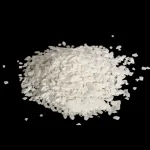
- Calcium chloride dihydrate flakes (77–80% CaCl₂): The most common industrial grade. Contains approximately 20% water of crystallization plus sodium chloride, magnesium chloride, and insoluble matter. Frequently marketed for de-icing and dust control; only selected batches with low alkali and chloride impurities are appropriate for concrete.
- Liquid calcium chloride (30–40% CaCl₂ solution): Used extensively in ready-mix plants for accurate dosing. Requires rigorous quality control of concentration (via specific gravity or hydrometer) and limits on sulfate and iron content.
- Food-grade and pharmaceutical-grade calcium chloride: Extremely high purity (≥96% CaCl₂) with tight heavy-metal specifications (e.g., arsenic <3 ppm, lead <5 ppm). Occasionally specified for concrete in contact with potable water, though cost and lack of customary concrete-industry documentation often make dedicated concrete grades more practical.
Why the distinction matters: Many calcium chloride products sold for dust control, de-icing, or food processing carry no representation regarding their effect on concrete setting time, corrosion potential, or compatibility with air-entraining admixtures. For structural concrete, specifiers should insist on a product that comes with a certificate of analysis addressing parameters relevant to cementitious systems.
How Does Calcium Chloride Work as a Concrete Accelerator?
Calcium chloride accelerates cement hydration primarily by catalyzing the reaction of tricalcium silicate (C₃S), the dominant compound in portland cement. It reduces the induction period—the phase when hydration temporarily slows—so that initial and final set occur sooner. The practical result is a significant shortening of the time required for concrete to reach initial stiffness and, more importantly, to achieve the early compressive strength needed for formwork removal, post-tensioning, or load application.
At 2% anhydrous calcium chloride by weight of cement, initial setting time at 10°C (50°F) can drop from roughly 6–8 hours to 3–4 hours, a reduction of up to 50%. The effect is temperature-dependent: at 21°C (70°F), the acceleration is still substantial but proportionally smaller. In freezing or near-freezing conditions, calcium chloride lowers the freezing point of the mix water and sustains hydration, enabling concrete placement at temperatures as low as -4°C (25°F) when combined with heated materials and proper curing.
The rate of early-age heat evolution also increases, which benefits winter concreting but can be problematic in mass placements where thermal cracking must be controlled. Consequently, calcium chloride acceleration is not recommended for concrete sections thicker than 1 meter unless thermal modeling confirms acceptable temperature differentials.
Why Purity Matters in Calcium Chloride Concrete Grade
Impurities in calcium chloride—sodium chloride (NaCl), magnesium chloride (MgCl₂), sulfate (SO₄²⁻), and water-insoluble residues—each bring distinct concrete durability penalties.
| Impurity | Typical Range in Industrial Flake | Concrete Durability Concern |
|---|---|---|
| Sodium chloride (NaCl) | 3–5% | Increases total chloride ion load, contributing to corrosion risk of reinforcing steel. |
| Magnesium chloride (MgCl₂) | 0.5–2% | More hygroscopic than CaCl₂; may prolong slump loss and increase shrinkage. |
| Sulfate (SO₄²⁻) | 0.1–0.5% | Adds to the sulfate load; can exacerbate ettringite formation and sulfate attack. |
| Water-insoluble residue | 0.5–2% | May interfere with air-void system and reduce freeze-thaw durability. |
High-purity anhydrous pellets typically limit sodium chloride below 2% and sulfate below 0.2%, making them the safer choice when the concrete mix design already uses sulfate-resisting cement or when total chloride ion budget is tight. As ASTM D98 requires for calcium chloride used in concrete, sulfate content (as CaSO₄) should not exceed 2.5%, and magnesium as MgCl₂ should be limited, though specific concrete applications often demand stricter internal limits.
What Industry Standards Govern Calcium Chloride Use in Concrete?
Several interrelated standards establish the performance, composition, and dosage boundaries for calcium chloride in structural concrete.
- ASTM C494/C494M – Standard Specification for Chemical Admixtures for Concrete: Type C accelerating admixtures must meet specified minimum requirements for time of setting and compressive strength. While calcium chloride is a common ingredient, ASTM C494 does not mandate its presence. The standard, however, requires the manufacturer to declare chloride content on the product data sheet.
- ASTM D98 – Standard Specification for Calcium Chloride: Covers technical-grade calcium chloride for concrete, dust control, and other uses. Grades are defined by purity and sulfate limits. For concrete, ASTM D98 Type S (solid) and Type L (liquid) grades are referenced.
- ACI 212.3R – Report on Chemical Admixtures for Concrete: Provides extensive guidance on dosage rates (recommending 1% to 2% by weight of cement), temperature effects, and compatibility with other admixtures.
- ACI 318-19 – Building Code Requirements for Structural Concrete: "The water-soluble chloride ion content contributed by concrete materials, including water, aggregates, cementitious materials, and admixtures, shall not exceed 0.06% by weight of cement for reinforced concrete that will be exposed to moisture in service." This hard limit forces a holistic calculation: every component’s chloride contribution must be summed, and the calcium chloride concrete grade must be chosen so that the total stays under the code maximum.
Specifiers should request a chloride ion contribution statement expressed as percent Cl⁻ by weight of cement at the recommended dosage. A typical high-purity pellet dosed at 2% by weight of cement contributes roughly 0.9–1.0% chloride ion by weight of cement to the mix—far exceeding the ACI 318 limit if the full dose were applied to a reinforced moisture-exposed element. This is precisely why calcium chloride is generally prohibited in post-tensioned structures and limited in many reinforced concrete applications unless stringent corrosion protection measures (such as epoxy-coated rebar, increased concrete cover, and low-permeability mix designs) are implemented.
What Factors Should You Evaluate When Choosing a Calcium Chloride Concrete Grade?
Chloride Ion Contribution and Corrosion Risk
Every calcium chloride source adds a specific mass of chloride ion per unit mass of admixture. Calculate the total chloride ion contribution as:
Total Cl⁻ (%) = (CaCl₂ dosage % × Cl⁻ fraction in CaCl₂ × CaCl₂ purity) + Cl⁻ from aggregates, water, and other admixtures.
For anhydrous CaCl₂ (96% purity), the Cl⁻ fraction is approximately 63.9%. Therefore, a 2% dosage by weight of cement contributes about 1.23% chloride ion by weight of cement from the admixture alone—well above the ACI 318 threshold for reinforced concrete. In unreinforced plain concrete, this limit does not apply, making calcium chloride a straightforward accelerator choice.
Purity and Alkali Content
Alkali content (Na₂O equivalent) in calcium chloride, while not directly regulated, influences the risk of alkali-silica reaction (ASR) when reactive aggregates are present. Request the supplier’s analysis for Na₂O and K₂O. Where ASR mitigation is critical, select a grade with combined alkalis below 0.5% by weight of the admixture.
Physical Form: Flake, Pellet, or Liquid
- Pellets: Free-flowing, low-dust, easy to store. Dissolve rapidly in batch water. Preferred for site-batched concrete.
- Flakes: Higher surface area aids dissolution but also absorbs moisture from the air, leading to caking. Often the most economical per ton of CaCl₂ but with the highest impurity risk.
- Liquid solutions: Allow precise metering via admixture dispensers, minimizing dosing errors. However, the water in the solution must be subtracted from the mix water to maintain the design water-cement ratio. Typical liquid concentrations are 30–40% CaCl₂; specific gravity should be verified at the delivery temperature.
Sulfate Resistance and Durability
Calcium chloride increases the reactivity of tricalcium aluminate (C₃A) in portland cement. When the cement’s C₃A content exceeds 8%, the risk of sulfate attack can rise, particularly in sulfate-rich soils or groundwater. Select a calcium chloride concrete grade with a sulfate content below 0.2% if the concrete will be exposed to sulfate environments, and consider using ASTM C150 Type II or Type V cement.
How to Read a Calcium Chloride Technical Data Sheet
A technically sound data sheet for concrete-grade calcium chloride should include, at minimum:
- CaCl₂ purity (as anhydrous or dihydrate basis, clearly stated).
- Chloride ion content expressed as percent Cl⁻ by weight of the product.
- Sulfate (as CaSO₄) and magnesium (as MgCl₂) content.
- Water-insoluble residue (%).
- Alkali content (Na₂O + 0.658 K₂O).
- Heavy metal limits if applicable (arsenic, lead, cadmium).
- Recommended dosage range for concrete acceleration (typically 1%–2% by weight of cement).
- Approximate effect on setting time at 10°C and 21°C.
- Compatibility statement with air-entraining agents, water reducers, and supplementary cementitious materials (fly ash, slag, silica fume).
- ASTM C494 Type C certification or compliance statement.
If any of these values are absent, request them in writing before qualifying the supplier. Concrete producers who skip this step risk introducing a variable that can silently degrade long-term durability.
Where Is Calcium Chloride Acceleration Most Beneficial?
Calcium chloride acceleration delivers the greatest value in:
- Cold-weather concreting (ambient temperature 0°C to 10°C): Accelerates strength gain and shortens the protection period, saving heating and labor costs.
- Precast concrete plants: Enables faster form stripping and higher production turnover without high-energy steam curing.
- Repair mortars and grouts: Rapid setting minimizes shutdown time on highways, runways, and industrial floors.
- Unreinforced concrete: Flatwork, curbs, and mass fills where corrosion risk is absent allow full utilization of the 2% dosage limit.
In contrast, calcium chloride should generally be avoided in post-tensioned structures, prestressed concrete, aluminum-embedded systems, and concrete containing reactive aggregates unless rigorous testing and alternative protection measures are documented.
Which Calcium Chloride Grade Should You Choose for Your Project?
Use the decision matrix below to match your project’s requirements to the appropriate grade and form.
Choose anhydrous calcium chloride pellets (≥94% CaCl₂) when:
- The concrete contains reinforcing steel and total chloride ion budget must be tightly controlled.
- Cold-weather placement demands predictable set acceleration and low water content.
- High sulfate resistance is required (sulfate <0.2%).
- Air-entrained concrete is specified and compatibility is critical.
Choose calcium chloride dihydrate flakes (77–80% CaCl₂) when:
- The application is plain (unreinforced) concrete.
- The cement has a C₃A content below 8% and sulfate exposure is minimal.
- A rigorous incoming inspection program verifies NaCl and insolubles for every shipment.
- Budget constraints are significant, and the project accepts the risk of higher impurity variation.
Choose liquid calcium chloride solution (30–40% CaCl₂) when:
- The concrete is produced in a ready-mix plant with automated admixture dispensing.
- Dosing accuracy and batch-to-batch uniformity are high priorities.
- The water content of the solution can be deducted from the mix water calculation.
- On-site storage and handling infrastructure for liquid chemicals already exists.
Choose food-grade or pharmaceutical-grade calcium chloride when:
- The concrete will be in prolonged contact with potable water and must meet NSF/ANSI Standard 61 or equivalent leaching limits.
- Heavy-metal restrictions (lead <5 ppm, arsenic <3 ppm) are contractually required.
- Documentation of trace element analysis is mandatory for environmental permitting.
What Should You Look for in a Calcium Chloride Supplier?
When evaluating potential suppliers, use the following audit checklist to verify that the calcium chloride concrete grade meets the technical demands of your concrete operations.
Supplier Evaluation Checklist
- Request a current certificate of analysis for the specific production lot, not a generic brochure.
- Verify CaCl₂ purity (anhydrous or dihydrate basis) and chloride ion content.
- Confirm sulfate content as CaSO₄ is below your internal limit (typically <0.2% for sulfate-resistant concrete).
- Obtain alkali content (Na₂O equivalent) for ASR risk assessment.
- Check for heavy metal data if drinking water contact is possible.
- Ask for an ASTM C494 Type C compliance letter or independent test report.
- Review the supplier’s quality control frequency: batch testing versus periodic composite sampling.
- Inspect packaging and storage recommendations to prevent moisture absorption and caking.
- Request particle size distribution for solids and specific gravity curves for liquids.
- Evaluate logistics: lead time, minimum order quantity, and cold-chain requirements if applicable.
- Ask for at least two references from ready-mix or precast producers using the same grade.
- Verify the supplier’s safety data sheet (SDS) for handling, PPE, and environmental precautions.
A supplier who cannot produce a lot-specific certificate of analysis or who is reluctant to disclose impurity levels should be viewed with caution, regardless of price. The cost of a single corrosion-related repair far exceeds any short-term admixture savings.
FAQs
What is a calcium chloride concrete grade?
A calcium chloride concrete grade refers to a purity and physical form of calcium chloride specifically tested and documented for use as a concrete accelerating admixture. It meets limits on chloride ion contribution, sulfate, alkalis, and insolubles defined by standards such as ASTM D98 and performance requirements of ASTM C494.
How much calcium chloride should I add to concrete?
The typical dosage is 1% to 2% flake or pellet calcium chloride by weight of cement, with 2% being the common maximum. For liquid solutions, the equivalent anhydrous calcium chloride mass must be calculated. Always verify total chloride ion contribution against ACI 318 limits.
Is calcium chloride bad for reinforced concrete?
It can be if the chloride ion limit is exceeded. ACI 318-19 caps water-soluble chloride ion at 0.06% by weight of cement for reinforced concrete exposed to moisture. Even at 1% calcium chloride dosage, the chloride ion contribution is substantial, so reinforced elements require careful mix design and often additional corrosion protection.
Can I use de-icing calcium chloride in concrete?
Not recommended. De-icing grade calcium chloride typically has higher sodium chloride and insoluble residues than concrete-specific grades. These impurities can increase corrosion risk, reduce strength, and interfere with air-void formation.
What is the difference between calcium chloride flake and pellet for concrete?
Flakes contain roughly 77–80% CaCl₂ with higher impurity levels; they dissolve quickly but are more hygroscopic. Pellets offer 94–97% purity, lower water content, and superior flowability, making them the preferred solid form for critical structural concrete.
Does calcium chloride affect concrete strength?
At the recommended 2% dosage, calcium chloride increases early-age compressive strength (1 to 7 days) by 20 to 50% compared to plain concrete at the same temperature. Long-term strength (28 days and beyond) is generally comparable, though very high dosages may reduce ultimate strength slightly.
Is calcium chloride an accelerator or a retarder?
Calcium chloride is a powerful accelerator. It shortens both initial and final setting times by catalyzing C₃S hydration. It is never used as a retarder; hot-weather concreting requires set-retarding admixtures instead.
How does calcium chloride affect freeze-thaw durability?
Properly air-entrained concrete containing calcium chloride can still achieve good freeze-thaw resistance. However, impurities such as insoluble residues may destabilize the air-void system. Always test air content and spacing factor when introducing a new calcium chloride source.
What is ASTM C494 Type C?
ASTM C494 Type C is the standard classification for accelerating admixtures. To comply, the admixture must reduce initial setting time by at least 30% and increase compressive strength at 3 days by a minimum of 125% compared to a control mix. Many Type C admixtures contain calcium chloride as the active accelerator.
Can calcium chloride cause efflorescence?
Yes. Calcium chloride increases the calcium ion content in concrete pore solution, which can migrate to the surface and react with atmospheric carbon dioxide to form white calcium carbonate deposits. Proper curing and mix design can minimize visible efflorescence.
Conclusion
Choosing the right calcium chloride concrete grade is fundamentally a risk-management exercise that balances accelerated strength gain against the potential for reinforcement corrosion, sulfate attack, and incompatibility with other admixtures. The three most important decision drivers are chloride ion contribution, purity (especially sulfate and alkali content), and compliance with ASTM C494 and ACI 318 limits. A product that meets these criteria in its certificate of analysis and is dosed within the proven 1–2% range will reliably shorten setting time and boost early-age strength without compromising long-term durability.
When evaluating suppliers, prioritize those who provide lot-specific chemical data, have a track record of consistent particle size or solution concentration, and openly disclose impurity profiles. Pair this technical scrutiny with a clear decision matrix—matching grade and physical form to the presence of reinforcement, exposure class, and production logistics—and your procurement process will support both concrete performance and structural service life.