Modern industrial sectors, ranging from oil and gas exploration to winter road maintenance, face a persistent challenge: sourcing consistent, high-purity chemical compounds at scale. The reliance on variable suppliers often leads to operational inefficiencies, equipment corrosion, or compromised safety standards. For technical procurement teams, understanding the calcium chloride manufacturing process is no longer just a technical curiosity—it is a critical requirement for securing reliable supply chains and verifying product quality.
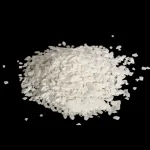
Different production methods yield varying levels of purity, moisture content, and heavy metal trace elements. Whether sourcing 77% flakes for dust suppression or 94% anhydrous pellets for moisture absorption, the specific manufacturing origin directly dictates the compound’s performance and environmental compliance. Evaluating these processes allows procurement professionals to align technical specifications with application requirements accurately.
This article explains how industrial-grade and food-grade calcium chloride are produced, detailing the core chemical reactions, purification stages, and quality assurance checkpoints that define industry standards.
Calcium chloride is safe and highly effective for industrial use if the manufacturing process strictly controls heavy metal contaminants and maintains precise concentration levels. The primary risks stem from residual acidity or untreated impurities in poorly managed production facilities.
Primary Production Methods and Raw Material Sourcing
The global supply of calcium chloride primarily originates from three distinct production avenues. The choice of method largely depends on regional resource availability, environmental regulations, and the desired purity of the final product.
The three dominant pathways include the recovery of by-products from the Solvay process, the direct reaction of limestone with hydrochloric acid, and the refinement of naturally occurring brine lakes. Each method requires specific infrastructure and rigorous filtration protocols to isolate calcium chloride (CaCl₂) from competing minerals like magnesium and sodium.
The Solvay Process: Ammonia-Soda By-Product Recovery
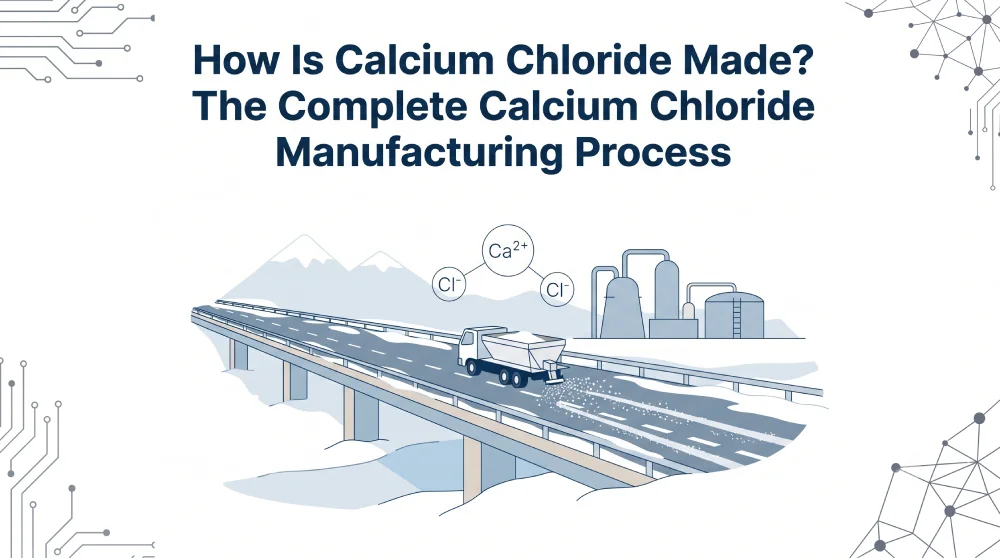
Historically, the most significant source of synthetic calcium chloride has been the Solvay process. Originally designed to produce sodium carbonate (soda ash), this process generates massive volumes of a calcium chloride-rich liquid waste stream. Modern chemical engineering has transformed this waste into a highly valuable commercial product.
Step 1: Ammonia Distillation and Waste Liquor Generation
The process begins when ammonium chloride reacts with calcium hydroxide (slaked lime) during the soda ash production cycle. This reaction releases ammonia gas, which is recycled, and leaves behind a distiller waste liquor. This liquor typically contains about 10% to 12% calcium chloride, alongside sodium chloride and unreacted calcium carbonate.
Step 2: Settling and Initial Clarification
The raw liquor is pumped into massive settling tanks. Here, suspended solids, primarily calcium carbonate and calcium sulfate, are allowed to settle at the bottom. Flocculants are often added to accelerate this process, ensuring that the supernatant liquid is clear and free from large particulate matter.
Step 3: Evaporation and Concentration
The clarified liquor undergoes a multi-effect evaporation process. By applying steam heat under vacuum conditions, water is systematically removed. As the concentration of the solution increases past 25%, the less soluble sodium chloride begins to crystallize and precipitate out of the solution.
Step 4: Fractional Crystallization and Separation
The mixture is fed into centrifuges or hydrocyclones to mechanically separate the solid sodium chloride crystals from the concentrated calcium chloride brine. This step is critical; effective separation reduces sodium impurities to below 1.5%, meeting standard industrial specifications.
Step 5: Flaking or Pelletizing
The highly concentrated liquid (now at roughly 35% to 45% concentration) can be sold as liquid brine or further dehydrated. To produce solid forms, it is passed through flaker machines or fluidized bed dryers at temperatures exceeding 150°C, yielding 77% to 94% active solid calcium chloride.
The Direct Limestone and Hydrochloric Acid Reaction
For applications demanding exceptionally high purity, such as food processing, pharmaceuticals, or high-end agriculture, the direct reaction method is preferred. This process relies on neutralizing hydrochloric acid with high-grade calcium carbonate.
Step 1: Material Preparation and Crushing
High-purity limestone (CaCO₃) is mined, crushed, and screened to a uniform particle size. The quality of the limestone dictates the baseline purity; ores with low magnesium and iron content are strictly prioritized.
Step 2: The Acid-Base Reaction
The crushed limestone is introduced into a corrosion-resistant reactor, where aqueous hydrochloric acid (HCl) is carefully metered in. The chemical reaction is straightforward:
CaCO₃ + 2HCl → CaCl₂ + H₂O + CO₂
This exothermic reaction produces a crude calcium chloride solution, water, and carbon dioxide gas, which is safely vented or captured.
Step 3: Neutralization and Impurity Removal
Because the reaction leaves residual acidity, slaked lime (Ca(OH)₂) is added to adjust the pH to a neutral or slightly alkaline level (pH 8-9). This shift causes trace heavy metals, such as iron and magnesium, to precipitate out as insoluble hydroxides.
Step 4: Filtration and Final Dehydration
The solution passes through heavy-duty filter presses to remove the precipitated impurities. The resulting ultra-clear liquid is then evaporated and dried. Because the starting materials are tightly controlled, this method easily achieves purity levels exceeding 96%.
Natural Brine Extraction and Solar Evaporation
In specific geological regions, such as the Great Salt Lake or the Dead Sea, calcium chloride is naturally dissolved in subterranean brine aquifers or surface lakes.
Step 1: Brine Pumping and Solar Concentration
Natural brine is pumped into expansive, shallow evaporation ponds. Solar energy slowly evaporates the water, steadily increasing the concentration of dissolved salts.
Step 2: Sequential Mineral Precipitation
Because different salts have different solubility limits, they precipitate at different stages. Sodium chloride drops out first, followed by potassium compounds. The remaining "bittern" is heavily concentrated with calcium and magnesium chlorides.
Step 3: Magnesium Separation and Drying
Chemical treatments, often involving calcium oxide, are applied to precipitate the magnesium. The final purified liquid is then mechanically dried. This method is highly energy-efficient due to its reliance on solar evaporation, though it is limited by geographical constraints and seasonal weather patterns.
Solvay Process vs Natural Brine Extraction: A Comparison
When technical procurement teams evaluate suppliers, understanding the origin of the chemical is vital for cost and quality forecasting.
| Evaluation Metric | Solvay By-Product Recovery | Limestone & Acid Reaction | Natural Brine Extraction |
| Typical Purity Range | 74% - 80% (Standard) | 94% - 99% (High Purity) | 77% - 94% (Variable) |
| Primary Impurities | Sodium Chloride (NaCl) | Trace heavy metals | Magnesium Chloride (MgCl₂) |
| Production Cost | Moderate to Low | High | Low (Highly localized) |
| Best Suited For | Road deicing, dust control | Food-grade, pharma, lab use | Oil drilling, concrete acceleration |
| Environmental Impact | Reduces chemical waste | Requires acid handling | Land-intensive ponds |
Choose Solvay By-Product Recovery when:
- The primary application is large-scale winter road deicing.
- Cost efficiency is the top priority for bulk procurement.
- Absolute maximum purity is not a strict regulatory requirement.
Choose Limestone & Acid Reaction when:
- Sourcing for food additives, brewing, or agricultural calcium supplements.
- Strict limitations on sodium or magnesium impurities exist.
- Consistent, predictable chemical behavior in sensitive manufacturing is required.
Choose Natural Brine Extraction when:
- Operating near geographical extraction zones to minimize freight costs.
- Sourcing liquid brine directly for oil and gas well completion fluids.
- Evaluating environmentally lower-energy production supply chains.
Quality Control Checklist for Technical Procurement
Ensuring that the acquired calcium chloride meets operational standards requires rigorous auditing. ASTM requires that industrial-grade calcium chloride meet specific chemical composition limits to ensure safe application in deicing and dust control. Procurement teams should demand Certificates of Analysis (CoA) and verify the following:
- Verify the total calcium chloride percentage via complexometric titration methods.
- Check the moisture content in solid forms to ensure it has not degraded or clumped during transit.
- Audit the heavy metal profile (Lead, Arsenic, Mercury) specifically if the product is intended for food-grade or agricultural use.
- Assess the particle size distribution (granules, pellets, or flakes) to ensure compatibility with spreading equipment.
- Confirm the pH level of a 5% aqueous solution falls within the acceptable range (typically 7.0 to 9.0) to prevent acidic corrosion of infrastructure.
- Request documentation regarding alkali chloride impurities (NaCl and KCl), which should typically remain below 2.0% for premium grades.
- Evaluate packaging integrity; hygroscopic materials must be sealed in moisture-barrier bags or tightly sealed bulk containers.
Conclusion
The calcium chloride manufacturing process encompasses complex chemical engineering, from recovering industrial by-products to neutralizing potent acids and harnessing natural solar evaporation. The manufacturing origin directly influences the chemical's purity profile, trace impurities, and ultimate cost-effectiveness.
By aligning the production method with specific application requirements, organizations can optimize their chemical spending and ensure operational reliability. When evaluating potential suppliers, prioritize those who provide transparent Certificates of Analysis and can demonstrate robust, multi-stage impurity filtration capabilities within their facilities.
FAQs
What is the most common calcium chloride manufacturing process?
The Solvay process is historically the most widespread method, where calcium chloride is recovered as a by-product of soda ash production. However, direct reaction between limestone and hydrochloric acid is increasingly common for producing high-purity variants.
How does the manufacturing process affect the chemical's purity?
Methods like the limestone-acid reaction allow for tight control over raw materials, resulting in purities exceeding 94%. By-product recovery methods typically yield 77% to 80% purity due to the presence of residual sodium chloride that is harder to completely separate.
Is calcium chloride safe for the environment?
When manufactured and applied correctly within recommended limits, it is generally safe. However, excessive application in deicing can lead to chloride runoff, which may affect local soil salinity and aquatic ecosystems. Regulated production minimizes toxic heavy metal contaminants.
What is the difference between food-grade and industrial-grade calcium chloride?
Food-grade calcium chloride is produced using the highly controlled limestone and acid method to eliminate toxic impurities like lead and arsenic. Industrial-grade is often produced via the Solvay process or natural brine, where trace levels of other salts are acceptable.
How long does calcium chloride take to absorb moisture from the air?
Due to its highly hygroscopic nature, solid calcium chloride begins absorbing moisture immediately upon exposure to humid air. It can dissolve itself into a liquid brine within a few days depending on the relative humidity and ambient temperature.
Why is slaked lime added during the limestone reaction process?
Slaked lime (calcium hydroxide) is added to neutralize residual hydrochloric acid. This critical step adjusts the pH, which forces unwanted trace metals like iron to precipitate out of the solution so they can be filtered away.
Is natural brine extraction better than synthetic production?
Neither is strictly "better," but natural brine extraction generally requires less energy since it relies on solar evaporation. However, its geographic dependence makes it unfeasible for global supply without significant freight costs, unlike synthetic plants.
What happens if calcium chloride is exposed to high heat during manufacturing?
Controlled high heat (up to 200°C) is necessary to drive off water and create anhydrous (dry) pellets. If temperatures are not carefully managed, the chemical structure can degrade, or it may fuse into unusable solid blocks inside the drying equipment.
How do manufacturers test the final concentration of the product?
Laboratories primarily use complexometric titration (often with EDTA) to determine the exact concentration of calcium ions. This standard test provides an accurate percentage of active calcium chloride in both liquid brines and solid flakes.
When should procurement choose liquid brine over solid flakes?
Liquid brine is ideal for immediate application in dust control or pre-wetting roads before a freeze, as it requires no on-site mixing. Solid flakes or pellets are preferred for long-term storage, moisture absorption, and reducing transportation costs over long distances.