Calcium chloride is one of the most effective deicing and anti-icing agents used in cold-weather operations, yet many engineering teams treat it as a simple "salt" without understanding the physical chemistry that makes it work. The performance difference between calcium chloride and other chloride salts is not marginal—it determines whether a road, runway, or conveyor system stays operational at temperatures where alternatives fail entirely.
The way engineers approach winter maintenance and freeze protection has shifted significantly. Rock salt and sand, once the default choices, are giving way to engineered chloride brines and treated salts driven by tighter environmental rules, faster cycle-time requirements, and the need to function at lower temperatures. Understanding the freezing point depression mechanism is the foundation for selecting the right agent and application rate.
Calcium chloride is safe when handled properly. The key risks are skin irritation, exothermic heat during dissolution, and corrosion of certain metals—all manageable with standard PPE and material selection. The main reason it lowers the freezing point so effectively comes down to colligative properties, ion count, and the unique hydration behavior of the calcium ion.
What This Article Covers
- The colligative property principle behind freezing point depression
- How calcium chloride dissociates into three ions and why that matters
- Why the calcium ion's hydration shell creates an unusually strong effect
- How the eutectic point defines the practical lower temperature limit
- A direct comparison of calcium chloride against sodium chloride and magnesium chloride
- Common misconceptions about corrosion, safety, and application rates
- Bottom line: Calcium chloride delivers roughly three times the freezing point depression of sodium chloride at equal molar concentration, extending effective deicing down to approximately −29°C (−20°F) as a practical working range.
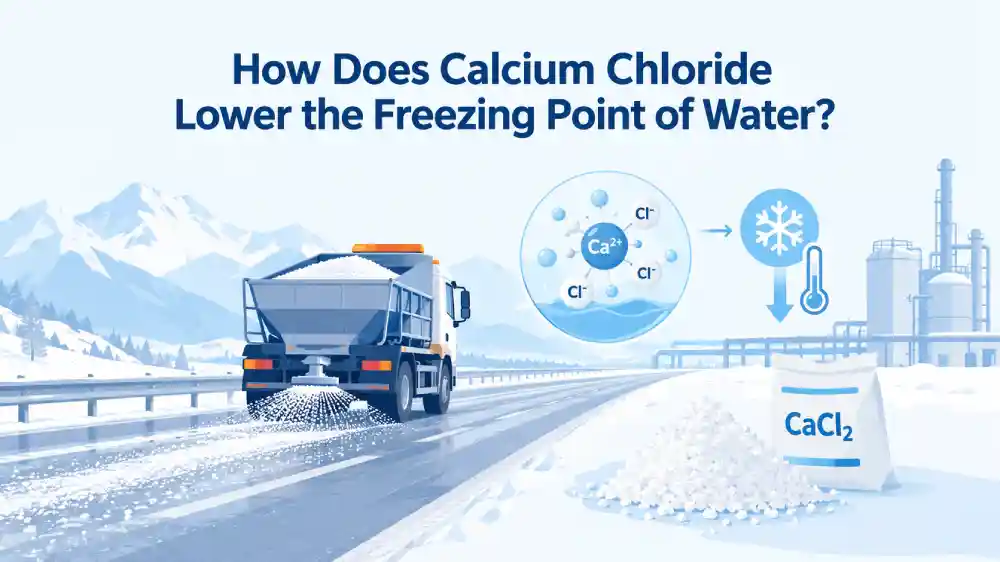
What Is Freezing Point Depression?
Freezing point depression is a colligative property, meaning it depends on the number of dissolved particles in a solution rather than on the chemical identity of those particles. When a solute dissolves in water, the dissolved particles interfere with the orderly arrangement of water molecules into an ice crystal lattice.
Water freezes at 0°C (32°F) under standard atmospheric pressure. Adding any soluble solute lowers that freezing temperature because the solute particles occupy space and interrupt hydrogen bonding between water molecules. More particles mean a lower freezing point, which is why the effect is described as "colligative"—from the Latin for "collected together."
For a given mass of solute, the number of particles produced depends on two factors: the molar mass of the compound and how many ions each formula unit releases upon dissolution. This is where Calcium Chloride separates itself from other common deicers.
The fundamental relationship is expressed in the van't Hoff equation for freezing point depression:
ΔTf = i × Kf × m
Where ΔTf is the freezing point depression, i is the van't Hoff factor (number of particles per formula unit), Kf is the cryoscopic constant of water (1.86 °C·kg/mol), and m is the molality of the solution.
How Does Calcium Chloride Dissociate in Water?
Calcium chloride (CaCl₂) is an ionic compound that dissociates completely in water, releasing one calcium ion (Ca²⁺) and two chloride ions (Cl⁻) per formula unit. This gives it a van't Hoff factor of 3, compared to 2 for sodium chloride (NaCl).
| Compound | Formula | Ions per Formula Unit | van't Hoff Factor (i) |
|---|---|---|---|
| Sodium chloride | NaCl | Na⁺ + Cl⁻ | 2 |
| Magnesium chloride | MgCl₂ | Mg²⁺ + 2Cl⁻ | 3 |
| Calcium Chloride | CaCl₂ | Ca²⁺ + 2Cl⁻ | 3 |
| Potassium chloride | KCl | K⁺ + Cl⁻ | 2 |
The molar mass of calcium chloride is 110.98 g/mol (anhydrous), which is higher than sodium chloride at 58.44 g/mol. This means that on a per-pound basis, calcium chloride produces slightly fewer moles than sodium chloride. However, the practical performance advantage comes from three factors working together:
- Triple ion yield: Each CaCl₂ unit produces 3 ions versus 2 for NaCl, a 50% increase in particle count per mole
- High solubility: Calcium chloride dissolves readily and can form concentrated brines exceeding 30% by weight
- Exothermic dissolution: CaCl₂ releases heat when it dissolves (approximately −82.8 kJ/mol), which accelerates ice melting
ASTM and ISO test standards for deicing chemicals, including ASTM D1194 and ISO 9001 quality frameworks, evaluate these performance characteristics for procurement decisions.
Why Does the Calcium Ion Create a Stronger Effect?
The calcium ion is divalent, carrying a +2 charge, which gives it a stronger electrostatic interaction with water molecules than the monovalent sodium ion. This has two important consequences for freezing point depression.
First, the divalent calcium ion has a larger hydration shell—it binds more water molecules in its immediate coordination sphere. This effectively removes more free water from the bulk solution, concentrating the remaining ions and enhancing the colligative effect.
Second, the strong ion-dipole interactions disrupt the hydrogen-bonding network of water more aggressively than monovalent ions do. The result is a solution that resists ice crystal formation at lower temperatures than an equivalent molal concentration of NaCl.
EPA guidance on road salt alternatives notes that chloride-based deicers differ substantially in their environmental and performance profiles, and that Calcium Chloride-based products typically require lower application rates by mass to achieve equivalent melting.
This is why the practical difference between calcium chloride and sodium chloride is larger than the simple ion-count ratio of 3:2 might suggest.
What Is the Eutectic Point of Calcium Chloride?
The eutectic point is the lowest temperature at which a given salt solution can remain liquid at a specific concentration. Below this temperature, the solution freezes regardless of concentration.
For calcium chloride, the eutectic point is approximately −51°C (−60°F) at a concentration of about 30% by weight. This is significantly lower than the eutectic point of sodium chloride, which is approximately −21°C (−6°F) at 23.3% concentration.
| Deicer | Eutectic Temperature | Eutectic Concentration |
|---|---|---|
| Sodium chloride (NaCl) | −21°C (−6°F) | 23.3% |
| Magnesium chloride (MgCl₂) | −33°C (−27°F) | 21.6% |
| Calcium Chloride (CaCl₂) | −51°C (−60°F) | ~30% |
In practical engineering terms, the eutectic point defines the theoretical floor. Most winter maintenance operations target a working range of −29°C (−20°F) for calcium chloride, where it still provides reliable melting capacity. Below that threshold, performance declines and application rates must increase substantially.
Is Calcium Chloride Better Than Sodium Chloride for Freezing Point Depression?
For pure freezing point depression performance, calcium chloride is more effective than sodium chloride across the entire practical temperature range. The comparison is not close at lower temperatures.
| Dimension | Calcium Chloride (CaCl₂) | Sodium Chloride (NaCl) |
|---|---|---|
| Ions per formula unit | 3 | 2 |
| Eutectic temperature | −51°C (−60°F) | −21°C (−6°F) |
| Effective range | Down to −29°C (−20°F) practical | Down to −10°C (14°F) practical |
| Exothermic dissolution | Yes (−82.8 kJ/mol) | Slightly endothermic (+3.9 kJ/mol) |
| Typical application rate | Lower by mass | Higher by mass |
| Corrosion to steel | Moderate to high | Moderate |
| Environmental chloride load | Higher per unit mass | Lower per unit mass |
The trade-off is cost and environmental load. Calcium chloride typically costs more per ton than sodium chloride, and it introduces more chloride ions per unit of melting capacity in some application scenarios. For engineering teams, the decision usually hinges on the required operating temperature and the acceptable cycle time for melting.
Where Is Calcium Chloride Used for Freeze Protection?
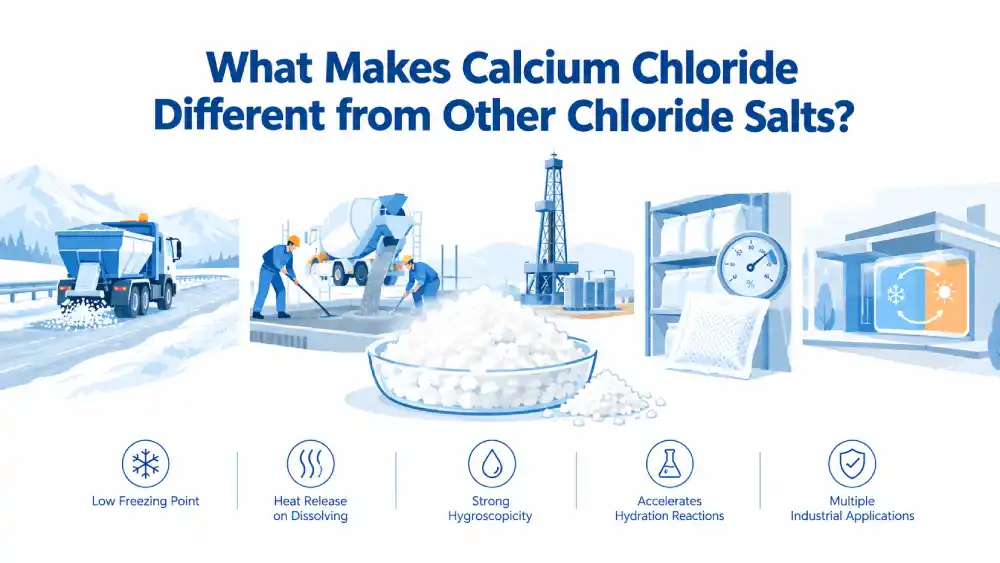
Calcium chloride is used wherever reliable performance at low temperatures justifies its cost premium. Common engineering applications include:
- Highway and bridge deicing: Liquid CaCl₂ brines are applied before and during winter storms to prevent ice bonding
- Airport runway treatment: Runways require fast-acting deicers that work at altitude and in extreme cold
- Concrete curing acceleration: Calcium chloride accelerates set time in cold-weather concrete pours
- Dust control on unpaved roads: Hygroscopic properties keep surfaces damp and suppress dust
- Refrigeration brines: Industrial cooling systems use CaCl₂ solutions as secondary refrigerants
- Coal and mineral handling: Prevents freeze-up of bulk materials in rail cars and stockpiles
OSHA and ASTM standards apply to workplace handling and performance testing of these materials in industrial settings.
Common Mistakes to Avoid
Misconceptions about calcium chloride lead to both performance shortfalls and unnecessary safety concerns. The following errors appear frequently in engineering specifications.
- Assuming all chloride salts behave the same. The divalent calcium ion and the 3-ion dissociation produce a fundamentally different freezing curve than NaCl. Treating them as interchangeable leads to under-application at low temperatures.
- Ignoring the exothermic reaction. Calcium chloride releases heat when it dissolves. While this accelerates melting, it also means dry product can cause burns on contact with skin or eyes. Standard PPE including gloves and eye protection is required.
- Over-applying to compensate for cold. Beyond the eutectic range, adding more salt does not lower the freezing point further. It only increases cost, chloride load, and environmental impact.
- Overlooking corrosion compatibility. Calcium chloride is aggressive toward mild steel, aluminum, and galvanized surfaces. ASTM corrosion testing should inform material selection for equipment in contact with brines.
What to Look for in Calcium Chloride Products
When specifying calcium chloride for freeze protection, engineers should evaluate suppliers against objective performance and documentation criteria rather than marketing claims.
Key selection criteria include:
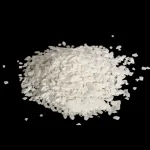
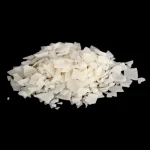
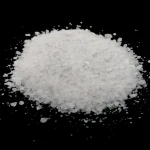
- Concentration and form: Anhydrous flakes, dihydrate pellets, and liquid brines each have different handling and performance profiles
- Certification and testing: Suppliers should provide batch analysis and third-party test data aligned with ASTM or ISO methods
- Corrosion inhibitor content: Some formulations include inhibitors for specific metals; verify compatibility with your equipment
- Traceability and SDS documentation: Complete safety data sheets and lot traceability are essential for industrial procurement
- Delivery and storage capability: Bulk liquid vs. packaged solid determines storage infrastructure requirements
For teams evaluating freeze protection chemistry, working with a supplier that provides full documentation and consistent concentration control reduces both operational risk and total cost of ownership.
Conclusion
Calcium chloride lowers the freezing point of water through a combination of colligative particle effects, triple-ion dissociation, and the strong hydration behavior of the divalent calcium ion. This combination produces a eutectic point near −51°C (−60°F) and a practical working range down to approximately −29°C (−20°F), substantially outperforming sodium chloride at low temperatures.
The three core points to remember are that ion count drives freezing point depression, the divalent calcium ion enhances the effect beyond simple ion counting, and the eutectic point sets the hard limit on any deicing application. For engineering teams specifying freeze protection, the priority should be matching the deicer's performance envelope to the actual operating temperature, not simply selecting the lowest-cost chloride salt.
When evaluating options for cold-weather operations, start by mapping your minimum operating temperature and required melt rate, then compare candidate products against those thresholds using documented performance data.
FAQs
What is the freezing point of a saturated calcium chloride solution?
A saturated calcium chloride solution freezes at approximately −51°C (−60°F) at a concentration of about 30% by weight. This is the eutectic point, the lowest temperature at which the liquid phase remains stable.
- Eutectic temperature: −51°C (−60°F)
- Eutectic concentration: ~30% CaCl₂ by weight
- Practical working range: down to −29°C (−20°F)
How does calcium chloride compare to magnesium chloride for deicing?
Both are chloride salts with a van't Hoff factor of 3, but calcium chloride has a lower eutectic point and releases more heat on dissolution. Magnesium chloride is often promoted as less corrosive, though field data varies by formulation and surface type.
- CaCl₂ eutectic: −51°C (−60°F)
- MgCl₂ eutectic: −33°C (−27°F)
- CaCl₂ releases ~82.8 kJ/mol on dissolution; MgCl₂ releases less
Is calcium chloride safe to use around concrete?
Calcium chloride can accelerate set time in fresh concrete at low doses, but high concentrations can cause surface scaling and spalling in hardened concrete. ASTM C672 testing evaluates scaling resistance. Use controlled application rates and avoid repeated saturation of concrete surfaces.
How long does calcium chloride remain effective on a road surface?
Duration depends on precipitation, traffic, and application rate. A typical liquid brine application provides 2–6 hours of active protection, while solid product can persist longer under dry conditions. Reapplication is required after precipitation dilutes or washes away the residual.
What is the exothermic reaction of calcium chloride?
Calcium chloride releases approximately 82.8 kJ of heat per mole when it dissolves in water. This exothermic dissolution accelerates ice melting, which is why it works faster than endothermic salts like sodium chloride in cold conditions.
Does calcium chloride corrode metal?
Yes. Calcium chloride is corrosive to mild steel, aluminum, and galvanized coatings, particularly in the presence of moisture. ASTM B117 salt spray testing is commonly used to evaluate corrosion performance. Corrosion-inhibited formulations are available for sensitive applications.
- Mild steel: moderate to high corrosion
- Aluminum: high corrosion risk
- Galvanized steel: moderate corrosion
- Stainless steel: generally resistant
When should calcium chloride be used instead of sand?
Calcium chloride should be used when melting, not traction, is the objective. Sand provides temporary traction but does not melt ice and can clog drainage systems. Use CaCl₂ when temperatures are below −10°C (14°F) and fast melting is required.
What concentration of calcium chloride is most effective?
The most effective concentration depends on the target temperature. For temperatures above −18°C (0°F), a 25–30% brine is typical. For extreme cold approaching −29°C (−20°F), higher concentrations near the eutectic point are required.
Is calcium chloride harmful to the environment?
Chloride-based deicers contribute to chloride loading in freshwater systems, which can harm aquatic life at elevated concentrations. EPA and state agencies regulate chloride discharge in some watersheds. Use the minimum effective application rate and consider alternative chemistries in sensitive areas.
How should calcium chloride be stored?
Store calcium chloride in sealed, moisture-resistant containers away from reactive metals. Anhydrous and dihydrate forms are hygroscopic and will absorb atmospheric moisture, which can cause caking and dilution. Liquid brines should be stored in compatible tanks with secondary containment.