
Warehouse teams and industrial handlers often struggle with the degradation of stored hygroscopic compounds. Traditional approaches like basic pallet wrapping address the symptoms of humidity exposure but fail to prevent chemical clumping or structural degradation over long periods. Calcium chloride is highly sensitive to ambient environmental conditions, meaning standard non-regulated storage setups inevitably lead to moisture absorption, liquefaction, and significant loss of product utility.
The way industrial logistics operations approach chemical holding environments has shifted significantly. Standard open-air warehousing is giving way to climate-monitored, moisture-sealed protocols driven by strict efficiency metrics and occupational safety mandates. Failing to isolate these compounds from atmospheric humidity leads to caked materials that clog processing machinery, decrease active chemical concentrations, and render tons of raw inventory unusable.
What makes an apparently straightforward compound so difficult to manage effectively over multi-month lifecycles? The answer lies in the fundamental thermodynamics of the material itself. Because calcium chloride continuously attracts vapor from the air until it completely dissolves in its own absorbed water, even microscopic breaches in packaging will initiate an irreversible degradation cycle.
Condition-Based Preliminary Summary:
Calcium chloride storage is highly effective and completely safe if moisture exposure is strictly controlled and appropriate containment material is verified. The primary risks during extended warehousing are accelerated moisture absorption (deliquescence), chemical clumping, concrete floor corrosion from accidental brine leaks, and chemical heat release upon unexpected contact with liquid water.
What Is Calcium Chloride and Why Is It Highly Hygroscopic?
To design a functional calcium chloride storage blueprint, warehouse managers must understand the exact physical chemistry behind the compound. Calcium chloride (CaCl₂) is an inorganic salt with an extreme affinity for water molecules. When exposed to the atmosphere, it functions as a natural desiccant, continuously pulling vapor into its crystalline matrix.
This behavior is known as deliquescence. The substance absorbs so much ambient water that it eventually dissolves into a highly concentrated liquid brine solution. The chemical transitions from an anhydrous state or a low-hydrate state (such as dihydrate, CaCl₂·2H₂O) into higher hydrate forms when exposed to moisture.
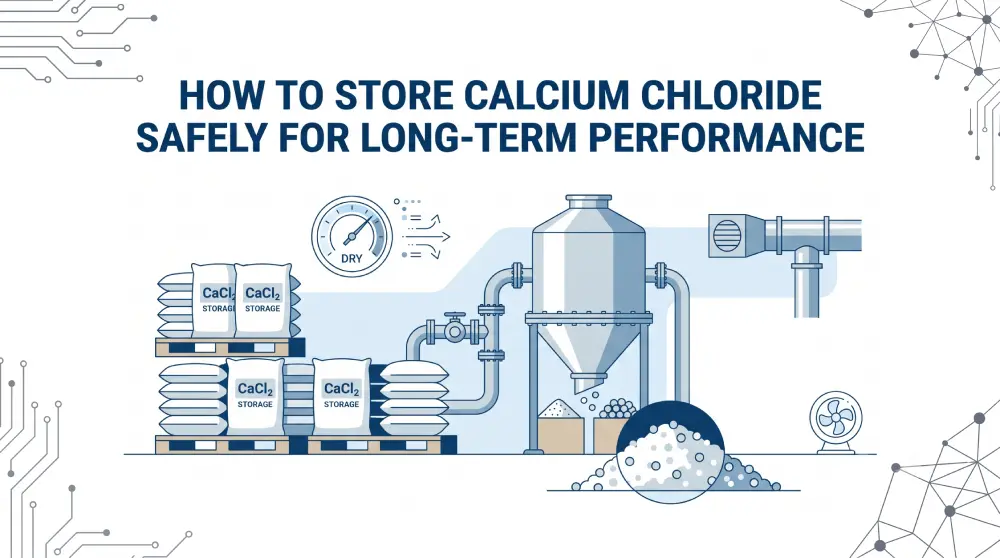
The International Association of Chemical Manufacturers reports that "anhydrous calcium chloride liberates substantial heat when dissolving in water, a property that can cause significant thermal stress on inadequate storage containers if liquid leaks occur." This exothermic reaction means that moisture ingress does not just ruin the product—it can create secondary thermal hazards within closed storage structures.
Technical Specifications and Environmental Threshold Matrix
Unregulated facility environments ruin material properties. Maintaining product flowability requires keeping facility metrics below specific dew points and relative humidity milestones.
The following environmental configuration matrix defines the precise tolerances necessary for stable industrial warehousing:
| Environmental Variable | Optimal Operational Range | Critical Alert Threshold | Mitigation Action Required |
| Relative Humidity (RH) | 20% – 35% | Above 40% | Activate industrial desiccant dehumidifiers immediately. |
| Ambient Temperature | 15°C – 25°C (59°F – 77°F) | Above 35°C (95°F) | Initiate mechanical cooling or increase air exchange rates. |
| Pallet Elevation | Minimum 100 mm off floor | Ground contact | Transfer inventory to intact plastic pallets with bottom runners. |
| Stacking Height Limit | Maximum 2 pallets high | 3 pallets or greater | Restructure racking configuration to prevent compression tears. |
How Containment Materials Determine Storage Longevity
The selection of primary packaging materials is the single most critical factor in successful calcium chloride storage. Standard woven sacks or low-grade paper bags without moisture barriers will fail within weeks under high-humidity conditions.
Polyethylene Sacks and Flexible Intermediate Bulk Containers (FIBCs)
High-density polyethylene (HDPE) and low-density polyethylene (LDPE) provide excellent water vapor protection. For bulk industrial shipments, Flexible Intermediate Bulk Containers (FIBCs), commonly called super sacks, must be specified with a continuous internal coating or a loose-fit polyethylene liner.
Multi-Wall Paper Bags with Vapor Barriers
When paper packaging is used for smaller, 25-kg bags, it must be constructed with multiple layers of heavy-duty craft paper sandwiching a protective plastic layer. This layer prevents vapor from moving through the porous paper outer shell.
Steel and Plastic Drum Storage
For high-purity laboratory reagents or anhydrous pellets, rigid hermetically sealed containers are preferred. Heavy-duty polyethylene drums with airtight gaskets prevent atmospheric exposure indefinitely. Unlined carbon steel drums should be avoided because wet calcium chloride brine accelerates rust and can quickly cause structural failures.
Strategic Pallet Layout and Racking Configurations
How pallets are arranged inside a warehouse directly affects air circulation and prevents mechanical damage to chemical bags. Storing chemical sacks flat on concrete surfaces is a common operational mistake. Concrete is porous and pulls moisture upward from the earth via capillary action, transferring it directly into the bottom row of product sacks.
Standard Racking Design Standard:
- Top Tier (Pallet Level 2): Max 1.2 Tons. Must be supported by structural racking beams.
- Bottom Tier (Pallet Level 1): Max 1.2 Tons. Must sit on a heavy-duty plastic pallet base to isolate from the ground.
- Subfloor Barrier: A verified vapor barrier membrane must be installed beneath the concrete slab.
When designing your storage space, keep the following floor guidelines in mind:
- Use Plastic Pallets: Always use heavy-duty plastic pallets rather than wooden ones. Wood contains natural moisture and often has rough splinters or protruding nails that can puncture plastic liners.
- Maintain Clear Aisle Spacing: Leave at least 45 cm of open space between pallet rows and exterior facility walls. This spacing prevents localized condensation zones caused by outdoor temperature swings.
- Implement Strict Stacking Limits: Never stack palletized super sacks more than two units high unless you are using dedicated chemical pallet racks. Excessive weight puts severe compression pressure on the bottom bags, which can cause seams to burst and cause the stack to lean safely.
Comprehensive Warehouse Operations Safety Checklist
This checklist must be executed by flooring supervisors every week to verify safety and product stability:
- Inspect Protective Gear: Confirm that floor teams have immediate access to NIOSH-approved dust respirators, splash-proof chemical goggles, and heavy nitrile gloves.
- Examine Heat Seals: Audit pallet shrink-wrap integrity to ensure no tears have occurred from forklift tines during transport.
- Monitor Moisture Level: Check digital hygrometer readouts twice daily to ensure relative humidity remains firmly below the 40% threshold.
- Inspect Floor Conditions: Search for damp spots, liquid puddles, or white crystalline crusts on concrete floors that indicate localized product leakage.
- Verify Fire Equipment: Ensure all fire suppression systems are functional and verify that water lines are completely isolated from open-chemical transfer areas.
- Calibrate Dehumidifiers: Confirm that automatic condensate drainage tubes on dehumidification units are clear of debris and running smoothly.
Step-by-Step Spill Response and Material Disposal Workflow
When a bag punctures or spills occur, immediate action is necessary to prevent structural damage and keep workers safe.
Spill Management Workflow Sequence:
Spill Detection ➔ Isolate Area & Don PPE ➔ Dry Mechanical Sweep ➔ Contain & Dispose ➔ Flush Residue
Step 1: Isolate the Area and Don Personal Protective Equipment
Immediately restrict forklift and foot traffic through the spill zone to prevent spreading the chemical. Responding personnel must put on safety goggles, long-sleeve uniforms, and chemical-resistant boots before handling the material.
Step 2: Mechanical Dry Reclamation
Use industrial brooms or plastic shovels to collect dry pellets or flakes. Do not use water during this initial phase. Adding water creates an intense exothermic reaction and generates a slippery brine that is difficult to contain.
Step 3: Transfer to Secondary Secure Overpack Containers
Place the swept chemical into clean, heavy-duty polyethylene drums or salvage bags. If the material is clean and dry, prioritize using it immediately for low-grade industrial applications like wastewater treatment or winter road de-icing.
Step 4: Neutralize and Flush the Spill Zone
After removing all dry chemical residues, mop the remaining thin film using large volumes of clean water. If the spill occurs near unpainted steel support pillars, apply a dilute sodium carbonate neutralizing solution to protect the metal from long-term corrosion.
Avoiding Common Structural and Handling Mistakes
Using Non-Breathable Single-Wrap Plastic
Wrapping a pallet in standard stretch film without top covers can trap moisture inside the unit if the bags were wrapped in a humid loading dock. This creates an internal microclimate that ruins the entire pallet from the inside out.
Storing Near Reactive Industrial Compounds
The Environmental Protection Agency (EPA) notes that "calcium chloride reacts aggressively when brought into direct contact with strong acids, zinc alloys, hot aluminum, or ammonium compounds, potentially releasing dangerous gases or causing rapid thermal expansion." Because of these hazards, warehouse managers must maintain strict spatial isolation between calcium chloride stocks and incompatible hazardous materials.
Overlooking Post-Winter Inventory Management
Leaving leftover winter road-salt stocks unmonitored during hot, humid summer months is a frequent oversight. Unsold winter inventory should be relocated to deep indoor climate-controlled storage zones or transferred into air-tight overpack containers before spring humidity rises.
Choosing the Right Structural Environment for Calcium Chloride Storage
When designing a chemical storage area or auditing an existing third-party logistics facility, look for specific construction features that can withstand the unique challenges of storing calcium chloride. The facility should feature reinforced concrete floors treated with a high-performance epoxy coating to prevent brine penetration and protect subterranean steel supports.
A high-quality storage area should utilize specialized air handling systems rather than simple passive vents. Passive vents can accidentally pull humid outdoor air inside during rainstorms, accelerating product clumping. Facilities equipped with automated desiccant wheel dehumidifiers offer the best protection for high-value chemical inventories.
For facilities handling large-scale chemical bulk transfers, partnering with an experienced logistics provider can prevent inventory losses. Top-tier providers offer climate-controlled environments and automated inventory rotation systems that ensure older material is used first, reducing product degradation risks.
Conclusion and Strategic Action Plan
Safeguarding your calcium chloride storage setup requires a proactive, systematic approach to moisture control, packaging integrity, and warehouse environmental monitoring. By keeping relative humidity consistently below the 40% threshold, using heavy-duty plastic pallets, and training floor staff on proper spill containment, operations can eliminate chemical clumping and maintain full product performance over extended storage periods. Warehouse managers should immediately audit their current pallet layouts, check for packaging tears, and confirm that climate control systems are matched to the specific thermodynamic properties of this highly hygroscopic compound.
FAQs
What is the maximum recommended shelf life for calcium chloride storage?
When held in its original, unopened packaging within a climate-monitored facility where relative humidity stays below 35%, calcium chloride maintains its full performance properties for more than 24 to 36 months. Once a container is opened, it must be used quickly or transferred to airtight storage containers to prevent clumping.
How does ambient humidity alter free-flowing calcium chloride pellets?
When relative humidity rises past 40%, the compound pulls water vapor from the surrounding air. This causes surface crystals to soften and stick together, creating hard clumps that can jam industrial feeder systems, block bagging lines, and disrupt precise chemical blending processes.
Is it safe to stack calcium chloride pallets three high?
Stacking pallets three units high is generally unsafe unless you use heavy-duty industrial racking that supports each pallet independently. Stacking pallets directly on top of one another exerts heavy pressure on the lowest bags, which can rupture seams, compromise moisture seals, and cause stacks to tip over.
When should desiccant dehumidifiers be added to storage areas?
Dehumidification systems should run continuously if your facility is located in a high-humidity region or if indoor relative humidity readings climb past 40%. Automated sensor systems provide the best protection by activating air-drying systems before moisture absorption begins.
Why does spilled calcium chloride damage warehouse concrete floors?
If spilled material absorbs moisture and turns into liquid brine, it can seep deep into untreated concrete. Over time, this brine attacks the internal steel rebar, causing the concrete to crack, scale, and lose structural strength under heavy forklift traffic.
Where should damaged calcium chloride bags be moved?
Damaged or leaking bags must be removed from the main storage area immediately. The material should be transferred into thick polyethylene recovery drums or heavy-duty salvage bags, which should then be sealed tightly to prevent further moisture contamination.
How long can calcium chloride stay outdoors on loading docks?
Palletized inventory should not be left on open, unprotected loading docks for more than two hours, especially during humid or rainy weather. Rapid temperature changes can trap condensation beneath plastic stretch wrap, damaging the outer product layers.
Who should manage hazardous chemical cleanup operations?
Spill cleanups should be handled by trained warehouse workers wearing full personal protective equipment, including chemical-resistant gloves, safety goggles, and dust respirators. Personnel must follow established chemical safety protocols and avoid using water during initial dry cleanup steps.
Can wooden pallets be used for long-term chemical storage?
Wooden pallets are not recommended for long-term storage because they can hold moisture, harbor splinters, or have exposed nails that can puncture plastic packaging liners. Smooth, heavy-duty plastic pallets provide better protection and can be easily washed if leaks occur.
What are the main risks of storing calcium chloride next to acids?
Storing calcium chloride near strong acids creates a severe chemical hazard. Accidental mixing can cause violent exothermic reactions, release toxic vapors, and compromise warehouse safety. Hazardous materials must always be separated by certified fire walls or dedicated storage bays.