Industrial operations managers frequently encounter a persistent challenge: controlling moisture, dust, and surface stability across large-scale sites without introducing excessive cost or operational disruption. Traditional methods like water spraying for dust suppression or mechanical dehumidification address the immediate symptom but rarely provide lasting control. Calcium chloride solution has emerged as a versatile chemical answer to these problems, yet its full range of industrial applications remains poorly understood outside specialized procurement circles. This guide examines what calcium chloride solution is, how it works across different industrial contexts, and where its use delivers measurable operational value.
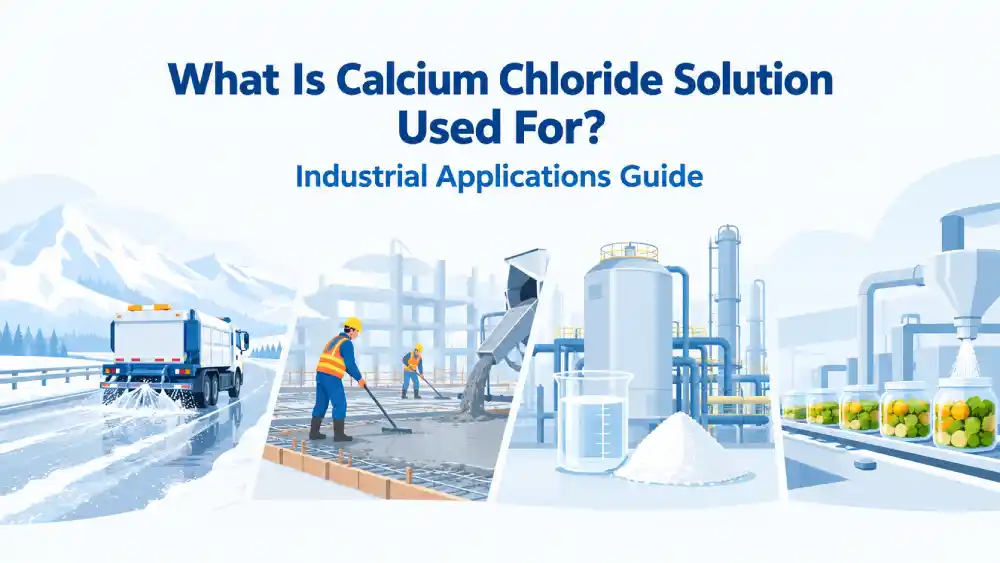
Calcium chloride solution is safe when handled properly. The key risks are thermal burns from exothermic dissolution, skin and eye irritation from concentrated exposure, and systemic toxicity if ingested in large quantities. The primary applications driving industrial demand include dust suppression on unpaved roads, deicing and anti-icing operations, concrete acceleration, oil and gas drilling fluids, and food processing aids.
What This Article Covers
- The fundamental properties that make calcium chloride solution effective across industries
- How the solution works as a dust suppressant and why it outperforms water
- Deicing and anti-icing applications in winter road maintenance
- Use in concrete, oilfield, and food processing operations
- Safety considerations and handling requirements for industrial users
- Bottom line: Calcium chloride solution delivers multi-functional performance across dust control, deicing, and industrial processing, but its hygroscopic and exothermic properties require informed handling.
What Is Calcium Chloride Solution and How Does It Work?
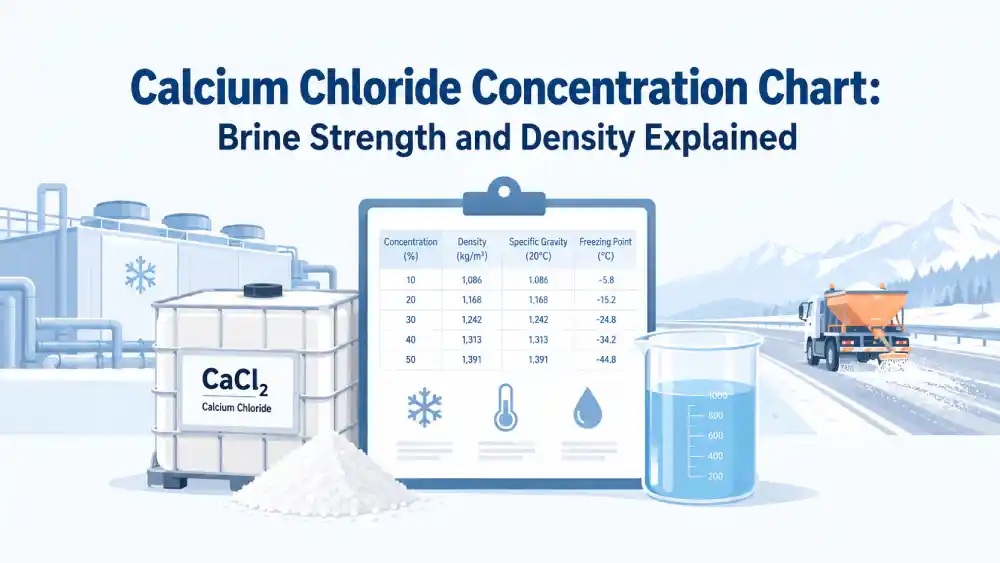
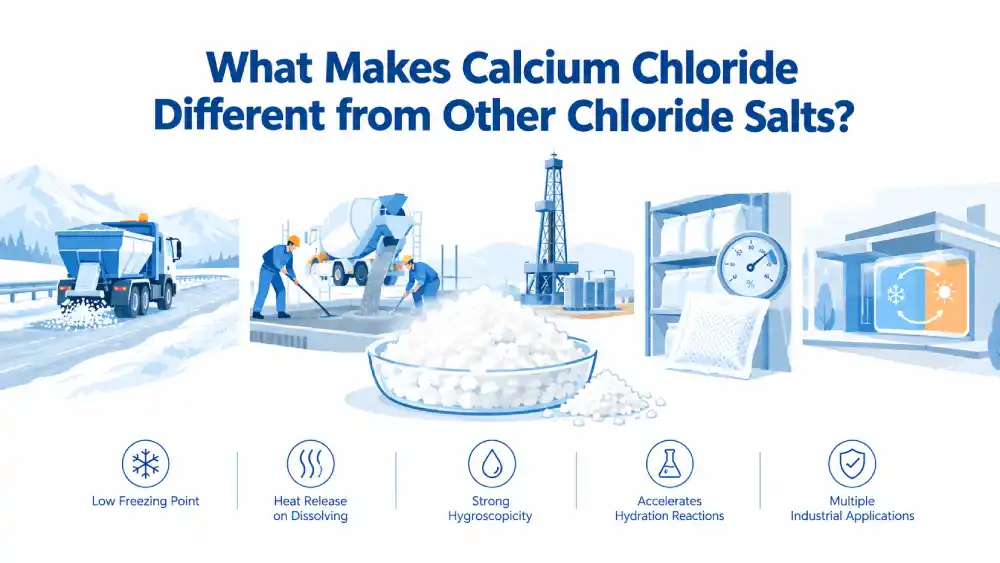
Calcium chloride (CaCl₂) is a white, crystalline salt that is highly soluble in water. Commercial solutions typically contain 30–45% CaCl₂ by weight, a concentration range that balances performance with transport economics. The solution’s industrial utility derives from three fundamental properties: hygroscopicity, deliquescence, and exothermic dissolution.
Hygroscopicity means the material absorbs moisture from the surrounding air. Deliquescence takes this further: the solid salt absorbs enough water vapor to dissolve itself into a liquid brine. When applied as a solution, calcium chloride maintains a persistently moist surface, a characteristic that underlies its effectiveness in dust suppression and anti-icing. The salt’s high solubility in water allows for solutions with relatively high densities, making it useful in applications requiring dense fluids, such as oilfield completion and workover operations.
Why Does Calcium Chloride Solution Remain Effective After Application?
Unlike water, which evaporates within hours, calcium chloride solutions retain moisture for extended periods. The solution’s high boiling point and low vapor pressure mean that once applied to a surface, it continues to attract and hold water molecules from the atmosphere. In dust control applications, this moisture retention keeps road surfaces damp and consolidated for 4–7 days under typical conditions, compared to the hours-long effect of plain water.
The dissolved salt also increases the surface tension of water, promoting particle aggregation. Dust particles bind together rather than becoming airborne, addressing the problem at its source rather than merely wetting the surface temporarily.
How Does Calcium Chloride Solution Suppress Dust on Industrial Roads?
Dust from unpaved haul roads, parking areas, and staging yards poses safety, environmental, and operational problems for mining, construction, and logistics operations. Calcium chloride solution addresses this through a mechanism distinct from water-based dust control.
When applied to a road surface, the solution penetrates the aggregate and forms a hygroscopic film around individual particles. The salt absorbs atmospheric moisture, keeping the surface persistently damp. This moisture film causes fine particles to adhere to larger aggregate, reducing the fraction of material available to become airborne. The effect is not merely temporary wetting; the calcium chloride remains in the roadbed and continues to function over multiple days.
Field testing on unpaved mine haul roads measured a dust control efficiency of 82% for calcium chloride two weeks after application, one of the highest efficiencies recorded for any chemical dust suppressant in the study. A separate military engineering demonstration found calcium chloride brine (38% concentration) applied at 0.27–0.36 gallons per square yard effectively controlled dust on crushed limestone roads, with performance comparable to magnesium chloride after a 2.5-month review period.
Where Is Calcium Chloride Solution Most Effective for Dust Control?
Calcium chloride dust suppression performs optimally under specific site conditions. Research indicates that effectiveness depends significantly on silt loading on the road surface and ambient relative humidity. Under low silt loading conditions (below 0.01 g/m²), field performance becomes inconsistent, and the suppressant may deliver limited benefit. This suggests that calcium chloride is best deployed on roads with moderate to high fine-particle content, where the hygroscopic mechanism has sufficient material to bind.
How Is Calcium Chloride Solution Used in Deicing and Anti-Icing?
Winter road maintenance represents one of the largest markets for calcium chloride solution in North America. The salt’s freezing point depression properties and exothermic dissolution make it effective at lower temperatures than sodium chloride, the most common deicing agent.
Calcium chloride solution can be applied in two distinct modes: anti-icing, where the solution is sprayed onto road surfaces before snow or ice accumulation, and deicing, where it is applied to break existing ice-pavement bonds. The exothermic nature of calcium chloride dissolution releases heat, accelerating ice melting and helping the brine penetrate beneath the ice layer. Sodium chloride, by contrast, requires energy input to dissolve and becomes ineffective at temperatures below approximately -10°C, whereas calcium chloride solutions remain functional at significantly lower temperatures.
The liquid form offers practical advantages for winter maintenance operations. Solutions can be applied at controlled rates, reduce bounce and scatter compared to solid salt, and can be mixed with other deicing chemicals to enhance performance or reduce corrosion. A 32% calcium chloride brine applied at 0.50 gallons per square yard has been used effectively in military airfield and road maintenance contexts.
Where Is Calcium Chloride Solution Used for Deicing?
- Highway departments for pre-treatment and ice control
- Airport runways and taxiways where rapid ice removal is critical
- Military installations with specific dust and ice control requirements
- Parking lots and private roads in industrial facilities
How Does Calcium Chloride Solution Function in Concrete and Construction?
In ready-mix concrete production, calcium chloride solution serves as a set accelerator. Adding the solution to concrete mixtures speeds up the hydration reaction, allowing faster formwork removal and earlier strength gain in cold weather construction. This application is particularly valuable in winter construction schedules where low temperatures would otherwise delay curing.
However, the use of calcium chloride in reinforced concrete is constrained by corrosion concerns. Chloride ions accelerate the corrosion of steel reinforcement. The addition of corrosion inhibitors can reduce corrosion problems by more than 70% compared to untreated salt exposure, but specifying engineers must weigh acceleration benefits against long-term durability requirements. For unreinforced concrete or applications where corrosion risk is acceptable, calcium chloride remains a cost-effective accelerator.
Calcium chloride solution also contributes to roadbed stabilization and soil compaction in construction. The hygroscopic properties help maintain consistent moisture content in granular base materials, improving compaction uniformity and load-bearing capacity during construction.
Where Is Calcium Chloride Solution Used in Oil and Gas Operations?
Oil and gas drilling operations use calcium chloride solutions for multiple purposes related to fluid density and clay inhibition. In drilling fluids, calcium chloride brine provides the density needed to control formation pressures without introducing solid weighting agents that could damage the reservoir. The salt also inhibits the swelling of water-sensitive clays in the water phase of invert emulsion drilling fluids, a critical function when drilling through shale formations.
Completion and workover fluids benefit from calcium chloride’s high density and solids-free nature. A clear brine that can be weighted to densities exceeding 11 pounds per gallon allows operators to control wellbore pressures during completion operations while maintaining the cleanliness required for gravel packing and other downhole interventions.
How Is Calcium Chloride Solution Used in Food Processing?
Food-grade calcium chloride solution appears in several distinct food processing applications, each exploiting a different functional property.
In cheese manufacturing, calcium chloride is added to milk to restore calcium lost during pasteurization, aiding in rennet coagulation and improving curd formation. The Food and Agriculture Organization (FAO) lists calcium chloride (INS 509) as a permitted firming agent and stabilizer, with maximum levels specified for various food categories including processed vegetables (800–4,000 mg/kg) and fresh meat (15,000 mg/kg).
In canned and pickled vegetable production, calcium chloride solution firms the texture of products like tomatoes, cucumbers, and jalapeños. Calcium ions complex with pectin in cell walls, preventing the breakdown that would otherwise cause softening during thermal processing. This texture preservation extends shelf life and maintains product quality through distribution.
The solution also serves as a calcium fortification ingredient in products including bread, tofu, infant formula, and dietary supplements. In the UK, calcium fortification of wheat flour is mandatory, and calcium chloride is one of several permitted calcium sources.
What Are the Safety Risks and Handling Requirements?
Calcium chloride is classified as Category 4 for acute oral toxicity under the Globally Harmonized System, with an LD50 in the range of 1,940–2,045 mg/kg in rats. The hazard statement, “Harmful if swallowed,” reflects this classification. Industrial handling protocols should address ingestion risk, particularly in powder or concentrated solution handling areas.
The more immediate industrial hazards relate to the solution’s exothermic dissolution and corrosive potential. When calcium chloride dissolves in water, it releases significant heat. In one documented case, a 66-year-old patient who ingested approximately 70 grams of calcium chloride developed gastric necrosis, attributed to thermal injury from the heat generated by dissolution in the stomach. While this ingestion scenario is not representative of industrial handling, it illustrates the exothermic magnitude of the dissolution reaction.
Concentrated calcium chloride solutions are also irritating to skin and eyes. Prolonged skin contact can cause irritation or burns. Appropriate personal protective equipment, including chemical-resistant gloves and eye protection, is standard practice for handling concentrated solutions. The material is classified as not classified for skin corrosion/irritation at dilute concentrations, but concentrated solutions warrant caution.
What Are the Corrosion Considerations for Equipment?
Calcium chloride solutions are corrosive to many metals, particularly carbon steel and aluminum. The corrosion rate depends on concentration, temperature, and the presence of inhibitors. Where the solution contacts vehicles, equipment, or structural steel, corrosion protection measures are essential. Corrosion inhibitors can reduce corrosion rates by more than 70% compared to untreated calcium chloride, and should be evaluated for applications where metal exposure is unavoidable.
Is Calcium Chloride Solution Better Than Alternatives for Dust Control?
Calcium chloride competes with several other chemical dust suppressants, most notably magnesium chloride (MgCl₂) and lignin sulfonate products. Each material has distinct performance characteristics and cost profiles.
| Factor | Calcium Chloride | Magnesium Chloride | Lignin Sulfonate |
|---|---|---|---|
| Hygroscopic mechanism | Absorbs moisture from air | Absorbs moisture from air | Binds particles through adhesion |
| Effective duration | 4–7 days per application | Similar to CaCl₂ | Variable; can be shorter |
| Performance in low humidity | Good; retains moisture longer | Good | Poor in dry conditions |
| Corrosion potential | High without inhibitors | Moderate | Low |
| Cost (typical, per ton) | $130–$305 (regional variation) | Lower than CaCl₂ | Variable |
| Best application | High-silt roads, cold climate deicing | General dust control | Temporary, low-traffic areas |
A military engineering study comparing calcium chloride and magnesium chloride brines on crushed limestone roads found both equally effective after 2.5 months, though calcium chloride demonstrated better penetration into the road surface. The choice between the two often comes down to regional availability, price, and specific site conditions.
FAQs
What is calcium chloride solution used for in industrial settings?
Calcium chloride solution is used for dust suppression on unpaved roads, deicing and anti-icing of road surfaces, concrete set acceleration, oil and gas drilling fluids, roadbed stabilization, and food processing applications including cheese making and vegetable firming. The solution’s hygroscopic properties make it particularly valuable for moisture control in large-scale outdoor operations.
How does calcium chloride solution control dust on roads?
Calcium chloride solution controls dust by absorbing moisture from the atmosphere and maintaining a persistently damp surface on road aggregate. This moisture causes fine dust particles to adhere to larger particles, preventing them from becoming airborne. Unlike water, which evaporates quickly, calcium chloride continues to attract moisture for 4–7 days after application.
- Absorbs atmospheric moisture through hygroscopic action
- Retains moisture due to low vapor pressure and high boiling point
- Binds fine particles to larger aggregate through surface tension effects
- Reduces PM10 resuspension on paved and unpaved surfaces
Is calcium chloride safe for industrial handling?
Calcium chloride is safe when handled with appropriate precautions. The primary risks are thermal burns from the heat released during dissolution, skin and eye irritation from concentrated solutions, and systemic toxicity if ingested. Industrial protocols should include personal protective equipment, ventilation in enclosed spaces, and procedures to prevent ingestion.
- Wear chemical-resistant gloves and eye protection when handling concentrate
- Avoid breathing dust from powder forms
- Do not allow concentrated solution to contact skin for prolonged periods
- Store in closed containers away from incompatible materials
What concentration of calcium chloride solution is used commercially?
Commercial calcium chloride solutions typically contain 30–45% CaCl₂ by weight. For dust control, application rates and concentrations vary by site conditions, with 38% brine solutions applied at 0.27–0.36 gallons per square yard in military road demonstrations. Deicing solutions are often diluted further for spray application.
How does calcium chloride compare to sodium chloride for deicing?
Calcium chloride is effective at lower temperatures than sodium chloride. Sodium chloride loses effectiveness below approximately -10°C, while calcium chloride solutions remain functional at significantly lower temperatures. Calcium chloride also releases heat when it dissolves, accelerating ice melting, whereas sodium chloride requires heat input to dissolve.
- Calcium chloride works at lower temperatures
- Exothermic dissolution provides additional melting energy
- Liquid application reduces bounce and scatter compared to solid salt
- Higher cost per ton than sodium chloride
What are the corrosion risks of calcium chloride solution?
Concentrated calcium chloride solutions are corrosive to carbon steel and aluminum. Corrosion rates depend on concentration, temperature, and exposure duration. Corrosion inhibitors can reduce corrosion by more than 70% compared to untreated calcium chloride. Equipment and vehicles exposed to the solution should be washed after contact, and structural steel should be protected with coatings or inhibitors where exposure is persistent.
Can calcium chloride solution be used for concrete acceleration?
Yes, calcium chloride solution is used as a set accelerator in ready-mix concrete. It speeds hydration and allows earlier formwork removal in cold weather. However, chloride ions accelerate corrosion of steel reinforcement, so its use in reinforced concrete requires careful evaluation and typically corrosion inhibitors.
How long does calcium chloride dust suppression last?
Calcium chloride dust suppression typically remains effective for 4–7 days per application under normal conditions. Performance depends on silt loading, relative humidity, traffic volume, and rainfall. Reapplication intervals should be adjusted based on site-specific monitoring of surface moisture and dust generation.
What are the environmental considerations for calcium chloride use?
Calcium chloride is not classified as a persistent bioaccumulative toxin, but runoff from treated areas can increase chloride concentrations in receiving waters. Excessive chloride levels can affect aquatic organisms and vegetation. Applications near sensitive water bodies should follow regulatory guidance and consider application rates that minimize runoff.
- Monitor chloride levels in runoff from treated sites
- Avoid application immediately before forecasted heavy rain
- Use minimum effective application rates
- Consider alternative suppressants near sensitive aquatic ecosystems
Where can industrial buyers source calcium chloride solution?
Calcium chloride solution is available from chemical distributors and directly from producers. Major production routes include evaporation of underground brines and synthetic production from hydrochloric acid and calcium carbonate sources. Regional price variation is significant, with 2025 prices ranging from approximately $130 per metric ton in China to $305 per metric ton in the United States.