Unpaved roads are the lifelines of industries ranging from mining and forestry to agriculture and rural logistics. Yet, they present a persistent and costly challenge: fugitive dust. Dust is not merely a nuisance; it’s a health hazard, a safety risk, and a significant source of material loss. Every vehicle that travels over a gravel or dirt road kicks up clouds of fine particles, leading to the rapid deterioration of the road surface, creating the need for more frequent and expensive maintenance. Traditional approaches like regular watering address the symptom temporarily but fail to solve the underlying problem of aggregate loss.
The way road managers and engineers approach this issue has shifted significantly over the last decade. The old method of simply sending out water trucks daily is giving way to proactive chemical treatments. These dust suppressant chemicals are designed to alter the road surface’s physical properties, binding particles together to resist the force of wind and tires. This evolution has transformed dust control from a recurring operational headache into a strategic, cost-saving initiative.
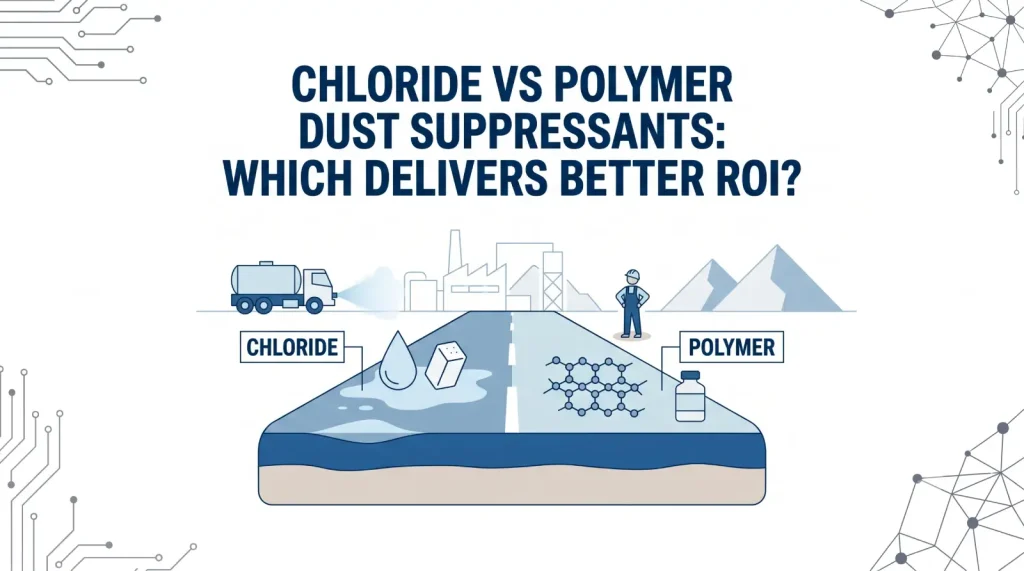
But with this shift comes a critical decision: which category of chemical suppressant delivers the best long-term value? The market is dominated by two primary options: traditional chloride-based products and advanced synthetic polymers. Many engineers assume that choosing the cheapest product per gallon will minimize their program budget. In practice, a product’s sticker price has little correlation with its overall return on investment (ROI), which includes application frequency, road condition, and climate resilience. This article provides a data-driven comparison of chloride and polymer suppressants to help you determine which solution delivers superior ROI for your specific operational context.
The direct answer is that polymer-based dust suppressant chemicals often deliver a higher long-term ROI than chlorides for high-traffic or sensitive applications, while chlorides provide a highly cost-effective solution for remote roads with moderate traffic and specific climatic conditions. The right choice hinges on a thorough analysis of your site’s traffic volume, road base material, climate, and environmental constraints.
What Is the Real Cost of Road Dust?
Before comparing products, it's essential to understand what dust is truly costing an operation. The visible cloud is the final symptom of a destructive cycle that drains budgets.
- Aggregate Loss: Dust consists of the finest, most crucial binding particles in a road’s surface. The EPA reports that for an unpaved road, this loss can exceed 1 ton of fines per vehicle per year for each mile of road.
- Increased Maintenance: As the road's matrix degrades, potholes, corrugations, and washboarding accelerate, requiring grading that can range from $50 to $200 per mile each time, not including lost productivity.
- Safety and Environmental Penalties: Reduced visibility is a direct cause of accidents. Simultaneously, PM10 dust emissions can trigger regulatory fines and compromise worker health.
- Vehicle Operational Costs: Dust infiltration destroys air filters, fouls engines, and damages electronics. A heavy truck’s operational cost can increase by 15-20% on poorly maintained haul roads due to increased rolling resistance and repair bills.
Quantifying these losses in cents-per-ton of material moved or per vehicle-mile is the first step in calculating the true ROI of any dust control program.
How Do Dust Suppressant Chemicals Work?
All dust suppressant chemicals function by preventing the release of fine particles into the air, but their mechanisms differ fundamentally. This distinction is the key to understanding their performance and cost-effectiveness.
| Mechanism | Chloride-Based Suppressants | Polymer-Based Suppressants |
|---|---|---|
| Primary Action | Hygroscopic: Attracts and retains moisture from the air, keeping the road surface damp and cohesive through surface tension. | Agglomeration: Binds fine soil particles together into larger, heavier aggregates that resist becoming airborne, even when dry. |
| Core Benefit | Provides a continuous, self-renewing moist layer; effective as long as humidity is above a critical threshold. | Creates a durable, water-insoluble crust or matrix that physically locks particles in place for extended periods. |
| Core Limitation | Performance ceases in dry, low-humidity conditions; the road dries out and reverts to dust. Can be leached away by heavy rain. | Can become brittle over time under heavy, continuous traffic; surface re-application or scarification may be needed to restore integrity. |
Chloride-Based Suppressants: A Closer Look
What Are the Types of Chloride Dust Suppressants?
Chloride-based products are the industry veterans, valued for their cost-effectiveness and simplicity. The three main types are:
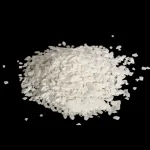
- Calcium Chloride (CaCl₂): The most common and effective flake or liquid suppressant. It’s hygroscopic and exothermic, generating a brine that attracts moisture even from relatively dry air. It can reduce surface fines by up to 40% compared to untreated roads.
- Magnesium Chloride (MgCl₂): Functions similarly to calcium chloride but is lighter and less corrosive. It is often preferred in environmentally sensitive areas as it's less toxic to vegetation.
- Sodium Chloride (NaCl): Simple road salt is the least expensive but least effective option. It requires high humidity (70%+) to perform well and can cause severe corrosion and soil damage.
Why Do Chlorides Work Best for Certain Roads?
Chlorides deliver peak performance in a specific operational envelope. Their hygroscopic nature makes them ideal for roads with low to moderate traffic (under 200 vehicles per day) and in climates where the equilibrium relative humidity is regularly above 40% . When these conditions are met, a single application can stabilize a roadbed for 3 to 6 months, making it a very low-cost solution per application cycle. The initial investment for treatment can range from $0.25 to $0.60 per square yard, making it a capital-friendly choice for extensive road networks.
Polymer-Based Suppressants: A Deeper Dive
How Do Synthetic Polymers Create a "Road-Mat"?
Synthetic polymer emulsions represent a different philosophy: instead of managing moisture, they engineer a physical structure. When applied, the liquid polymer coats each soil particle. As the water evaporates, the polymer chains interlock, forming a flexible, three-dimensional net that cements aggregates together. This effectively creates a bound, asphalt-like "mat" on the surface that is completely insoluble once cured.
This physical binding mechanism is what gives polymers their durability. A well-engineered polymer application can last 12 to 24 months without the need for reapplication, even on roads with high traffic volumes. Unlike chlorides, its performance is completely independent of humidity, making it the superior choice for arid regions.
What Is the Environmental and Equipment Impact?
The stability of polymers translates into a significant reduction in maintenance interventions. Road grading frequency can be reduced by up to 50% on polymer-treated sections. Furthermore, the insoluble crust eliminates chloride runoff, which is a major advantage near waterways or sensitive farmland. The reduction in airborne particulate matter is also more profound, with PM10 suppression rates often exceeding 85% immediately after application.
An often-overlooked operational benefit is the reduction in water truck usage. One site documented that a polymer program slashed their water usage for dust control by 90% , repurposing those trucks and operators for core production tasks.
Chloride vs Polymer: A Head-to-Head Performance Comparison
To move from theory to a real-world decision, a granular comparison is required. The table below contrasts the two options across the key performance indicators that drive ROI.
| Performance Factor | Chloride-Based Suppressants | Polymer-Based Suppressants |
|---|---|---|
| Material Cost | Low ($0.50 - $1.50 per sq. yd.) | High ($1.00 - $4.00 per sq. yd.) |
| Effective Duration | 3-6 months per application | 12-24+ months per application |
| Moisture Dependence | High; requires >40% humidity | None; performance is humidity-independent |
| Optimal Traffic Level | Low to moderate (<200 vehicles/day) | Moderate to heavy (200-1000+ vehicles/day) |
| Water Insolubility | Soluble; can wash out with heavy rain | Insoluble once cured; highly resistant to rain |
| Corrosivity | Moderate to high (dependent on wash-down) | Negligible (inert when cured) |
| Dust Reduction (PM10) | 40-60% (when active) | 80-95% (consistent) |
| Total Maintenance Impact | Reduces grading by ~25%; needs re-grading before re-application | Reduces grading by up to 50%; surface remains intact |
How to Calculate Your Real-World ROI
Evaluating these dust suppressant chemicals requires moving beyond the cost-per-gallon fallacy. The total cost of ownership (TCO) must account for all the "hidden" costs.
A simplified five-year TCO comparison for a 1-mile, 24-foot-wide road segment illustrates the dynamic.
| Annualized Cost Item | Water-Only (Baseline) | Chloride Program | Polymer Program |
|---|---|---|---|
| Initial Treatment | $0 | $15,000 | $40,000 |
| Re-Application / Cycle | N/A | $12,000 (6-mo cycle) | $5,000 (spot repairs) |
| Annual Grading | $25,000 | $18,750 | $12,500 |
| Annual Watering | $30,000 | $9,000 | $3,000 |
| Aggregate Replacement | $20,000 | $10,000 | $4,000 |
| 5-Year TCO | $375,000 | $223,750 | $137,500 |
Note: All costs are typical market reference values and will vary by region. The above assumes a moderate-traffic road of 500 vehicles/day. This model shows that while a polymer program requires a higher initial capital outlay, the 5-year cost can be nearly 40% lower than a chloride program and 63% lower than water-only, driven by massive savings in water, aggregate, and labor.
A Decision Matrix: When to Choose Which Chemical
Given the data, the final choice rests on mapping the product's strengths to your dominant site conditions.
Choose a Chloride-Based Suppressant when:
- Your primary constraint is a tight annual operating budget and capital is limited.
- Road traffic is consistently low to moderate, with fewer than 200 vehicle passes daily.
- Your climate has consistent ambient humidity above 40%.
- The roadbed is not a critical part of your production loop, and some aggregate loss is acceptable.
Choose a Polymer-Based Suppressant when:
- High traffic volumes (500+ vehicles/day) rapidly destroy untreated or lightly treated roads.
- You operate in an arid climate where humidity is low and watering is expensive.
- The road is a primary haul route where washboarding and downtime directly impact production.
- Environmental regulations mandate strict PM10 limits or prohibit chloride runoff.
- You have the capital to invest in a long-term solution that will pay back through operational savings within 12-24 months.
Conclusion
The choice between chloride and polymer dust suppressant chemicals is not a simple verdict of "better," but a strategic calculation of total cost of ownership matched against site-specific conditions. Chlorides offer a low upfront cost and effective, humidity-dependent performance for less demanding roads. In contrast, polymers provide a high-durability, high-performance surface that slashes long-term maintenance, water, and aggregate costs, emerging as the superior ROI option for high-traffic, arid, or environmentally constrained operations.
The key is to commission a site audit that quantifies your true cost of dust—in lost material, labor, and machine hours—to establish a baseline. When evaluating potential solutions, prioritize a field trial on a critical road segment to generate your own internal cost-benefit data under your exact operational conditions before committing to a network-wide program.
FAQs
What are the main types of dust suppressant chemicals?
The two dominant categories of dust suppressant chemicals are hygroscopic salts and synthetic polymers. Hygroscopic salts, like calcium and magnesium chloride, pull moisture from the air to keep roads damp. Synthetic polymers bind soil particles together physically, forming a durable, water-insoluble crust that works independently of humidity.
How long does a polymer dust suppressant treatment last?
A single, well-engineered polymer treatment can last from 12 to 24 months, significantly outlasting chloride-based treatments. The exact longevity depends on three key variables:
- Traffic volume and type (heavy trucks vs. light vehicles)
- Road base quality and fine particle content
- Application rate and initial curing conditions
Is magnesium chloride a better suppressant than calcium chloride?
Magnesium chloride is often preferred over calcium chloride in certain sensitive environments because it is less toxic to vegetation. However, their dust suppression performance is quite similar. Calcium chloride is typically more cost-effective per unit of performance, making it the standard choice unless environmental regulations on chloride runoff or plant toxicity are a primary concern.
Where are polymer-based dust suppressants not recommended?
Polymer suppressants are not the optimal choice for every scenario. They are generally not recommended in the following conditions:
- Roads with very high fines content (>25%), which may require a pre-treatment stabilization step.
- Extremely cold climates where freeze-thaw cycles can fracture the polymer matrix.
- Tight-budget, low-traffic roads where the higher upfront investment cannot be recovered through operational savings.
When should you apply chloride dust suppressants for best results?
The optimal time to apply a chloride-based suppressant is in the spring, after the frost has melted and the road has been graded to a proper crown. Applying it after a light rain is ideal, as the existing moisture helps the chloride dissolve and penetrate the road surface, forming a strong, cohesive base. Application during a hot, dry, windy day should be avoided as it can cause the product to crystallize on the surface.
How much does a chloride-based dust control program typically cost?
The initial treatment for a chloride-based program, including material and application, typically ranges from $0.50 to $1.50 per square yard. A full life-cycle cost, which includes re-application, reduced grading, and aggregate replacement, makes it a cost-effective choice for low-to-moderate traffic roads with the right humidity profile.
Can you use polymer and chloride together on the same road?
Yes, combining these dust suppressant chemicals sequentially can be a highly effective strategy. A common practice is to first use a chloride product to consolidate the base and fill voids between particles. After this base stabilizes, a polymer topcoat is applied to seal the surface and provide long-term, humidity-independent durability.
Why does traffic volume affect dust suppressant performance?
Traffic volume is the primary mechanical force that destroys a road’s surface integrity. High traffic abrades the treated layer, physically grinding away at the cohesive matrix.
- Chlorides rely on a continuous moisture film that is quickly stripped away by the friction of many tires.
- Polymers form a solid structural mat that resists abrasion, but even this can fracture under extremely high, continuous loads from heavy haul trucks.
How effective are dust suppressant chemicals for PM10 control?
Polymer suppressants are highly effective, immediately reducing PM10 particulate matter by over 85% by locking fine particles into a solid crust. Chloride suppressants are moderately effective, achieving a 40-60% reduction when active, but their performance drops to near zero once the road dries out completely.
What is the solubility of different dust suppressant chemicals?
Solubility is a key factor in product resilience. Chloride salts are fully soluble in water, which means a single heavy rainfall event can dilute and wash out the entire treatment, requiring immediate re-application. Conversely, polymer emulsions are designed to be water-soluble during mixing, but after the curing process, they cross-link into a completely water-insoluble film, providing excellent resistance to rain and runoff.