For businesses managing large-scale winter operations—municipal road crews, commercial snow removal fleets, and industrial facility managers—securing a consistent supply of deicing materials is not just a procurement task; it is a critical operational necessity. The challenge often lies not in finding a single bag of bulk ice melt, but in navigating the complexities of the bulk commodity market, where product quality, logistical reliability, and price volatility can derail even the best-laid winter preparedness plans. Traditional on-demand purchasing leaves organizations vulnerable to mid-season shortages and price spikes that can freeze budgets and ground fleets.
The bulk deicing chemicals market operates on a different logic than retail. It is a supply chain driven by seasonal demand forecasting, production lead times, and transportation economics. A purchasing decision made in the summer can determine your operational capability during a January blizzard. Understanding the chemistry, grades, and sourcing strategies for materials like calcium chloride is what separates a reactive purchase from a strategic procurement advantage.
This guide provides a framework for professional buyers to evaluate and secure bulk deicing chemicals efficiently. It focuses on the procurement logistics, quality standards, and cost variables that impact your bottom line, moving beyond generic product descriptions to the supply-chain realities dealers face.
Calcium chloride is safe and effective when handled correctly and selected for the right application. The key risks stem from improper storage, insufficient corrosion inhibition for unprotected metals, and applying incorrect concentrations. Material Safety Data Sheets (MSDS) and strict adherence to storage protocols eliminate the majority of safety concerns, making it a highly manageable chemical for professional use.
Key Takeaways
- Bulk calcium chloride pricing is dictated by a seasonal commodity market, with early-summer forward purchasing often yielding a 15-25% cost avoidance over peak-season spot buys.
- Purity directly determines melt performance; while 94% pelletized calcium chloride is an industry standard, 77-83% flake grades are often a more cost-effective choice for general ground deicing.
- Freight costs are the single largest variable in total landed cost, making supplier proximity or access to rail trans-loading the most critical factor in vendor selection.
- Contractual agreements should specify ASTM D98 or equivalent standards and include a "freeze clause" or maximum moisture content of less than 3% to prevent caking in storage.
- A distributor’s capacity to resell bulk chemicals depends on having a chemical storage and packaging facility that meets local environmental regulations for stormwater runoff control.
What Are Bulk Deicing Chemicals?
A Market Definition for Commercial Buyers
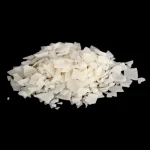
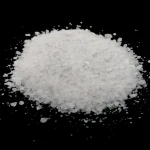
Bulk deicing chemicals are commercially produced materials purchased by the ton to manage snow and ice on large-scale surfaces. Unlike consumer-packaged 50-pound bags from a hardware store, the bulk market deals in super sacks (2,000-2,500 lbs), pneumatic tanker deliveries, or full truckloads of 2,000-pound totes. The primary materials in this category include sodium chloride (rock salt), calcium chloride, and magnesium chloride, each with distinct performance curves relative to temperature.
For a dealer or municipality, purchasing in bulk means entering a raw material supply chain. The product is a high-volume, low-margin commodity where value is created through effective logistics management and value-added blending—not through the chemical itself, which is functionally identical across suppliers at a given purity level. The decision-making revolves around guaranteed supply, particle size specification, and corrosion-inhibitor packages.
How Does Calcium Chloride Work as a Deicer?
Understanding Exothermic Reactions for Faster Melting
The Operational Chemistry of Ice Penetration
All deicers work by disrupting the thermodynamic equilibrium at the ice-pavement interface, but calcium chloride does this with a unique mechanism. When pelletized calcium chloride (CaCl₂) contacts ice, it aggressively absorbs moisture to begin dissolution. This process is exothermic, releasing 150 BTUs of heat per pound of material, which initiates rapid brining independent of solar radiation. The ASTM D98 standard specifies the minimum calcium chloride content and gradation that ensures this rapid-action performance.
The generated brine immediately lowers the freezing point of water at the surface to its eutectic temperature of -59°F (-51°C). This is a theoretical limit, but practical effectiveness is validated at -25°F (-32°C), a temperature at which sodium chloride is effectively useless. The hygroscopic nature of the material means the resulting brine continues to undercut ice layers for up to 24 hours after application, reducing the need for reapplication and lowering the material cost per lane mile.
Calcium Chloride vs. Sodium Chloride: A Supplier's Value Analysis
Why the Higher Cost Justifies the Product Line
Understanding the competitive positioning between these two materials is essential for any dealer advising end-users. The following table breaks down the core differences:
| Feature | Calcium Chloride (CaCl₂) | Sodium Chloride (NaCl) |
|---|---|---|
| Effective Temperature | Down to -25°F (-32°C) | Typically 15°F to 20°F (-9°C to -7°C) |
| Heat Generation | Exothermic (generates heat) | Endothermic (absorbs heat) |
| Ice Penetration | High—rapid undercutting capability | Moderate—surface-level melting |
| Typical Application Rate | 0.5-1.5 lbs per 100 sq ft (light to heavy ice) | 2-3 lbs per 100 sq ft (heavy accumulation) |
| Corrosion Potential | Moderately high if uninhibited; requires formulated inhibitor packages | High; accelerates oxidation on steel and concrete |
| Bulk Wholesale Cost | $200-$400 per ton, seasonal | $65-$150 per ton, seasonal |
For a dealer, the margin opportunity lies not in selling calcium chloride against rock salt on price, but in positioning it as a performance product for specific, high-value segments—hospitals, airports, steep-grade commercial lots, and concrete protection applications. The lower application rate per square foot is a key sales narrative, as it narrows the total cost-in-use gap.
How to Build a Bulk Procurement Strategy
Step 1: Forecast Demand Using Historical Snowfall Data
Accurate demand forecasting is the foundation of any cost-avoidance strategy. Analyze a 5-year rolling average of actual snowfall events for your service area, categorizing them by severity and the response protocol they triggered (anti-icing vs. deicing). This data, correlated with the recommended application rates in pounds per lane mile, yields a total seasonal tonnage baseline. Over-order by 10-15% as a safety stock buffer for anomalous seasons, ensuring you can meet supply guarantees without panic buying during a storm event.
Step 2: Issue a Request for Proposal (RFP) Based on ASTM Standards
Do not simply ask for a price on "calcium chloride flakes." Write an RFP that specifies the exact chemical and physical properties required. Reference ASTM D98 for calcium chloride and include granular details: minimum purity percentage, acceptable magnesium and alkali chloride limits, and particle size distribution (e.g., 100% passing a 3/4-inch sieve, less than 15% passing a No. 4 sieve). This standardized specification makes bids from multiple producers directly comparable, ensuring you evaluate apples-to-apples.
Step 3: Audit Logistics and Trans-Load Capabilities
The total landed cost per ton is the only price that matters. A low Free on Board (FOB) plant price is meaningless if your facility is 500 miles from a production well or railhead. Map the supplier's logistics chain. Do they run a dedicated truck fleet, or do they rely on spot market common carriers that become scarce in winter? Suppliers with access to rail trans-loading terminals in your region can offer a "carry-over" service, allowing you to buy in July by railcar but schedule truck deliveries throughout the winter, stabilizing both price and supply.
What to Look for in a Chemical Supplier
Choosing a supply partner involves evaluating financial stability, logistical reach, and quality infrastructure. A reliable program ensures consistent product and late-season availability, which is critical for professional operations.
The evaluation process should center on three pillars: third-party testing, storage practices, and supply chain transparency. Independent lab assays for each production run verify that the product matches the certificate of analysis and has not degraded during transport. This validates performance specifications. The supplier’s storage infrastructure, specifically humidity-controlled warehouses with impermeable secondary containment, is also critical, as preventing moisture absorption before bagging directly impacts application flowability and prevents costly caking issues.
For dealers seeking a partner that combines high-purity calcium chloride manufacturing with rigorous, lot-specific quality control, XRD CHEMICAL provides a consistent supply program designed for the bulk industrial channel. Their process begins with a direct supply of raw materials, ensuring traceability from production to final delivery.
Common Mistakes to Avoid in Bulk Ice Melt Buying
- Mistake: Buying solely on price per ton. This metric is a trap if you ignore logistics. A $10/ton advantage is immediately erased if a supplier cannot deliver during a three-day blizzard. The real metric is the total cost of service disruption, a number far higher than any per-ton premium for a guaranteed delivery window.
- Mistake: Ignoring moisture content guarantees. Calcium chloride is aggressively hygroscopic. A shipment that tests at 3.5% moisture instead of 1% will arrive as a partially solidified block, not free-flowing pellets. Your contract must stipulate a rejection threshold for moisture content, typically a maximum of 3.0%.
- Mistake: Overlooking local environmental regulations. Municipalities and commercial lots operate under strict stormwater permits. Pushing a white-label product without documented, third-party verified environmental impact data, specifically biochemical oxygen demand and heavy metal limits, exposes you and your customer to regulatory fines. Request full eco-toxicity profiles.
Conclusion
Purchasing bulk deicing chemicals is fundamentally a logistics and risk management exercise focused on calcium chloride and other chlorides. The core competency for a successful dealer is not simply finding the lowest FOB plant price, but structuring a supply agreement that guarantees product specification, mitigates freight volatility, and provides the warehousing flexibility to ride out seasonal demand spikes. Proactive RFPs and moisture content guarantees are the tools that separate professional procurement from reactive spot buying.
To apply this framework, begin with a concrete forecast for your next season and draft your technical specifications. For teams building a private-label or branded bulk deicing line, XRD CHEMICAL offers a manufacturing and packaging partnership that allows you to focus on market coverage while leveraging their supply chain consistency.
FAQs
What is the main chemical used in bulk ice melt?
The most common bulk deicing chemical is sodium chloride due to its low cost, but calcium chloride is the preferred material for low-temperature performance. Professional blends often include small percentages of magnesium chloride or organic-based corrosion inhibitors to reduce the environmental impact of the core chloride salt.
How long can I store bulk calcium chloride?
Calcium chloride can be stored indefinitely if kept in a dry environment. Because the material is hygroscopic, it will absorb atmospheric moisture and harden if exposed. In properly sealed, humidity-controlled silos or original totes in a covered warehouse, the product maintains its pelletized form and chemical efficacy for over two years without measurable degradation.
Is calcium chloride better than rock salt for concrete?
It is less likely to cause the freeze-thaw spalling damage associated with rock salt when used correctly. Calcium chloride's lower effective temperature means it generates fewer harmful freeze-thaw cycles. It does not chemically attack cured concrete, but because it melts ice so rapidly, the resulting water can refreeze in cracks if proper drainage is absent.
Why is bulk ice melt so expensive this year?
Price volatility is driven by three primary factors: a tight trucking market that increases freight rates, high energy costs required for the manufacturing process, and a previous severe winter that depleted end-user stockpiles, creating a supply-demand imbalance at the producer level.
Where should I source deicing salt for municipal contracts?
Municipal buyers should prioritize suppliers with guaranteed minimum stockpile levels and a performance bond capability. The source should have multiple logistical nodes—ideally both a production plant and a rail-served terminal—to ensure supply continuity if one node is impacted by a severe weather event.
How do you properly unload a tanker of liquid calcium chloride?
The process involves connecting a chemical-grade hose to the tanker's discharge valve and using a compatible pneumatic or centrifugal pump. Before unloading, a technician must verify the material temperature is above its crystallization point (30°F for a 35% solution) and that the receiving fiberglass or polyethylene tank has sufficient secondary containment volume to hold 110% of the delivery.
What are the safety hazards of handling calcium chloride in bulk?
The primary acute hazard is a thermal burn, as the exothermic reaction when dissolving can quickly heat water to over 150°F. Secondary hazards include eye and skin irritation from dust. Professional handlers must wear chemical goggles, impervious gloves, and long sleeves, and an eyewash station must be immediately accessible at the bagging or blending line.
How is a corrosion inhibitor added to bulk ice melt?
Corrosion inhibitors are typically added as a liquid spray during the final blending stage in a ribbon mixer or cement-type auger mixer. Common inhibitors include sodium silicate, phosphates, or organic-based formulas, metered precisely to coat each pellet. The inhibitor dosage is calibrated based on the base-salt weight, usually 0.5% to 1.5% by weight.
What is the specification for ice melt pellets used on airport runways?
Airfield pavement deicers must meet strict SAE AMS 1431 or 1435 specifications, not just generic ASTM standards. These specifications include a chemical oxygen demand limit, a toxicity test on aquatic organisms, and strict limits on residues that could cause hydrogen embrittlement in aircraft aluminum alloys. Potassium acetate and sodium formate are often used instead of chloride-based salts for this specific application.
How do you calculate the application rate for a parking lot?
The rate is calculated based on the pounds per 1,000 square feet, a number that varies by pavement temperature and ice thickness. For a standard lot at 20°F with a light glaze, apply 0.5 lbs of calcium chloride per 1,000 sq ft. An acre of parking lot is 43,560 sq ft, meaning a single application would require approximately 21.78 lbs of material for that scenario, a figure that guides spreader calibration.