The procurement landscape for industrial chemicals has grown increasingly complex. Supply chain disruptions, inconsistent product quality, and opaque pricing models plague buyers across industries—from food processing and oil drilling to winter road maintenance. When sourcing a hygroscopic salt like calcium chloride, these challenges intensify because the material’s performance is directly tied to its chemical purity and physical form.
Many procurement teams discover too late that not all calcium chloride suppliers are equipped to deliver consistent, high-purity material on time. A supplier that excels in manufacturing flake for dust control may lack the food-grade certifications needed for cheese making or brewery applications. The risk of buying from the wrong source extends beyond wasted spend; it can lead to equipment corrosion, failed quality audits, and production downtime.
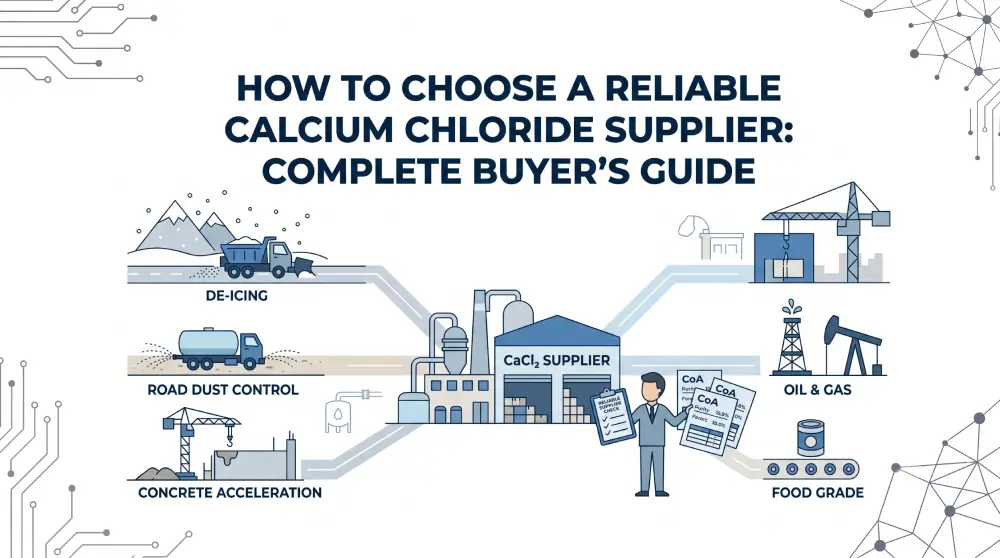
This guide provides a structured evaluation framework for vetting calcium chloride suppliers. It covers the critical technical specifications, certification requirements, and supply chain factors that separate dependable producers from opportunistic distributors.
Calcium chloride is safe to source and handle when proper quality controls are in place. The key risks involve impurity profiles (including heavy metals), inadequate packaging that leads to moisture absorption and solidification, and supply chain instability. A reliable supplier addresses these through transparent Certificate of Analysis (CoA) documentation, robust logistics, and verifiable certifications.
Key Takeaways
- Calcium chloride purity above 94% is essential for food and pharmaceutical applications; industrial grades typically range from 77–94%, with the balance being water, salt, and other impurities.
- Supplier location relative to your facility is the single largest variable in landed cost, often outweighing the purchase price difference per ton.
- A legitimate calcium chloride supplier provides a batch-specific CoA with every shipment that details purity, heavy metal content, and physical form—accept no substitutes for this document.
- Production method matters: Synthetic calcium chloride (Solvay process or limestone-HCl reaction) offers higher consistency than natural brine-derived material, though both have valid industrial uses.
- On-site audits should occur at least annually and cover manufacturing sites, not just distribution warehouses.
What Is Calcium Chloride and Why Does Supplier Quality Matter?
What Is Calcium Chloride?
Calcium chloride (chemical formula CaCl₂) is a salt compound of calcium and chlorine. It is highly hygroscopic—meaning it aggressively absorbs moisture from the air—and releases heat as it dissolves in water. These two properties underpin its use across dozens of industries: as a desiccant, a deicing agent, a firming agent in canned vegetables, a concrete accelerator, and a completion fluid in oil and gas wells.
Why Supplier Quality Directly Affects Performance
The difference between a reliable and an unreliable calcium chloride supplier often appears at the margins. A shipment that arrives at 77% purity instead of the specified 94% purity means 17 percentage points of the product weight is water, sodium chloride, or insoluble matter. For a manufacturer dosing calcium chloride into a food recipe, this variance alters the calcium ion concentration and can compromise product texture or shelf stability.
For a road maintenance agency, lower-purity flake contains more water and salt, reducing its effective melting capacity per ton applied. This shifts the cost calculus: the "cheaper" product may require higher application rates, erasing any initial savings.
Purity, particle size distribution, and packaging integrity are all supplier-controlled variables. A supplier with weak quality systems will deliver material that varies from order to order, forcing you to constantly adjust your processes.
Raw Material Sources and Manufacturing Methods
Natural Brine vs. Synthetic Production
Calcium chloride suppliers typically source their product from one of two pathways: natural brine extraction or synthetic chemical manufacturing.
Natural brine is pumped from underground deposits, often as a co-product of sodium chloride or bromine production. The brine undergoes evaporation and purification steps to concentrate the calcium chloride. This method yields a product that is widely used for dust control, deicing, and industrial drying applications. However, brine-derived calcium chloride may carry trace minerals from the source geology, which can affect performance in sensitive applications.
Synthetic calcium chloride is produced through chemical reactions:
- The Solvay process generates calcium chloride as a byproduct of sodium carbonate (soda ash) manufacturing, where limestone and salt react.
- Direct reaction of limestone (CaCO₃) with hydrochloric acid (HCl) produces calcium chloride as the primary product.
Synthetic production generally achieves higher purity levels, making it the preferred route for food-grade, pharmaceutical-grade, and precision industrial applications.
Liquid, Flake, Pellet, and Powder Forms
The physical form your calcium chloride supplier provides must match your handling equipment and dissolution requirements:
| Form | Typical Concentration | Common Applications | Handling Notes |
|---|---|---|---|
| Liquid | 28–45% solution | Dust control, liquid deicing, wastewater treatment | Easiest to handle; highest transportation cost per dry ton |
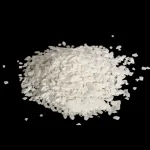
| Flake | 77–80% purity | Concrete acceleration, oilfield drilling, general deicing | Rapid dissolution; hygroscopicity requires sealed packaging |
| Pellet | 90–94% purity | Food processing, pharmaceuticals, premium deicing | Low dust; excellent flow characteristics; slower dissolution |
| Powder | 94%+ purity | Laboratory reagents, specialty chemical synthesis | Extremely hygroscopic; requires nitrogen-blanketed storage |
Selecting the wrong form leads to handling bottlenecks. A facility equipped for liquid receiving cannot use dry pellets without installing dissolution tanks, pumps, and filtration.
How to Verify Calcium Chloride Purity and Grade Specifications
Understanding Purity Grades by Application
Purity requirements differ sharply by industry. What constitutes "acceptable" for road salt is unacceptable for food. When evaluating calcium chloride suppliers, align their stated grade with your actual regulatory requirements:
| Grade | Minimum Purity | Typical Applications | Key Impurity Limits |
|---|---|---|---|
| Food Grade (FCC) | 93–97% | Cheese making, canned vegetables, sports drinks, beer brewing | Heavy metals <10 ppm, arsenic <3 ppm, fluoride <40 ppm |
| Pharmaceutical Grade (USP) | 94–100% | Dialysis solutions, IV fluids, drug compounding | Stringent limits on aluminum, iron, magnesium |
| Technical/Industrial Grade | 77–94% | Deicing, dust control, concrete acceleration, oilfield fluids | Sodium chloride content varies; heavy metals may not be controlled |
| High-Purity Anhydrous | 94–97% | Desiccants, laboratory reagents, specialty manufacturing | Very low moisture; often in sealed, nitrogen-flushed packaging |
The FDA references calcium chloride as GRAS when used in accordance with good manufacturing practices. However, this designation applies to the substance, not the supplier. Your supplier must provide documentation that their specific product meets the monograph standards for your use case.
Reading a Certificate of Analysis
A Certificate of Analysis (CoA) is the single most important document you will receive from a calcium chloride supplier. Every shipment should arrive with a batch-specific CoA. Accept no substitute—no "typical analysis," no "product data sheet," no verbal assurance.
A legitimate CoA includes:
- Assay (purity): Expressed as CaCl₂ percentage (with method referenced, typically titration)
- Alkalinity: As Ca(OH)₂, indicating residual lime
- Heavy metals: As lead (Pb), typically <10 ppm for food grade
- Iron (Fe): Can discolor solutions; critical for food and pharmaceutical uses
- Magnesium and sodium chloride: The primary non-functional impurities
- Water content: Relevant for dry forms
- Particle size distribution: For pellet and flake products
- Batch number: Enables traceability to production records
- Production date and retest/expiration date
Pro tip: Randomly pull a retained sample from three consecutive shipments and send them to an independent third-party lab for assay verification. If results deviate from the supplier's CoA by more than the method's stated uncertainty range, this signals a systemic quality control problem.
Where Is Calcium Chloride Produced? Evaluating Domestic vs. International Suppliers
Global Production Hubs
The global calcium chloride supply chain concentrates in regions with access to natural brine deposits, limestone, and hydrochloric acid. Major production hubs include:
- United States: Significant brine-based production in Michigan (linked to salt deposits) and synthetic production at multiple chemical manufacturing sites across the Gulf Coast and Midwest.
- China: A dominant global producer with capacity concentrated in Shandong and Jiangsu provinces, primarily using the ammonia-soda (Solvay) process as a co-product stream.
- India: Growing production capacity serving domestic and Asian export markets, largely from soda ash co-production.
- Europe: Specialty synthetic production in Germany, the Netherlands, and Scandinavia, often targeting higher-purity food and pharmaceutical grades.
Domestic vs. International: A Decision Matrix
The choice between a domestic and an international calcium chloride supplier involves trade-offs between cost, lead time, and supply chain control. There is no universally correct answer—only the answer that fits your specific risk tolerance and operational requirements.
Choose a domestic supplier when:
- Your inventory buffer capacity is less than 4 weeks
- Your application requires food-grade, pharmaceutical-grade, or other tightly regulated material
- Your receiving facility lacks the space or equipment to unload containerized imports
- Tariff volatility or port labor uncertainty threatens supply continuity
- You require just-in-time delivery with variable volumes
Choose an international supplier when:
- Your annual volume exceeds 500 tons, justifying ocean freight economics
- Your application uses technical-grade material with broader specifications
- You maintain 8–12 weeks of safety stock and have bonded warehouse access
- You can commit to fixed-volume annual contracts that optimize the supplier's production planning
- You have in-house quality control capability to verify incoming material before it enters production
The landed cost formula for international sourcing is:
Landed Cost = FOB Price + Ocean Freight + Insurance + Customs Duties + Port Handling + Inland Trucking + Quality Testing
For domestic sourcing, the simpler equation is typically FOB price plus truck or rail freight. However, the difference in base price between domestic and international material can range from 15% to 40%, creating a meaningful incentive to manage the complexity of international procurement for high-volume buyers.
What to Look for in a Calcium Chloride Supplier: A Structured Evaluation Framework
Your evaluation of calcium chloride suppliers should move beyond price comparison to assess four pillars of reliability: documentation, production capability, logistics performance, and financial stability.
Documentation and Certification Requirements
A qualified supplier provides documentation proactively—not only when you ask. At minimum, require:
- ISO 9001:2015 certification for the manufacturing site that actually produces the calcium chloride (not just a corporate office certification)
- Product-specific certifications relevant to your industry: FCC monographs for food grade, USP monographs for pharmaceutical, NSF/ANSI Standard 60 for drinking water treatment chemicals
- Hazardous Materials Transportation compliance documentation (49 CFR hazmat training records for personnel, proper shipping papers)
- Safety Data Sheet (SDS) that is current, complete, and compliant with GHS Revision 7 or later
Request these documents before you request a quotation. Suppliers unable to produce current certifications within 48 hours are signaling a disorganized quality system.
Supply Chain and Logistics Capability
The best calcium chloride on the market has zero value if it arrives two weeks late. Assess:
- Production capacity vs. your demand: Can the supplier comfortably fulfill your annual requirement, or are you a small portion of a large plant's output—or worse, the reverse?
- Geographic redundancy: A supplier with a single production site is a single point of failure. Ask what happens if that plant goes down for planned maintenance or an unplanned event.
- Packaging integrity: Calcium chloride's hygroscopicity means a torn bag or a leaky valve on a liquid tote creates a mess and wastes material. Visit the packaging line to observe sealing equipment and handling procedures.
- Carrier management: Does the supplier use a core group of qualified bulk chemical carriers, or do they post loads on the spot market? The former indicates logistics maturity.
On-Site Audit Priorities
Conduct an initial on-site audit before qualifying a new calcium chloride supplier and schedule re-audits at least annually for strategic suppliers. Your audit team should focus on:
- Incoming raw material testing: How are brine or limestone feedstocks tested before entering production? Who makes the accept/reject decision?
- In-process controls: What parameters are monitored during evaporation, crystallization, or synthesis? How often? By whom?
- Finished product sampling: Is sampling statistically valid per ANSI/ASQ Z1.4 or ISO 2859? Are retain samples held for the full shelf-life period?
- Laboratory competency: Is the on-site lab accredited to ISO/IEC 17025? If not, what proficiency testing program does it participate in?
- Non-conforming product management: What physically happens to out-of-specification material? Is there clear segregation from conforming inventory?
Calcium Chloride Supplier Audit Checklist
Use this 10-point checklist when assessing a potential calcium chloride supplier. Each item requires documented evidence, not verbal assurance.
- Verify ISO 9001:2015 certificate is valid, current, and covers the actual production site.
- Request three recent Certificates of Analysis (CoAs) and compare them to the supplier's published specifications.
- Confirm product-grade certifications match your application (FCC, USP, NSF/ANSI 60, etc.).
- Inspect packaging integrity: observe bag sealing, tote valve condition, and bulk loading procedures.
- Tour the quality control laboratory; ask to see calibration records and proficiency testing results.
- Review the supplier's raw material sourcing: natural brine or synthetic? From which sources?
- Evaluate logistics capability: carrier qualification program, on-time delivery data for the past 12 months.
- Audit the non-conforming product quarantine area: is it physically segregated and clearly labeled?
- Request a business continuity plan: what is the supplier's plan for a 30-day production interruption?
- Check financial stability: request a D&B report or equivalent to confirm the supplier is a going concern.
Common Mistakes to Avoid When Choosing a Calcium Chloride Supplier
Procurement errors in chemical sourcing carry operational consequences that can take months to resolve. Avoid these five common missteps:
1. Selecting on price alone. A $20 per ton savings on a 500-ton annual contract equals $10,000. One batch failure that shuts down production for two days can easily exceed that amount. Total cost of ownership includes quality consistency, delivery reliability, and technical support.
2. Overlooking form and packaging requirements. A buyer who quotes dry pellets but receives flake has a product that may not flow through their metering equipment. Confirm physical form (liquid, flake, pellet, powder), packaging type (bulk bags, 50-lb bags, tanker truck), and closure mechanisms before contracting.
3. Failing to audit the actual production site. Some distributors present themselves as manufacturers. Visit the facility where the calcium chloride is produced—not just a blending or repackaging warehouse. A distributor that sources from multiple upstream producers introduces quality variability.
4. Ignoring logistics and inventory implications. A supplier 1,000 miles away may offer a lower FOB price, but freight costs for this dense, heavy material can negate the difference. Model the full landed cost, not just the purchase price.
5. Accepting "typical" instead of batch-specific documentation. "Typical analysis" is an average. It tells you nothing about the specific material in your shipment. Insist on batch-specific Certificates of Analysis for every delivery.
Conclusion
Selecting a reliable calcium chloride supplier requires a structured evaluation process that goes beyond price comparison. The core dimensions of supplier capability—purity consistency, production method transparency, documentation rigor, and logistics reliability—directly impact your operational outcomes. A supplier that meets food-grade specifications one quarter and barely scrapes the lower limit the next is not reliable, regardless of competitive pricing.
Begin your supplier evaluation by clarifying your own specifications: required purity grade, physical form, annual volume, delivery frequency, and acceptable lead times. Then audit potential calcium chloride suppliers against the checklist and framework in this guide. When you find a supplier whose documented performance aligns with your requirements, negotiate terms that include batch-specific CoAs, on-site audit rights, and clear non-conformance procedures.
The right supplier relationship stabilizes your supply chain and reduces the operational friction caused by variable material quality. Invest the effort in supplier qualification now to avoid the costs of qualifying replacements under crisis conditions later.
FAQs
What is a calcium chloride supplier?
A calcium chloride supplier is a company that manufactures or distributes calcium chloride in various forms—liquid, flake, pellet, or powder—for industrial, food, pharmaceutical, and commercial applications. Suppliers range from primary manufacturers operating chemical synthesis or brine processing facilities to authorized distributors who resell material from multiple production sources.
What purity of calcium chloride do I need?
The required purity depends entirely on your application. Food-grade applications require 93–97% CaCl₂ with strict heavy metal limits. Industrial deicing and dust control can use 77–80% flake. Pharmaceutical uses demand 94–100% purity meeting USP monographs. Always align your specification with the relevant regulatory standard for your industry rather than defaulting to the lowest or highest grade available.
How can I verify a calcium chloride supplier's quality?
Require a batch-specific Certificate of Analysis (CoA) with every shipment, verify the supplier's ISO 9001:2015 certification covers the actual production site, conduct an on-site audit of the manufacturing facility, and send retained samples to an independent ISO/IEC 17025-accredited laboratory for verification at least annually. A supplier that cannot produce these within 48 hours warrants further investigation.
What certifications should a calcium chloride supplier have?
At minimum, ISO 9001:2015 certification for the production facility. For food applications, the product must meet Food Chemicals Codex (FCC) monographs. For pharmaceutical use, USP monograph compliance is required. For drinking water treatment, NSF/ANSI Standard 60 certification applies. The specific certifications required are dictated by your end-use regulatory framework.
Is it safe to transport and store calcium chloride?
Yes, when proper procedures are followed. Calcium chloride is not classified as hazardous for transportation in its solid form, though it is hygroscopic and can create slippery surfaces if spilled and moisture is present. Liquid solutions may be classified as irritants. Storage requires sealed containers in dry conditions because the material will absorb atmospheric moisture and solidify.
What is the difference between flake and pellet calcium chloride?
Flake typically contains 77–80% CaCl₂, dissolves rapidly, and costs less per ton—making it common for deicing, dust control, and concrete acceleration. Pellets contain 90–94% CaCl₂, dissolve more slowly and uniformly, generate less dust, and flow better through metering equipment—making them preferred for food processing and premium deicing applications.
How much does calcium chloride cost from a supplier?
Calcium chloride pricing is commodity-linked and varies significantly by grade, form, volume, and location. As typical market reference values, industrial-grade flake (77–80%) ranges from $200–$400 per ton FOB, while food-grade pellets (94%) can range from $500–$900+ per ton. Liquid solutions (28–35%) are priced lower per ton but carry higher transportation costs per dry ton of material delivered.
Where is calcium chloride manufactured?
Major production regions include the United States (Michigan brine operations and Gulf Coast synthetic plants), China (Shandong and Jiangsu provinces, largely from Solvay process co-production), India, and Europe. The calcium chloride supply chain is tied to the soda ash industry and natural brine deposits, which concentrate production geographically.
How long can calcium chloride be stored?
Under proper conditions—sealed containers, dry environment, ambient temperatures—solid calcium chloride has a recommended shelf life of 12 months from the date of manufacture. Liquid solutions can be stored for 12–18 months in properly maintained tanks. However, improperly sealed material can absorb enough atmospheric moisture in weeks to become a solid block.
What happens if calcium chloride arrives out of specification?
Your purchase agreement should define the remedy in advance. Standard provisions include rejection and return at the supplier's expense, a price adjustment if the material can still be used but at reduced efficiency, or a corrective action request requiring the supplier to identify root cause and implement preventive measures within a specified timeframe. Without a pre-agreed non-conformance procedure, resolution becomes a negotiation rather than a process.