Snow and ice are persistent operational and safety hazards for property management teams. A slick parking lot can lead to slip-and-fall incidents, vehicle damage, and liability claims that disrupt business and tarnish a property’s reputation. Traditional approaches like bulk rock salt application often address the symptoms but not the root cause, especially when temperatures plummet. The challenge isn’t just melting ice; it’s doing so rapidly, cost-effectively, and in a way that minimizes damage to concrete and surrounding landscaping. Understanding the science behind different deicing materials is the first step toward a more efficient, reliable winter maintenance strategy.
Calcium chloride is a safe and highly effective deicer for commercial parking lots when handled and applied correctly. The key risks are mild skin or eye irritation upon direct contact and potential damage to young vegetation if over-applied. Its unique hygroscopic nature—the ability to attract moisture from the air—allows it to generate heat and begin melting ice immediately, working far more effectively than traditional rock salt in sub-zero conditions.
What This Article Covers:
- The science that makes calcium chloride a superior parking lot deicer
- A pre-treatment vs. post-treatment decision matrix for different storm scenarios
- A step-by-step workflow for efficient deicing operations
- Common mistakes that waste material and how to avoid them
- Key equipment and calibration checks for your spreaders
- Bottom line: A methodical, science-based approach to deicing saves time, cuts material costs, and significantly reduces liability risk.

How Does Calcium Chloride Work as a Parking Lot Deicer?
The fundamental reason calcium chloride is effective lies in its hygroscopic properties. Unlike sodium chloride (rock salt), which requires external moisture to form a brine, calcium chloride actively draws water vapor from the surrounding air and even from the ice itself. When solid pellets of calcium chloride come into contact with moisture, they dissolve in an exothermic reaction, releasing significant heat. This thermal energy rapidly breaks the bond between the ice and the pavement, allowing for quick mechanical removal.
This mechanism makes it the preferred choice for low-temperature deicing. Rock salt loses most of its effectiveness below 15°F (-9°C) because it struggles to create brine. In contrast, calcium chloride generates enough heat to melt ice at temperatures as low as -25°F (-32°C). A comparative study of ice melters shows that calcium chloride can melt up to twice the volume of ice as rock salt in the first 20 minutes at 20°F (-7°C). This rapid action is critical in commercial settings where a quick turnaround before business hours is non-negotiable.
Why Does Pavement Damage Happen During Freeze-Thaw Cycles?
A common misconception among property managers is that all deicers inherently destroy concrete. In practice, the primary culprit is not the chemical deicer itself, but the physical stress of freeze-thaw cycles. Liquid water seeps into the porous surface of concrete. When temperatures drop, this water freezes and expands by approximately 9%, creating internal hydraulic pressure that cracks the surface.
Calcium chloride, when used at the correct application rates, can actually mitigate this damage by melting ice quickly and preventing water from re-freezing for an extended period. This reduces the number of damaging cycles. The real risk of chemical degradation comes from using ammonium-based deicers, which are highly corrosive to concrete, not from chloride-based products like calcium chloride when applied as directed.
Pre-Treatment vs. Post-Treatment: A Decision Matrix
The most efficient parking lot deicing strategy involves choosing the right mode of application based on the weather forecast. Pre-treatment with a liquid brine prevents ice from bonding to the pavement, while post-treatment with pellets breaks up existing ice.
Choose Pre-Treatment (Anti-Icing) when:
- The forecast is for freezing rain or black ice with minimal snow accumulation (under 2 inches).
- You have a clear window to spray liquid brine 1-2 hours before the event.
- Your goal is to create a barrier layer that allows for easy plowing and zero ice bonding.
- The pavement temperature is above 15°F (-9°C), allowing the brine to dry and activate quickly.
Choose Post-Treatment (Deicing) when:
- You are reacting to an unexpected flash freeze after a snowstorm.
- The storm involves heavy, wet snow exceeding 3-4 inches, which dilutes liquid pre-treatment.
- Packed snow and ice have already formed and bonded to the asphalt.
- You need targeted application on high-traffic areas, inclines, and shaded sections.
How to Deice Parking Lots Efficiently: A Step-by-Step Workflow
A systematic approach to deicing can reduce product waste by up to 30% and cut labor costs significantly. Follow these steps to optimize your operations.
Step 1: Map and Prioritize Your Zones
Divide the parking lot into specific deicing zones. Identify critical areas that must be clear for business operations: main entrances, handicap-accessible ramps, emergency vehicle lanes, and high-pedestrian walkways. These zones should receive prioritized treatment first. Create a digital map that crews can access on mobile devices, noting any areas prone to refreeze due to shade or wind patterns. The expected result is a clear action plan that prevents crews from wasting time driving in circles or treating unoccupied sections of the lot.
Step 2: Calibrate Spreading Equipment Before the Storm
The most efficient material on the market is useless without proper calibration. Put a known weight of calcium chloride pellets into the spreader’s hopper. Run the spreader at a consistent speed over a measured, clean tarp. Weigh the material collected on the tarp. Calculate the application rate per square foot. Adjust the gate aperture and spinner speed until the output matches a target of 2-3 ounces per square yard for post-treatment deicing. Conduct this calibration test monthly, as wear on the auger and gate can change the flow rate by up to 15% over a season.
Step 3: Execute Plowing Before Chemical Application
Mechanical snow removal is always more cost-effective than chemical melting. Plow or blow snow as close to the pavement surface as possible, removing the bulk of accumulation. The purpose is to expose the packed ice layer to the deicer. Applying calcium chloride on top of deep snow is wasteful; the pellets will melt through the snow column, creating slush that can refreeze into a thicker ice layer. The expected result is a thin, uniform ice pack that is highly vulnerable to chemical assault.
Step 4: Apply a Targeted, Uniform Spread Pattern
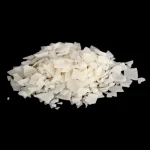
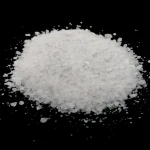
Load the calibrated spreader and begin application in the prioritized zones. Drive in a methodical grid pattern with a 10-15% overlap to ensure even coverage. Avoid the common error of applying heavy piles at the edge of a lane, which creates a runoff brine river that damages landscaping. A granular calcium chloride formulation is ideal here, as its spherical pellets roll less on impact compared to flake products, landing exactly where they’re aimed.
Step 5: Allow 15-20 Minutes of Dwell Time, Then Scrape
After application, allow the calcium chloride to work for 15-20 minutes. This dwell time is when the exothermic reaction penetrates the ice-pavement bond. Do not send in a plow immediately, as this scrapes away the active chemical. After the bond is broken, use a scraper blade or box plow to remove the loose slush completely. The expected result is a nearly dry pavement surface that requires no further chemical treatment, having eliminated the ice source.
Common Mistakes to Avoid When Deicing a Parking Lot
Understanding how to avoid operational errors is just as important as knowing the right technique. These misconceptions are among the most costly in commercial property maintenance.
- Assuming more ice melt equals faster melting. Over-application is the number one mistake. A rate above 5 ounces per square yard for calcium chloride does not significantly increase melting speed. Instead, the excess chemical creates a corrosive sludge that tracks into buildings, damaging interior flooring and carpets. This residue also kills vegetation when the spring thaw washes it into soil.
- Using the same material and rate for every temperature. A parking lot deicing plan for a 28°F (-2°C) event must differ from a -10°F (-23°C) deep freeze. Rock salt is cheaper but becomes inert at low temperatures. Adjusting the product selection based on the low point of the storm prevents the false sense of security of applying a product that has physically stopped working. Calcium chloride’s performance curve remains consistent across its effective temperature range, eliminating this variable.
- Treating an entire lot when only a section is used. For commercial properties with predictable traffic patterns, like office buildings or retail stores, full-lot deicing is unnecessary. Close off unused sections before a storm, mark them clearly with cones, and instruct crews to bypass them. This practice can reduce material consumption by 25-40% per season.
Choosing the Right Deicer for Commercial Properties
An effective ice melt product for a parking lot must be more than just a chemical that turns ice to water. The evaluation framework should center on performance at the pavement’s actual surface temperature, total applied cost per acre, and compatibility with property infrastructure. Liquid pre-treatment brines and granular solid melts have different roles in a complete program, and a property manager’s primary question should be whether the product works fast enough to be cleared before the morning business rush.
When evaluating potential suppliers, prioritize those who provide detailed technical data sheets showing the product’s exothermic heat release and melting volume at 5°F, 15°F, and 25°F. Ask for a calibration chart for common commercial spreader models like Swenson or V-box units, and request a list of the product’s corrosion inhibitors. A supplier’s willingness to provide this level of technical support indicates the product is formulated for professional use, not just a consumer-grade repackage. The right choice is one that integrates into a documented workflow, delivering predictable results and contributing to the overall liability protection of the property.
FAQs
What is the most effective chemical for parking lot deicing?
Calcium chloride is the most effective chemical for low-temperature parking lot deicing. Its exothermic reaction generates heat instantly upon contact with moisture, allowing it to melt ice at temperatures where other products, like rock salt, become chemically inactive.
- It melts ice up to 8 times faster than rock salt in the first 30 minutes at 20°F (-7°C).
- It remains effective down to -25°F (-32°C), a threshold where magnesium chloride also begins to fail.
- Its spherical pellet form minimizes bounce and scatter, keeping 20-30% more product on the pavement.
How much calcium chloride do I need per square foot for my parking lot?
The standard application rate for calcium chloride pellets is 2 to 3 ounces per square yard for post-treatment deicing, which translates to roughly a quarter-ounce per square foot. For extreme ice buildup, the rate can be increased to a maximum of 5 ounces per square yard, but only in targeted areas.
- Use a spreader calibration test to achieve precise output rather than relying on visual estimation.
- A 50-pound bag of calcium chloride at the 2-ounce-per-yard rate will cover approximately 400 square yards.
- Over-application wastes up to 35% of the product without a proportional increase in melting speed.
How long does calcium chloride take to melt ice on asphalt?
Calcium chloride begins melting ice within 5-10 minutes of application as it absorbs moisture from the air and forms a hot brine. The ice-pavement bond is typically broken and ready for mechanical scraping within a 15-20 minute dwell time.
- Its hygroscopic nature allows it to start working even in low relative humidity where other deicers lie dormant.
- The exothermic reaction peaks in the first 15 minutes, providing a burst of thermal energy for rapid penetration.
- Full dissipation of thick ice packs (over 1 inch) requires the 20-minute dwell time, followed by scraping to remove the slush layer.
Is it safe to use calcium chloride around concrete and plants?
Yes, calcium chloride is safe for concrete and plant life when applied at the recommended rates of 2 to 3 ounces per square yard. Concrete damage is primarily caused by the physical expansion of freezing water, not by this specific chemical.
- The American Concrete Institute notes that high-quality, air-entrained concrete is resistant to scaling from chloride-based deicers.
- It is less damaging to vegetation than sodium chloride because calcium is a secondary plant nutrient, though over-application will still cause soil salinity issues.
- To protect plants, avoid piling deicer-laced snow near trees and drains, and flush landscaped areas with water in early spring.
Calcium chloride vs magnesium chloride: Which is better for a commercial lot?
For commercial parking lot deicing, calcium chloride is superior to magnesium chloride in nearly all operational metrics, primarily due to its higher exothermic heat release and lower eutectic temperature.
- Calcium chloride generates significantly more heat upon dissolving, melting ice faster in the critical first 20 minutes.
- Magnesium chloride is effective only down to about -13°F (-25°C), while calcium chloride works to -25°F (-32°C), providing a much wider safety margin.
- Magnesium chloride pellets are often more hygroscopic in storage, leading to clumping and bridging issues in spreader hoppers if not kept perfectly sealed.
When should I pre-treat a parking lot instead of waiting for the snow?
Pre-treat a parking lot with a liquid calcium chloride brine 1 to 2 hours before a freezing rain event or a light snowstorm of under 2 inches. This anti-icing strategy prevents ice from ever bonding to the pavement, making subsequent plowing effortless and reducing total chemical use.
- The application rate for a 32% liquid calcium chloride brine is typically 10-15 gallons per lane mile.
- Do not pre-treat if heavy rain precedes the cold front, as the rain will wash the brine off the pavement before it can work.
- Pavement temperature sensors are the most reliable trigger for pre-treatment decisions, removing the guesswork from the timing.
Can deicing a parking lot damage the drainage system?
Deicing runoff does not inherently damage a modern, properly graded drainage system. The risk comes when excessive chemical sludge, created by massive over-application of any deicer, flows into stormwater ponds and elevates chloride levels beyond the 230 mg/L chronic toxicity threshold for freshwater life.
- Calibrating spreaders to prevent over-application is the single most effective strategy to protect on-site drainage from chloride contamination.
- Most municipal stormwater permits now implicitly require documented chemical application logs as a best management practice.
- The brine from calcium chloride is heavier than water and tends to sink in a stormwater pond, which can be managed by operating pond aerators during the thaw season.
How do I store bulk calcium chloride to prevent it from hardening?
Bulk calcium chloride must be stored in a dry, covered structure with a concrete floor and protected from any source of moisture, as the product’s hygroscopic nature means it will absorb humidity from the air and form a solid, cement-like mass.
- Keep the storage area below 50% relative humidity using passive ventilation or a dehumidifier, and always re-seal opened bags by folding the top and taping it tightly.
- If storing in a large stationary hopper or “brine maker” tank, ensure the lid creates a positive seal with a rubber gasket.
- Stockpile rotation based on “first-in, first-out” principles prevents older material from clumping at the bottom of the pile.
What is the difference between liquid and granular deicing for lots?
Liquid deicing uses a brine solution that is ideal for pre-treatment anti-icing, while granular deicing uses solid pellets for post-treatment ice melting. A complete parking lot management plan uses both: liquid brine before the storm to prevent bonding and granular product after plowing to handle any remaining ice.
- Liquid brine, when sprayed correctly, can cover a lane mile for a fraction of the material cost of an equivalent granular application.
- Granular pellets provide the necessary weight and thermal mass to bore through packed ice and snow that a light liquid spray would simply sheet off of.
- The decision of which to use hinges entirely on the timing of the application relative to the storm’s arrival.
Why does calcium chloride melt ice faster than sodium chloride?
Calcium chloride melts ice faster because its dissolving process is highly exothermic, releasing a large amount of heat, while sodium chloride’s dissolving process is endothermic, absorbing heat from its surroundings. This fundamental thermodynamic difference means calcium chloride creates its own activation energy, leading to rapid melt rates.
- One gram of anhydrous calcium chloride releases approximately 170 calories of heat when it dissolves in water, actively warming the ice interface.
- Sodium chloride requires ambient heat from the air, pavement, or sun to initiate the melting process, so it stalls at low temperatures.
- This is why a freshly applied pellet of calcium chloride will physically steam slightly in cold, dry air as it aggressively pulls in water vapor.
Conclusion
Efficient parking lot deicing is a science-driven process that balances material chemistry with methodical application. The core principle is that calcium chloride is the most effective tool for rapid, low-temperature ice removal, provided its use is guided by a clear decision matrix and a calibrated workflow. Choosing pre-treatment with liquid brine to prevent ice bonding, or post-treatment with granular pellets to break up existing ice, must be a tactical choice based on storm timing and pavement temperature. Avoiding common errors like over-application and inconsistent spread patterns is as critical to a liability defense as the product choice itself. The key is to shift the operational focus from a reactive, high-volume dump of salt to a proactive, measured program that documents every step, dramatically reducing both material costs and slip-and-fall risk.