The global chemical supply chain is more interconnected and complex than ever. Procurement teams are under immense pressure to secure reliable sources of industrial chemicals, yet the landscape is riddled with inconsistencies in quality, supply reliability, and regulatory compliance. A decision based solely on unit price can expose an organization to operational disruptions, safety liabilities, and hidden costs that dwarf the initial savings.
Evaluating a chemical manufacturer is not a simple transaction; it is a rigorous due diligence process. This is especially true for high-volume, industrial chemicals like Calcium Chloride, where product purity and consistent physical properties directly impact downstream processes, from de-icing and dust control to oil and gas drilling. A systematic evaluation framework that prioritizes technical capability, quality assurance, and supply chain integrity over superficial factors is essential for securing a long-term, reliable partnership.
Calcium chloride is safe when handled properly and sourced from a reputable manufacturer. The key risks are not inherent to the chemical itself but arise from inconsistent purity levels, the presence of harmful contaminants like heavy metals, and a supplier's failure to provide adequate safety data sheets (SDS) and handling guidelines. The main evaluation criteria should therefore focus on a manufacturer’s ability to consistently deliver a product that meets defined specifications and complies with global safety and quality standards.
Key Takeaways
- A manufacturer’s ISO 9001 certification is the minimum baseline, but industry-specific credentials like NSF/ANSI 60 for drinking water treatment chemicals are non-negotiable for certain applications.
- Evaluating Calcium Chloride requires reviewing a full certificate of analysis (CoA), focusing on purity (typically 94-97% for prills) and trace contaminant levels of alkali metals, magnesium, and iron.
- A process audit, whether virtual or in-person, must trace the entire manufacturing chain—from raw material sourcing (e.g., Solvay process vs. natural brine) to final packaging—to identify contamination risks.
- The true cost of a supplier partnership includes logistical reliability, technical support responsiveness, and regulatory documentation accuracy, which can account for 15-20% of the total cost of ownership beyond the ex-works price.
What Does a Quality Chemical Manufacturer Look Like?
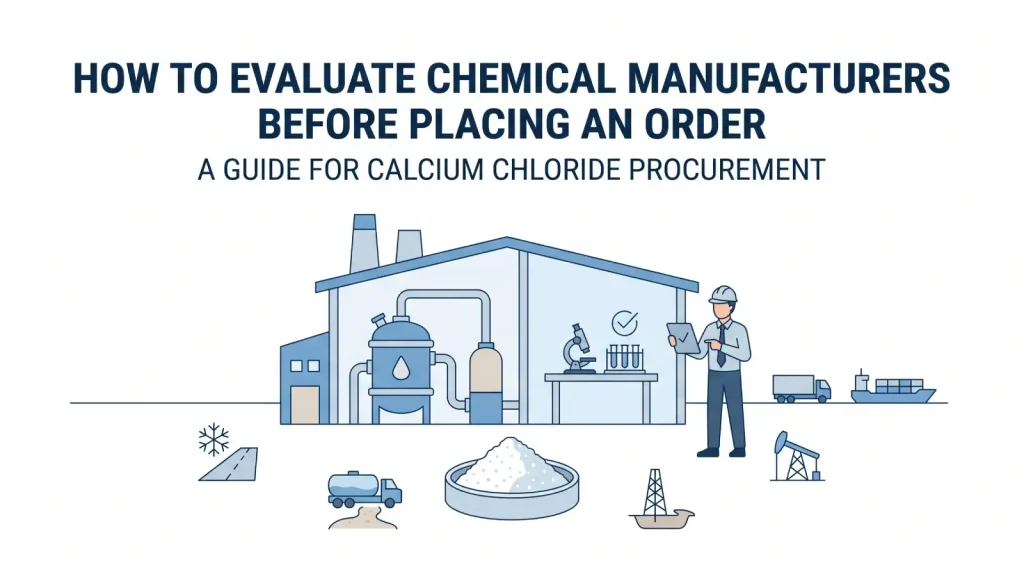
Defining a quality manufacturer goes beyond a simple checklist. It requires understanding the intersection of process capability, quality management systems, and a culture of continuous improvement. A manufacturer's primary responsibility is to convert raw materials into a finished product with consistent, verifiable properties, batch after batch. The marker of excellence is not the absence of problems but the presence of robust systems to detect, contain, and correct deviations before they impact the customer.
How Does Process Control Define Product Quality?
The manufacturing process is the single greatest determinant of product consistency. For a chemical manufacturer, process control is the ability to manage the chemical reactions or physical transformations with minimal variation. This involves closed-loop systems that continuously monitor critical process parameters (CPPs) like temperature, pressure, pH, and reactant feed rates, making automatic adjustments to maintain the target profile.
Why Raw Material Sourcing is a Critical Quality Factor
The quality of the finished product cannot exceed the quality of its raw materials. This is a fundamental axiom in chemical manufacturing. A rigorous supplier qualification program is a non-negotiable trait of a top-tier manufacturer. This program must include auditing raw material sources, requiring their own certificates of analysis, and performing incoming quality control checks before the material enters the production line.
The Role of Distillation, Crystallization, and Solid Handling
The specific unit operations used directly influence the final chemical’s physical form and purity. For Calcium Chloride, the two dominant production pathways—the Solvay process and the refining of natural brine—yield different impurity profiles. The crystallization or prilling process then determines key physical characteristics like particle size distribution and surface area, which affect dissolution rates and anti-caking properties during storage.
How to Decode Quality Certifications and Standards
A manufacturer’s certifications provide a shorthand for their commitment to quality, but a procurement team must understand what these credentials actually represent. They should not be taken at face value; verification is a critical step.
ISO 9001 vs. Industry-Specific Credentials: What Is the Difference?
ISO 9001:2015 certification confirms that a manufacturer has a documented and audited quality management system (QMS) in place. It ensures repeatability and a framework for continuous improvement but does not prescribe specific product quality levels. A manufacturer can be ISO 9001 certified and still produce a product that fails your specification. This is why industry-specific certifications are so crucial for certain end-uses.
For Calcium Chloride intended for drinking water applications, a manufacturer must hold NSF/ANSI/CAN 60 certification. This standard specifically evaluates the health effects of chemicals added to drinking water, setting limits on impurities like arsenic, lead, and mercury. Other critical standards include FCC (Food Chemicals Codex) for food-grade applications and API monographs for pharmaceutical use. These certifications provide a direct, auditable link between the chemical product and its safe use in a regulated environment.
How to Conduct a Pre-Order Audit: A Step-by-Step Framework
An audit is the most effective tool for converting paper-based qualifications into verified capability. Before placing a large or long-term order, a structured evaluation—whether remote or on-site—is essential. The objective is to verify that the documented QMS is operational on the plant floor.
Step 1: Pre-Audit Questionnaire and Document Review
Begin by requesting a comprehensive pre-qualification package. This should include a valid ISO certificate, a sample product certificate of analysis (CoA), a safety data sheet (SDS) compliant with GHS (Globally Harmonized System) guidelines, and a quality policy statement. For Calcium Chloride, scrutinize the CoA for purity percentage, magnesium and alkali metal chloride content, and water-insoluble matter levels. A rejection rate of over 0.5% on key parameters in the last 12 months of data is a red flag.
Step 2: A Virtual Plant Tour and Process Walkthrough
A structured video tour is a powerful method to assess housekeeping, material flow, and operational discipline. Ask to see the organization of raw material warehousing to prevent cross-contamination, the calibration stickers on critical instruments, and the final packaging and labeling line. The tour should follow the logic of the material flow, from receiving to shipping, observing how the plant prevents mix-ups at every stage.
Step 3: Performance Validation Through a Lab-Scale Trial
Before committing to a full production run, request a 1-5 kg sample for an independent lab-scale trial. Design a set of tests that mimic your key application parameters. For a de-icing operation, this would involve testing dissolution rate, exothermic heat generation, and freeze-point depression at a standard concentration. For dust control, it would test hygroscopicity and dust suppression longevity. The results must be evaluated against your predefined critical quality attributes (CQAs).
Supply Chain Integrity and Logistics: What to Evaluate
A chemical can be perfect at the factory gate and useless upon arrival if the supply chain fails. Logistics and packaging are integral parts of the quality equation, directly affecting both product integrity and total cost of ownership. Evaluating a chemical manufacturer requires an equally rigorous assessment of their supply chain capabilities.
| Logistics Factor | Key Evaluation Questions | High-Risk Indicators |
|---|---|---|
| Packaging Integrity | Is the packaging designed to prevent moisture ingress and physical damage? Are pallets stretch-wrapped and labeled per global standards? | Damaged, mismatched, or unlabeled drums; inappropriate packaging for sea/air freight. |
| Inventory Management | Can the manufacturer hold a 4-6 week safety stock of your specific grade? Is their ERP system capable of real-time inventory visibility? | A "make-to-order" only policy for high-volume products; inability to integrate with your procurement system via EDI or API. |
| Shipping & Documentation | What is their on-time, in-full (OTIF) delivery rate over the last 12 months? Are all regulatory documents digitally available before shipment? | An OTIF rate below 95%; a history of incorrect or delayed certificates of analysis, SDS, or bills of lading. |
| Geo-Political Contingency | Does the manufacturer have multiple, diversified raw material sources or production sites to mitigate regional disruptions? | Sole-source reliance on a single port, rail line, or a politically unstable region for key raw materials. |
Is a Lower Price Better Than a Reliable Partnership for Chemical Sourcing?
A price-first procurement strategy in the chemical industry is inherently high-risk. The decision equation must shift from a simple price-per-ton comparison to a comprehensive Total Cost of Ownership (TCO) analysis. A seemingly cheaper quote from a less-capable manufacturer often obscures significant operational and financial risks. A single batch of off-spec Calcium Chloride can halt a production line, causing losses that exceed the annual savings from a lower unit price.
How to Build a Total Cost of Ownership (TCO) Model
A robust TCO model aggregates all costs associated with a supplier partnership over a defined period, typically one year.
Choose a Supplier Based on TCO, Not Price, When:
- Your application is a critical step in a high-value manufacturing process where downtime costs exceed $10,000 per hour.
- The chemical’s quality directly impacts the safety, efficacy, or regulatory compliance of your final product.
- Logistical costs, such as demurrage charges, special handling, or long-distance freight, represent more than 20% of the product’s ex-works price.
- You require significant technical support for application development, a service that high-service manufacturers bundle into their cost structure but low-cost providers ignore.
A basic TCO formula is: TCO = (Annual Purchase Price + Inbound Freight + Quality Control Costs + Internal Handling) / (Annual Purchased Tons - Rejected/Off-Spec Tons). This calculation often reveals that a premium-priced, high-reliability supplier is the most cost-effective option.
FAQs
What is the typical purity of industrial-grade Calcium Chloride?
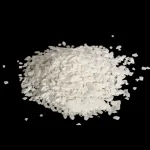
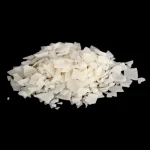
Industrial-grade Calcium Chloride, typically sold as prills or pellets, has a standard purity of 94-97% as CaCl₂. The remaining percentage consists of water of crystallization, alkali metal chlorides (like sodium and potassium chloride), and trace magnesium salts. For high-purity applications, such as in food processing or pharmaceutical buffers, an FCC or USP grade with purity above 98% is necessary.
How does the Solvay process produce Calcium Chloride?
The Solvay process, primarily used for sodium carbonate production, generates Calcium Chloride as a significant byproduct. In this method, a purified brine solution is reacted with ammonia and carbon dioxide, and the calcium chloride is recovered from the resulting distiller waste after a filtration and purification process. This synthetic route often yields a product with a very controlled and consistent impurity profile.
What are the key safety risks when handling Calcium Chloride?
- Exothermic Reaction: The rapid dissolution of Calcium Chloride in water releases a significant amount of heat, which can cause the solution to boil and splatter if not properly controlled.
- Tissue Irritation: Due to its strong hygroscopic nature, direct contact with dry prills or concentrated solutions can desiccate skin and cause severe eye irritation.
- Environmental Release: Large spills can drastically increase the salinity of soil and groundwater, creating an inhospitable environment for plant and aquatic life.
How to verify if a chemical manufacturer’s ISO certification is valid?
To verify a manufacturer's ISO 9001 certificate, request a copy and note the certifying body. Then, check the certifying body’s accreditation with a national accreditation forum like ANAB (ANSI National Accreditation Board) in the U.S. or UKAS in the U.K. The certificate’s validity and scope can then be cross-checked on the certifying body’s official online database to confirm it covers the specific chemical processes.
How long does a Calcium Chloride shelf life last?
Calcium Chloride is highly hygroscopic, meaning it actively absorbs moisture from the air. When stored in its original, unopened, air-tight packaging, its shelf life is effectively indefinite. However, once a bag or supersack is opened, the product can quickly absorb moisture, leading to clumping or solidification, which degrades its flowability but does not change its chemical composition.
Is Calcium Chloride better than Magnesium Chloride for dust control?
- Effectiveness: Calcium Chloride is more effective in a wider range of humidity levels because it has a lower critical relative humidity than Magnesium Chloride, allowing it to absorb water vapor from drier air.
- Cost: Calcium Chloride is typically more cost-effective on a per-ton basis, making it the standard choice for large-scale, unpaved road dust control programs.
- Environmental Impact: Both chlorides can be corrosive and impact roadside vegetation, but Magnesium Chloride is often perceived as less aggressive to metal surfaces, a claim that remains debated by corrosion engineers.
Where is Calcium Chloride used in the oil and gas industry?
In the oil and gas industry, Calcium Chloride is a critical component in drilling fluids and completion brines. Its primary function is to provide a high-density, solids-free fluid that exerts sufficient hydrostatic pressure to control formation pressures without damaging the reservoir rock. It is also used as an additive in cementing operations to accelerate the setting time of the casing cement.
When should I choose a natural brine Calcium Chloride over a synthetic source?
- De-icing and Dust Control: The slightly higher alkali metal content in natural brine-derived Calcium Chloride is generally acceptable for these cost-sensitive, large-scale applications.
- High-Purity Chemical Synthesis: Synthetic sources, like those from the Solvay process, are often preferred when a more tightly controlled, low-magnesium impurity profile is required.
- Food Grade Applications: Both can meet FCC standards, but synthetic routes sometimes offer an advantage in reducing the variability of trace organics.
What is a Certificate of Analysis (CoA) and why is it critical?
A Certificate of Analysis (CoA) is a legally binding document issued by a manufacturer’s quality assurance department. It lists the standard specifications for a product batch alongside the actual laboratory test results for that specific batch. The CoA is the primary objective evidence of quality and serves as a commercial and regulatory record, making it the most critical document in the purchasing process.
How do I assess a manufacturer's commitment to environmental regulations?
- Documented Permits: Request copies of all valid environmental permits for air emissions, water discharge, and hazardous waste handling.
- Public Audit History: Review the manufacturer’s history with regulatory bodies like the EPA (Environmental Protection Agency) in the U.S., specifically looking for Notices of Violation or records of non-compliance fines.
- Third-Party Sustainability: Inquire about independent certifications like a completed EcoVadis assessment or ISO 14001 environmental management system certification, which provides a standardized framework for continuous environmental improvement.
Conclusion
The process of evaluating chemical manufacturers before placing an order is a strategic investment in operational security. This guide has moved through the essential framework: defining quality through process control, verifying it via certifications and audits, securing it through supply chain rigor, and measuring its value through a total cost of ownership model. For a product as fundamental as Calcium Chloride, the margin for error is small, and the impact of a sourcing failure is immediate and costly.
The long-term goal is to build a partnership based on technical transparency and mutual confidence. A reliable supplier is defined by their willingness to share detailed process data, accommodate an audit, and proactively communicate potential disruptions. When evaluating your next supplier, apply this framework directly. Request a comprehensive pre-qualification package, including a recent Certificate of Analysis and the corrective actions from their last third-party audit, to begin a supplier relationship grounded in verified data rather than commercial promises.