The global supply chain for industrial chemicals has shifted dramatically over the past decade. Importers who once relied solely on domestic or regional suppliers are now looking eastward, drawn by competitive pricing and massive production capacity. Calcium chloride, a de-icing agent and dust control workhorse, is one such commodity where China dominates global supply. Yet for every importer who secures a cost-effective, reliable shipment, another gets entangled in regulatory delays or receives product that falls short of purity specifications. The challenge isn't finding a Chinese supplier—it's navigating the complexities to import calcium chloride successfully without financial or legal missteps.
What makes international chemical sourcing so prone to error? The answer lies in a triad of variables: opaque supplier qualifications, evolving import regulations, and the inherent chemical variability of an industrial salt. A successful import strategy must address all three simultaneously. This guide provides a concrete, step-by-step framework to help importers move from initial supplier research to cleared cargo at your warehouse door.
Calcium chloride can be imported safely and cost-effectively if proper handling, documentation, and quality verification protocols are rigorously followed. The main risks are non-compliant product grades, moisture-damaged cargo, and customs delays due to incomplete Harmonized System (HS) code classification. Controlling these variables transforms a high-risk transaction into a predictable procurement process.
What This Article Covers
- A step-by-step workflow from identifying a qualified Chinese calcium chloride supplier to receiving your shipment
- Essential pre-import documentation and regulatory requirements
- A detailed cost breakdown to avoid hidden fees
- A troubleshooting guide for the most common import problems
- Bottom line: A structured, verified process eliminates 90% of the risks that cause first-time calcium chloride imports to fail.
Key Takeaways
- China produces over 3 million metric tons of calcium chloride annually, making it the world’s largest exporter.
- Importers must require a Certified Analysis (COA) and third-party lab testing before shipment to avoid receiving substandard industrial-grade material labeled as food-grade.
- Classifying the product under the correct HS code (typically 2827.20.0000) is the single most common failure point in U.S. customs clearance.
- Total landed cost typically runs 30-45% above the FOB price when freight, duties, and port fees are calculated.
- Building a relationship with a supplier who provides audit reports and consistent quality is more valuable than simply accepting the lowest price per ton.
How to Import Calcium Chloride from China: Step-by-Step Workflow
This workflow assumes you have already identified calcium chloride as the correct chemical for your application, whether it's for dust control, ice melting, food processing, or oilfield drilling fluids. The steps below walk through the import process from initial supplier contact to post-clearance evaluation.
Step 1: Qualify Suppliers Using Documentation Audits
Begin by requesting three critical documents from any potential supplier: a business license, an ISO 9001:2015 certificate, and a third-party product Certificate of Analysis (COA) from the most recent production batch. The business license confirms legal operating status. The ISO certificate indicates that a baseline quality management system exists. The COA reveals the product’s actual purity profile—commercial calcium chloride typically ranges from 74% to 94% purity, with higher grades required for food and pharmaceutical applications.
A legitimate supplier will share these documents within 48 hours. Those who delay, redact key information, or offer only in-house test results without third-party verification should be deprioritized. Expect to audit at least five to eight suppliers before identifying two or three viable candidates.
Step 2: Request a Pre-Shipment Sample and Conduct Independent Lab Testing
Never rely solely on a supplier’s COA. After shortlisting candidates, pay for a pre-shipment sample (typically 1-2 kg) to be sent to an independent, ISO 17025-accredited laboratory. Instruct the lab to test for purity, magnesium and alkali metal chloride content, sulfate levels, and heavy metals.
Independent lab testing costs approximately $300-$600 per sample depending on the testing suite, but it is the only reliable way to verify that calcium chloride purity specifications match your order requirements. Reject any supplier whose sample results deviate more than 1% from the agreed-upon purity specification.
Step 3: Negotiate Terms with a Clearly Defined Specification Sheet
Draft a specification sheet that becomes an appendix to your purchase agreement. Include the exact chemical formula (CaCl₂), purity grade, acceptable moisture content, packaging requirements, and Incoterms 2020. For most first-time importers, FOB (Free On Board) or CIF (Cost, Insurance, Freight) terms from a major Chinese port like Qingdao or Tianjin are the most practical starting points.
Specify packaging explicitly: Calcium chloride is hygroscopic and will absorb moisture from the air, potentially turning into a solid block or brine solution if packaging fails. Typically, 25 kg woven polypropylene bags with an inner polyethylene liner provide adequate moisture protection. Liquid calcium chloride is transported in IBC totes or flexitank containers.
Step 4: Confirm HS Code Classification and Calculate Duties
Product classification errors trigger customs holds, penalties, and demurrage charges. In the United States, anhydrous calcium chloride generally falls under HS code 2827.20.0000, with a duty rate that can vary based on trade agreements and tariff schedules. Always confirm the current rate directly with a licensed customs broker or the U.S. International Trade Commission (USITC) online database before finalizing your order.
Your customs broker will require the commercial invoice, packing list, bill of lading, and the COA. Provide these documents at least 72 hours before the vessel arrives to allow for pre-clearance.
Step 5: Arrange Freight, Insurance, and Inland Logistics
For full container load (FCL) shipments, a 20-foot container holds approximately 20-25 metric tons depending on packaging density. Ocean freight transit from Shanghai to Los Angeles typically takes 14-18 days, while transit to Rotterdam takes approximately 30-35 days. Factor in an additional 5-7 days for port unloading and customs clearance.
Cargo insurance is not optional. A standard marine cargo insurance policy costs approximately 0.3-0.5% of the insured value and covers loss, damage, and general average claims. For a $25,000 shipment, this equates to roughly $75-$125—a negligible cost relative to the risk.
Step 6: Manage Customs Clearance and FDA/USDA Notification (If Applicable)
If you are importing food-grade calcium chloride (used as a firming agent, for example), the shipment requires prior notice to the FDA. Submit the prior notice through your customs broker no later than 2 hours before arrival by truck, 4 hours by rail, or 8 hours by vessel. The FDA reviews the product’s intended use, manufacturer registration, and label compliance.
For de-icing or dust control grades, no FDA notification is needed, but the product must still clear CBP (U.S. Customs and Border Protection) under the correct HS code. Anticipate potential random inspections, which can add 3-5 business days and approximately $500-$1,000 in examination fees.
Step 7: Receive, Inspect, and Document Your Shipment
Upon delivery, immediately inspect the packaging for tears, moisture intrusion, or caking. Randomly sample bags from different container locations and send a composite sample to an independent lab for a post-arrival COA. Compare this to the pre-shipment COA to verify that the product remained unadulterated during transit.
Document any discrepancies with photos and written reports. This documentation is critical for filing an insurance claim or escalating with the supplier.
Pre-Import Checklist for Calcium Chloride Importers
Before placing your first purchase order, verify each item below:
- Verify the supplier’s business license and ISO certifications.
- Obtain a third-party COA from a recent production batch.
- Contract an independent lab to test a pre-shipment sample.
- Finalize a specification sheet signed by both parties.
- Confirm the correct HS code and current duty rate with a licensed customs broker.
- Secure a freight forwarder and marine cargo insurance policy.
- Prepare all shipping documents (commercial invoice, packing list, bill of lading, COA) in digital and physical formats.
- Submit FDA prior notice if importing food-grade material.
- Budget for customs examination fees as a contingency expense.
- Arrange inland transportation from the port to your warehouse.
Calcium Chloride Cost Breakdown: Understanding Total Landed Cost
Accurate cost modeling prevents margin erosion. The FOB price per metric ton is the starting point, not the total. The table below illustrates a representative cost build-up for a 20-metric-ton FCL shipment of industrial-grade calcium chloride from Qingdao to Los Angeles.
| Cost Component | Estimated Range (Per 20' Container) | Notes |
|---|---|---|
| Product FOB Price (20 MT @ $150/MT) | $3,000 | Industrial grade, 94% purity |
| Ocean Freight (Qingdao to LA) | $2,200 - $3,000 | Subject to spot rate fluctuations |
| Marine Insurance (0.4% of value) | $20 - $30 | Based on insured value |
| U.S. Customs Duty (2.5% ad valorem) | $75 - $130 | Verify current tariff schedule |
| Customs Brokerage Fee | $150 - $350 | Per entry filing |
| Port Handling & Chassis Fee | $400 - $700 | Terminal handling and chassis usage |
| Inland Trucking (Port to Warehouse) | $600 - $1,200 | Distance-dependent |
| Contingency (Exam, Demurrage) | $500 | Recommended buffer |
| Estimated Total Landed Cost | $7,000 - $8,500 | Total per MT: $350 - $425 |
Note: Market reference values are based on typical 2025 shipping conditions. Actual rates vary with fuel surcharges, seasonal demand, and contractual agreements.
Common Mistakes When Importing Calcium Chloride
Avoiding these errors can save weeks of delay and thousands of dollars in unplanned costs.
Mistake #1: Relying Entirely on Supplier-Provided Documentation
The COA provided by a supplier is a marketing document until verified by independent testing. Many importers have received industrial-grade calcium chloride when they paid for food-grade, simply because they trusted an unverified certificate. Independent lab testing is the only safeguard.
Mistake #2: Incorrect HS Code Classification
Misclassifying calcium chloride as another chloride salt can result in a higher duty rate and trigger a customs audit. Always use the specific HS code and consult the official tariff schedule for your destination country.
Mistake #3: Ignoring Hygroscopic Packaging Requirements
Standard woven bags without an inner moisture barrier will allow calcium chloride to absorb ambient humidity during the four-week ocean transit. The resulting product can be a single solidified mass that is unusable. Specify packaging explicitly in the purchase contract.
Mistake #4: Underestimating Port and Customs Delays
Customs examinations, port congestion, and container availability delays are routine, not exceptional. Including a 1-2 week buffer in your delivery timeline and a $500 contingency line in your budget prevents a logistics crisis from becoming a financial one.
Where Is Imported Calcium Chloride Used in Industrial Applications?
Understanding the end-use application determines the required purity grade, packaging, and regulatory pathway.
- De-icing and Dust Control: Industrial grade (77-80% flake or pellet). The largest volume application. Regulatory requirements focus on corrosion potential and environmental runoff.
- Oilfield Drilling Fluids: High-purity anhydrous (94-97%) used in brine-based completion fluids. Requires strict quality control for brine clarity and density.
- Food Processing: Food-grade per FCC (Food Chemicals Codex) specifications. Used as a firming agent in canned vegetables and in cheese making. Requires FDA registration and prior notice.
- Concrete Accelerator: Technical grade powder or liquid. Added to concrete mixes to accelerate setting time in cold weather. Specification focuses on chloride content.
- Desiccant: Anhydrous pellets with minimal dust. Used in industrial air drying systems and container desiccant packs.
Troubleshooting Common Import Problems
Symptom: Shipment Held at Customs for "Documentation Review"
Solution: Contact your customs broker immediately. Provide any missing documents, typically the commercial invoice or packing list. Verify that the HS code on the entry matches the HS code on the commercial invoice.
Symptom: Product Arrives Solidified or Clumped
Solution: A moisture-compromised shipment is a packaging failure. File an insurance claim if packaging damage is visible. If packaging is intact, request a re-test to determine if the product meets the moisture specification in your contract.
Symptom: Delivered Purity Is Lower Than Agreed Specification
Solution: This constitutes a contractual non-conformity. Provide the supplier with the independent lab report showing the discrepancy and request a price adjustment or refund proportional to the purity shortfall.
Symptom: Unexpected Demurrage Charges After Vessel Arrives
Solution: Demurrage accrues when containers remain at the terminal beyond the allowed free days. Coordinate inland trucking in advance and ensure your customs broker files entry within 24 hours of vessel discharge to minimize these charges.
FAQs
What Is Calcium Chloride and Why Is It Imported?
Calcium chloride is an inorganic salt with the chemical formula CaCl₂. It is imported because China’s production capacity, driven by abundant raw material access and low manufacturing costs, makes it one of the most cost-effective global sources. It arrives in flake, pellet, powder, or liquid form for applications ranging from road de-icing to food preservation.
How Long Does Ocean Freight Take When I Import Calcium Chloride from China?
Transit times depend on the destination port.
- To the U.S. West Coast: 14-18 days
- To the U.S. East Coast: 30-35 days (via Panama Canal)
- To Northern Europe: 30-35 days
- To the Middle East: 20-25 days
These are vessel transit times only; port clearance adds 3-7 business days on average.
Is It Safe to Import Calcium Chloride for Food Applications?
Yes, it is safe if the supplier is registered with the destination country's food safety authority and the product meets food-grade specifications such as those defined in the FCC (Food Chemicals Codex). Independent lab testing for heavy metals like lead and arsenic is mandatory for food-grade applications.
What Are the Different Grades of Calcium Chloride Available from Chinese Suppliers?
Chinese suppliers typically offer the following grades:
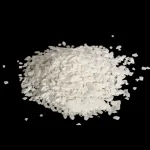
- Industrial Grade (74-77% flake): Used for de-icing and dust control
- Technical Grade (94% prills/pellets): Higher purity, low magnesium and alkali metals
- Food Grade (94% min): Meets FCC and USP specifications for food and pharmaceutical use
- Anhydrous Grade (96-97% powder): Used in desiccants and sensitive chemical processes
How Much Does It Cost to Import a Container of Calcium Chloride from China?
For a 20-foot container holding 20 metric tons, the total landed cost typically ranges from $7,000 to $8,500. This includes the product FOB cost, ocean freight, insurance, customs duties, and inland logistics. The per-metric-ton cost drops slightly for a 40-foot container due to freight efficiencies.
What Documents Are Required to Clear Customs When Importing Calcium Chloride?
A standard customs clearance package includes:
- Commercial Invoice
- Packing List
- Bill of Lading (for ocean freight)
- Certificate of Analysis (COA)
- Safety Data Sheet (SDS) for hazardous material classification
- FDA Prior Notice (food-grade only)
A customs broker assembles and submits these documents electronically to CBP or the relevant authority.
When Should I Use a Letter of Credit Instead of Telegraphic Transfer for Payment?
Choose a Letter of Credit (L/C) when dealing with a new supplier or placing a first-time order, as it provides a bank-guaranteed payment mechanism conditional on compliant documents. Choose Telegraphic Transfer (T/T) when you have an established relationship with a supplier who has consistently delivered quality for at least 12 months. L/Cs cost $100-$300 in bank fees but significantly reduce default risk.
How Do I Verify a Chinese Calcium Chloride Supplier Is Legitimate?
Verification is a multi-step process:
- Request a business license and verify it on China’s National Enterprise Credit Information Publicity System
- Confirm ISO 9001 certification validity through the issuing body
- Commission a factory audit through a third-party inspection company like SGS or Bureau Veritas
- Require trade references from previous international clients in your industry
- Avoid any supplier unwilling to provide documented answers to these items
Is It Better to Buy Calcium Chloride in Flake, Pellet, or Powder Form?
The choice depends entirely on your application.
- Flake (74-77%): Best for dust control and road de-icing due to lower cost and slower dissolution
- Pellet (94%): Best for oilfield and industrial uses requiring higher purity and consistent dissolution
-
Powder (96-97%): Best for desiccant and chemical synthesis where rapid dissolution is required
Each form has different storage requirements due to varying hygroscopicity.
What Happens If the Calcium Chloride Shipment Fails Quality Testing After Arrival?
If the product fails post-arrival lab testing, notify the supplier in writing within the claim window specified in your contract. Provide the independent lab report. Remedy options depend on your contract terms and may include a proportional refund, product replacement in a subsequent shipment, or a negotiated price discount. If the shipment is unusable and the supplier is unresponsive, file a claim against your marine insurance policy.
Conclusion
Importing calcium chloride from China successfully is not about finding the lowest FOB price—it is about building a procurement process that systematically controls supplier quality, regulatory compliance, and logistics predictability. A verified pre-shipment sample, a correctly classified HS code, and moisture-resistant packaging specifications remove the vast majority of financial and operational risks that derail chemical imports.
The key is to treat the first shipment as a process validation exercise rather than a pure cost-saving measure. Once a supplier demonstrates consistent purity, reliable documentation, and on-time delivery across two or three shipments, you can confidently scale order volumes. Successful importers prioritize independent verification at every stage—from supplier qualification to post-arrival lab testing—and maintain a $500-$1,000 contingency budget per shipment for customs examinations and port delays. Apply this structured workflow to your next purchase order and measure the result not just in dollars saved per metric ton, but in the predictability and safety of your supply chain.