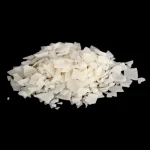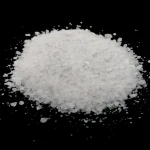
Municipal public works departments face immense logistical pressure when extreme winter storms strike without warning. Maintaining transit infrastructure, preventing transit gridlock, and ensuring community safety require immediate, strategic action. During these critical events, execution speed and chemical efficacy determine whether local economies stall or stay mobile. Standard winter maintenance procedures often fail under the weight of rapid accumulation and plummeting pavement temperatures, demanding a highly structured framework for emergency deicing deployment.
When storms drop temperatures below 15°F, conventional rock salt rapidly loses its ability to melt ice effectively, leading to hazardous packed snow conditions. Municipal supervisors must immediately pivot toward high-performance chemical alternatives that perform reliably in sub-zero environments. Relying on outdated methodologies during severe weather events can quickly lead to unsafe road conditions and high operational costs. To achieve optimal results, infrastructure teams require an advanced understanding of modern chemical interactions and calibrated deployment strategies.
Emergency deicing operations are highly effective even in extreme sub-zero conditions if Calcium Chloride is deployed using pre-wetting techniques and properly calibrated equipment. The main risks of failure are delayed deployment, improper application rates, and lack of real-time pavement temperature monitoring.
Prerequisites for Emergency Response
- Stockpile Verification: Ensure a minimum of 50 tons of high-purity solid pellets are available at the primary depot.
- Equipment Calibration: Pre-calibrate all electronic spreader controls for low-volume, high-accuracy distribution.
- Hydrological Monitoring: Check regional drainage paths to minimize concentrated runoff patterns.
- Safety Gear Deployment: Provide all field operators with specialized chemical-resistant gloves, protective goggles, and respiratory masks.
- Brine System Inspection: Confirm that liquid storage tanks, transfer pumps, and spray nozzles are fully functional and free of debris.
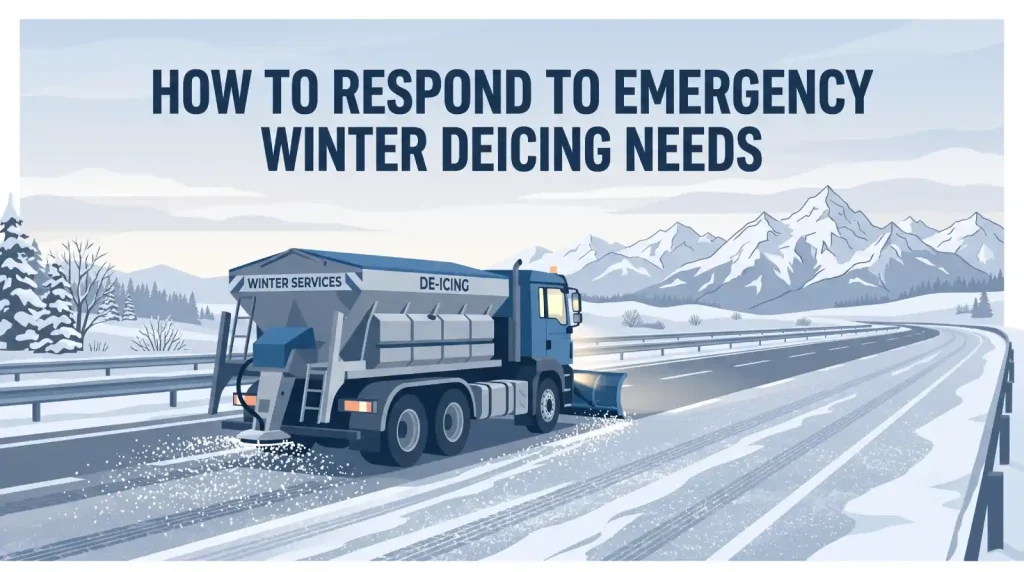
Why Calcium Chloride Outperforms Traditional Rock Salt
The primary limitation of traditional sodium chloride is its reliance on ambient moisture and heat to initiate the melting process. Sodium chloride undergoes an endothermic reaction, meaning it absorbs heat from its surroundings to dissolve into a brine. When pavement temperatures drop below 15°F, this heat absorption slows down dramatically, rendering the rock salt practically inert. In contrast, Calcium Chloride is highly hygroscopic, meaning it actively attracts moisture from snow and the surrounding atmosphere to accelerate brine formation.
Furthermore, it undergoes an exothermic reaction, releasing a substantial amount of heat as it dissolves. This thermal output speeds up ice penetration, cutting through packed accumulation to break the bond between ice and the underlying pavement. The practical eutectic point of this chemical is significantly lower than that of competing agents, remaining active at temperatures as low as -25°F. This makes it an indispensable tool for public works departments tasked with clearing roads during severe mid-winter freezes.
| Deicing Agent | Practical Lowest Temp | Reaction Type | Melting Speed (at 10°F) | Environmental Impact Profile |
| Sodium Chloride (Rock Salt) | 15°F | Endothermic | Slow (over 60 minutes) | High soil accumulation, vegetation damage |
| Magnesium Chloride | 0°F | Exothermic | Moderate (30-45 minutes) | Moderate runoff concerns |
| Calcium Chloride | -25°F | Exothermic | Rapid (10-15 minutes) | Lower application rate reduces overall footprint |
| Potassium Acetate | -20°F | Endothermic | Moderate (20-30 minutes) | Biodegradable, low structural corrosion |
How to Execute the Emergency Deicing Workflow
Managing severe winter storms effectively requires a structured approach that coordinates mechanical clearing with chemical application. The FHWA notes that "proactive anti-icing and structured deicing workflows can reduce severe winter weather road accidents by up to 85%." Adhering to a standardized operational sequence ensures that municipal crews maximize material efficiency while minimizing road downtime.
- Step 1: Anti-Icing / Pre-Treatment: Apply a liquid brine composed of 23% chemical concentration to dry pavement surfaces up to 2 hours before forecasted snowfall. This prevents the initial layer of snow from bonding to the asphalt.
- Step 2: Mechanical Plowing: Once snow accumulation reaches 1 inch, deploy plow fleets to mechanically clear the bulk of the loose snow. Chemical treatments should never be used to melt heavy accumulation that can be plowed mechanically.
- Step 3: Targeted Deicing Application: Immediately following the plows, distribute solid pellets onto the remaining packed snow layer. Focus application on high-traffic intersections, steep inclines, and bridge decks.
- Step 4: Post-Storm Monitoring: Utilize infrared pavement sensors to track residual chemical activity and monitor for potential refreezing as ambient temperatures fluctuate.
What Are the Recommended Application Rates for Municipal Roads?
Applying the correct amount of material is essential for both operational budget management and infrastructure preservation. Over-application does not speed up melting; instead, it leads to chemical waste and unnecessary runoff into local waterways. The EPA reports that "strict adherence to calibrated application frameworks prevents excessive chloride loading in local freshwater ecosystems without compromising public safety."
Application rates must be adjusted dynamically based on pavement temperature trends rather than ambient air temperatures. For instance, if the pavement temperature is stable at 20°F and rising, a light application of 200 pounds per lane mile is typically sufficient. However, if the temperature is falling below 10°F, the application rate must be increased to 350 pounds per lane mile to maintain sufficient brine strength and prevent refreezing. The target concentration can be modeled mathematically using the mass-balance equation: Q = m \times \Delta T where brine dilution must be offset by adding active chemical solids.
Troubleshooting Common Emergency Deicing Challenges
Operational anomalies frequently occur during heavy winter storms due to equipment stress and rapid weather shifts. Field supervisors must be equipped to quickly diagnose and resolve these issues to keep operations on schedule.
Symptom 1: Ice bonding to pavement despite heavy chemical application.
Solution: Check the current pavement temperature. If it is below 5°F and falling, traditional brines will dilute and freeze. Increase the solid pellet ratio to trigger the exothermic heat release, or transition to a direct pre-wetting process at the spinner disk using a 32% liquid concentration.
Symptom 2: Clogged spreader nozzles and uneven distribution patterns.
Solution: This is typically caused by material caking due to moisture absorption in the storage hopper. Flush the system with warm water, clear the aggregate filters, and ensure that all bulk storage units remain sealed against atmospheric humidity.
Symptom 3: Slow melting action on highly elevated bridge structures.
Solution: Elevated structures cool faster than ground pavement due to ambient air exposure underneath. Increase the pre-storm anti-icing frequency on bridges, and switch to high-density pellet distributions to maximize chemical contact time on the concrete surface.
Common Mistakes to Avoid in Winter Operations
Optimizing winter road maintenance requires avoiding common operational errors that reduce chemical efficiency and accelerate infrastructure wear.
- Applying Chemicals on Top of Unplowed Heavy Accumulation: This dilutes the chemical brine too quickly, rendering it ineffective and creating a thick, heavy slush that is difficult for plows to clear later.
- Relying Solely on Ambient Air Temperature Gauges: Pavement temperatures can vary by up to 15°F from air temperatures, leading to incorrect application rates. Always use truck-mounted infrared sensors for real-time data.
- Neglecting Post-Storm Equipment Washdowns: Leaving high-performance exothermic salts in spreader hoppers leads to rapid corrosion of electrical connectors and hydraulic lines. Implement a mandatory post-shift cleaning protocol.
Conclusion
Successfully managing emergency deicing needs requires coordinating rapid deployment workflows, accurate application rates, and high-performance chemicals like calcium chloride. By understanding how exothermic melting actions perform in sub-zero conditions, municipal teams can keep critical transportation corridors open during severe winter weather events. Prioritizing mechanical plowing alongside calibrated chemical distribution ensures maximum material efficiency and safeguards local infrastructure. For specific winter operation planning and tailored material procurement strategies, consult a qualified public works specialist who can assess your regional climate demands.
FAQs
What is the lowest effective temperature for calcium chloride?
It remains highly effective down to a practical temperature of -25°F. Unlike alternative materials, its exothermic properties allow it to draw moisture and generate heat even in extreme sub-zero conditions. This makes it the standard choice for severe mid-winter storms when alternative deicers stop working.
- Maintains melting action down to -25°F ambient conditions.
- Releases heat continuously upon contact with moisture.
- Prevents brine refreezing at lower thresholds than rock salt.
How does calcium chloride prevent ice from bonding to asphalt?
It works by forming a long-lasting liquid brine layer directly on the pavement surface. This chemical barrier prevents hard pack snow and ice from creating a mechanical bond with the aggregate material. Consequently, municipal plow crews can clear the road down to the bare pavement far more easily.
- Creates an immediate liquid interface on the road surface.
- Disrupts the crystalline structure of developing ice sheets.
- Reduces the mechanical scraping force required by plow blades.
Is calcium chloride safe for concrete sidewalks and municipal infrastructure?
It is generally safer for concrete than sodium chloride because it requires lower application volumes to achieve the same melting results. This reduced volume minimizes the frequency of freeze-thaw cycles within concrete pores, which is the primary cause of scaling and spalling. However, proper calibration is required to avoid over-concentration.
- Requires lower application rates, reducing overall chemical exposure.
- Minimizes destructive freeze-thaw cycles within masonry pores.
- Meets standard infrastructure safety criteria when applied correctly.
When should liquid brine be used vs solid pellets during a winter storm?
Liquid brines are ideal for proactive anti-icing treatments applied before a storm to prevent the initial ice bond from forming. Solid pellets are preferred for reactive deicing during or after a storm, as they can cut through accumulated snow and thick ice layers. Combining both forms creates a comprehensive winter maintenance strategy.
- Liquid brine: Best used for pre-storm anti-icing on dry pavement.
- Solid pellets: Ideal for boring through packed ice during active storms.
- Combination strategy: Maximizes labor efficiency and material coverage.
How long does calcium chloride remain active on a road surface?
The residual activity depends heavily on traffic volume and the rate of precipitation dilution. Under typical conditions, its hygroscopic properties allow it to remain active on the pavement for up to 48 hours after application. This persistent residual effect helps prevent frost formation and refreezing during subsequent overnight drops in temperature.
- Provides up to 48 hours of residual frost protection.
- Resists ambient evaporation due to moisture-retaining properties.
- Lowers the total number of re-applications needed during multi-day events.
Calcium Chloride vs Rock Salt: Which is more cost-effective for emergency deicing?
While the initial cost per ton is higher than rock salt, it is often more cost-effective during severe cold snaps due to its higher melting efficiency. Because it works faster and at much lower temperatures, crews use significantly less material per lane mile. This reduces application frequencies, labor hours, fuel consumption, and long-term infrastructure repair costs.
- Reduces total material volume requirements by up to 40%.
- Lowers labor overhead and equipment runtime hours per storm.
- Minimizes post-winter infrastructure and vegetation repair costs.
- Functions efficiently at temperatures where rock salt fails completely.
What safety equipment is required for handling bulk calcium chloride?
Because of its strong hygroscopic and exothermic properties, bulk handling requires appropriate personal protective equipment (PPE) to prevent skin and eye irritation. Operators should wear long-sleeved uniforms, chemical-resistant gloves, splash-proof safety goggles, and dust masks when loading spreaders. If skin contact occurs, the area should be rinsed immediately with clean water.
- Chemical-resistant gloves to protect hands from moisture loss.
- Splash-proof goggles to prevent eye irritation from airborne dust.
- Dust masks to protect the respiratory tract during bulk loading.
- Immediate clean water rinse stations located near storage hoppers.
How should municipalities store calcium chloride to prevent caking?
It must be stored in a completely dry environment, away from ambient humidity and precipitation, to prevent it from absorbing moisture and caking. Ideal storage options include climate-controlled silos, covered concrete bays, or tightly sealed UV-resistant polyethylene bulk bags. High-purity pellets should always be placed on raised pallets to prevent moisture draw from the ground.
- Store inside fully enclosed, climate-controlled storage silos.
- Use covered concrete bays equipped with heavy moisture barriers.
- Keep material on raised pallets away from floor condensation.
- Inspect bulk storage covers weekly for tears or water leaks.
- Maintain a first-in, first-out inventory rotation schedule.
Does calcium chloride harm roadside vegetation?
Any chemical deicer can impact soil chemistry if applied excessively. However, because it is highly efficient, it requires much lower application volumes than traditional rock salt to achieve the same results. This lower volume reduces the total amount of chloride runoff entering roadside soils, minimizing root damage and helping to protect surrounding trees and grasses from winter burn.
How quickly does calcium chloride melt ice compared to other deicers?
Thanks to its exothermic reaction, it begins melting ice almost immediately upon application. At a pavement temperature of 10°F, it typically breaks through a standard ice sheet within 10 to 15 minutes. By comparison, traditional sodium chloride can take over an hour to achieve the same level of penetration under identical winter conditions.