Dust control is a non-negotiable requirement across industries like mining, construction, and unpaved road maintenance. Beyond regulatory compliance, effective dust suppression protects worker health, prevents equipment wear, and minimizes environmental liability. Yet project managers and field engineers frequently face a persistent operational question: should they apply a liquid dust suppressant or use dry bulk materials?
The choice between these two application methods significantly impacts everything from equipment logistics and water consumption to long-term cost per square foot. While both methods aim to bind fine particles and prevent them from becoming airborne, they operate on fundamentally different mechanisms and suit vastly different site conditions. Understanding these differences is the first step to achieving reliable dust control without overspending on chemicals, water, or labor.
A liquid dust suppressant is generally more effective for long-term, large-area applications. However, dry suppressants offer distinct advantages in specific scenarios where moisture management and immediate traction are critical. The decision ultimately hinges on your specific surface material, traffic patterns, climate, and budget constraints.
Key Takeaways
- Liquid dust suppressants reduce long-term maintenance costs by up to 50% compared to water-only spraying on unpaved roads.
- Dry applied products achieve immediate surface stabilization and can reduce respirable dust by over 80% upon application.
- The total cost of ownership difference between liquid and dry methods often narrows significantly when factoring in application frequency and equipment wear.
- Traffic volume and surface type are the most influential variables in selecting the optimal dust suppression application method.
- No single solution fits all conditions; many industrial sites achieve optimal results with a hybrid approach combining liquid treatments and periodic dry spot treatments.
Liquid dust suppressant is typically the superior choice for long-term treatment of unpaved roads and large open areas, provided that curing time and application equipment are managed correctly. Dry suppressants excel in high-moisture environments and where immediate stabilization is required.
What Is a Liquid Dust Suppressant?
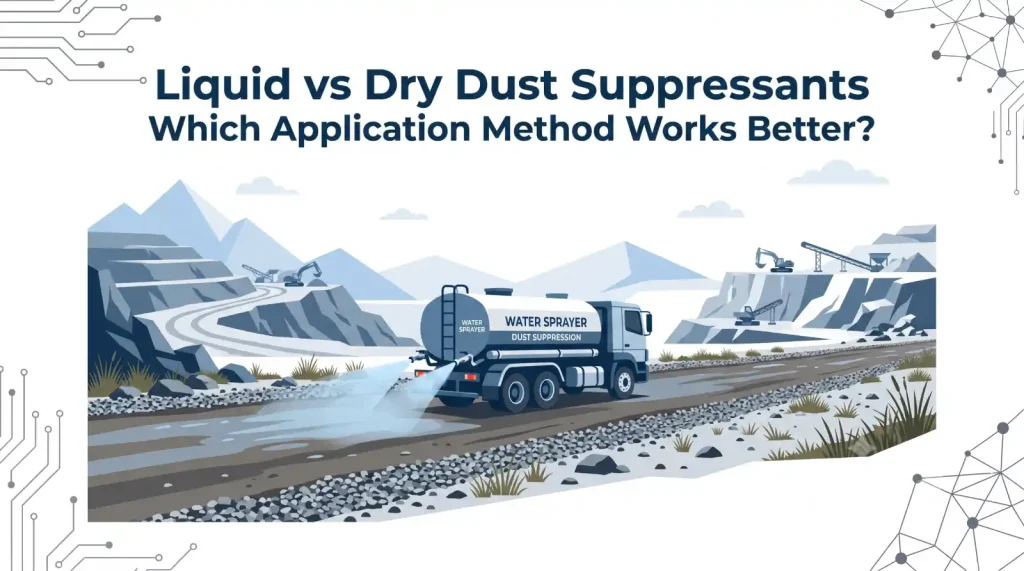
A liquid dust suppressant is a water-based solution containing chemical binding agents such as calcium chloride, magnesium chloride, lignin sulfonate, or synthetic polymer emulsions. When applied to a surface, these liquid formulations penetrate the top layer of aggregate or soil, coating individual particles and binding them together through hygroscopic, adhesive, or electrochemical mechanisms. Unlike plain water, which evaporates quickly and requires frequent reapplication, a formulated liquid suppressant can provide dust control that lasts for weeks or even months, depending on traffic and weather conditions.
The primary mechanism involves increasing the surface moisture retention capacity while simultaneously agglomerating fine particles. For example, hygroscopic salts like calcium chloride attract and retain atmospheric moisture, keeping the road surface continuously damp. Polymer-based liquid suppressants, on the other hand, cure to form a flexible, water-insoluble crust that physically encapsulates dust particles. This versatility makes liquid dust suppressants suitable for a wide range of applications, from mine haul roads and construction sites to agricultural fields and military training grounds.
Where Is a Liquid Dust Suppressant Most Effective?
Liquid dust suppressants perform best in conditions where long-lasting, uniform coverage is required. They are the go-to choice for unpaved roads with moderate to heavy vehicle traffic, where frequent water truck passes would become prohibitively expensive. A single application of a calcium chloride-based liquid dust suppressant can remain effective for 8–12 weeks on a well-graded gravel road, compared to water alone, which might evaporate within 2–4 hours on a hot, windy day.
Open storage piles, tailings dams, and disturbed land areas also benefit from liquid application. The spray-on method allows operators to treat large surface areas quickly and evenly, penetrating the material to a controlled depth. In underground mining, specialized liquid suppressants are used to treat conveyor transfer points and crusher stations, where dry products would create additional airborne particulate due to the velocity of material movement.
How Does a Dry Dust Suppressant Work?
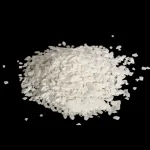
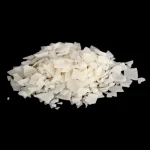
Dry dust suppressants are typically bulk granular materials or powders that are mechanically incorporated into the surface or broadcast over the target area. Common examples include calcium chloride flakes, magnesium chloride pellets, gypsum-based products, and various organic binders. The application method is fundamentally different from liquid spraying: these products are spread using salt spreaders, belt conveyors, or manual broadcasting, and they often rely on existing atmospheric moisture or intentional wetting after placement to activate.
The primary advantage of dry products lies in their high concentration and long shelf life. Because they are not diluted in water, a single ton of dry calcium chloride flakes can treat a significantly larger area than the same weight of salt dissolved in a water truck. Dry suppressants also eliminate the need for water trucks in locations where water is scarce or expensive to transport. The main trade-off is in uniformity. Achieving even distribution of a dry granular product across a road surface requires careful calibration of spreading equipment, or else you risk over-treatment in some spots and under-treatment in others.
Liquid vs Dry: Mechanism Comparison
The fundamental operational difference between a liquid dust suppressant and dry materials lies in the delivery of the active binding agent to the dust particles. The table below compares the key characteristics of each application method across four critical dimensions.
| Comparison Factor | Liquid Dust Suppressant | Dry Dust Suppressant |
|---|---|---|
| Application Mechanism | Sprayed as a solution, penetrates surface by gravity and capillary action | Broadcast as solid, requires moisture (rain or watering) to dissolve and migrate into surface |
| Coverage Uniformity | High; spray patterns ensure even distribution when calibrated correctly | Variable; dependent on spreader type, particle size, wind conditions during application |
| Curing Time | 30 minutes to 24 hours depending on humidity and temperature | 2–48 hours after first wetting event; may remain inactive until rainfall |
| Best Surface Type | Compacted gravel roads, sand, tailings piles | Soft, loose soils with high void space, muddy areas, or high-moisture subgrades |
Why Liquid Application Methods Deliver More Consistent Results
A liquid dust suppressant penetrates the road surface immediately upon spraying, flowing into the void spaces between aggregate particles. As the water carrier evaporates, the active binding agent is deposited directly onto the particle surfaces where it performs its agglomerating function. This process creates a uniformly treated layer that extends from the surface down to the penetration depth, which can be adjusted by changing the spray nozzle pressure and vehicle speed.
In contrast, dry application relies on an external moisture source to dissolve the suppressant and carry it into the surface. If rain is delayed or insufficient, the product sits on top as an inactive crust. If too much water arrives too quickly, the dissolved suppressant may wash away before penetrating adequately. This dependency introduces operational uncertainty that liquid application simply does not have.
How to Choose Between Liquid and Dry Application Methods
Making the right selection requires evaluating five core factors that directly influence the performance and practicality of your dust control program. Use the following checklist as a preliminary assessment tool.
- Verify your available water supply: Is water truck access reliable and affordable, or is water a limiting resource?
- Inspect your surface material: Is it a well-graded gravel with low fines content, or a loose, sandy soil with high dust potential?
- Define your expected traffic load: Will the treated area see 50 vehicle passes per day, 500, or primarily foot traffic?
- Review your budget timeline: Are you comparing cost per application, or total cost over a 12-month treatment cycle?
- Check climate data: What is the average relative humidity, rainfall frequency, and temperature range for the upcoming treatment season?
What Does a Liquid Dust Suppressant Cost Compared to Dry Products?
Understanding the cost structure of a liquid dust suppressant versus dry alternatives requires looking beyond the price per gallon or per ton. Liquid products are sold as concentrated solutions, typically at concentrations from 28% to 38% active ingredient for salt-based products. A 35% calcium chloride liquid solution might cost $0.85–$1.20 per gallon in bulk, and a typical application rate on unpaved roads is 0.25–0.50 gallons per square yard per treatment.
Dry flake or pellet products are priced per ton, with common bulk prices ranging from $350 to $550 per ton for calcium chloride flakes. The application rate is typically 1–2 pounds per square yard. However, dry products also carry hidden costs: you may need to rent a water truck to wet the surface after broadcasting, and uneven distribution can lead to material waste of 15–20% compared to the precision of liquid spray application.
The table below illustrates the cost comparison for a hypothetical 10,000-square-yard unpaved road segment over a 6-month treatment season.
| Cost Component | Liquid Dust Suppressant | Dry Dust Suppressant |
|---|---|---|
| Material Cost per Application | $2,100–$3,000 | $1,100–$1,700 |
| Application Equipment (if rented) | $800–$1,200 per day (spray truck) | $500–$700 per day (spreader + water truck) |
| Application Frequency (6 months) | 2–3 treatments | 3–5 treatments (due to lower initial uniformity) |
| Water Requirements | Mixed into tank; product contains 65–72% water | Separate water truck needed for activation |
| Total Estimated 6-Month Cost | $5,200–$11,400 | $4,600–$12,100 |
Note: Typical market reference values. Actual costs vary by region, supplier, and bulk purchase agreements.
The total cost of ownership difference often narrows significantly when considering labor, water logistics, and performance longevity. For many large-scale operations, the predictability of a liquid dust suppressant application schedule offsets its higher upfront material cost.
Where Does Weather Fit Into the Decision?
Climate is one of the most underrated variables in dust suppressant selection. A liquid dust suppressant containing hygroscopic salts actually performs better in semi-arid to moderately humid conditions, where it can continuously pull moisture from the air. In regions with relative humidity consistently above 40%, a calcium chloride-based liquid suppressant can maintain road surface moisture without additional watering for extended periods.
Conversely, in extremely dry environments with relative humidity below 20%, hygroscopic liquid suppressants may eventually dry out and become brittle, requiring more frequent reapplication. In these conditions, a dry suppressant that relies on polymer binding rather than hygroscopic action may offer more consistent performance, particularly if light periodic surface watering can be scheduled.
High-rainfall regions present a different challenge. Liquid suppressants, once cured, often form a more water-resistant crust than dry products. Polymer-based liquid dust suppressants in particular resist washout during heavy rain, whereas loose dry granules can be displaced by surface runoff before they have a chance to dissolve and penetrate.
The Role of Application Equipment and Operator Skill
The effectiveness of a liquid dust suppressant is highly dependent on the quality of the application. A professionally calibrated spray truck can deliver a uniform application rate across an entire road segment, adjusting nozzle pressure to compensate for vehicle speed and surface contours. Computer-controlled rate controllers, increasingly common on modern water trucks, ensure that every square yard receives the target volume, eliminating both under-application and waste from over-spraying.
Dry application is often perceived as simpler, but achieving uniform coverage with a granular product is surprisingly difficult. Wind can carry lighter particles off-target, spreader settings require manual calibration for each product density, and any overlap or gap in the spread pattern becomes evident only after the product activates and dust patches appear. Operator training is therefore critical for both methods, but the consequences of poor calibration are more immediately visible and harder to correct with dry products.
How to Optimize Your Dust Suppression Program with a Hybrid Approach
Rather than committing exclusively to liquid or dry methods, many experienced site managers adopt a hybrid strategy that leverages the strengths of both. A typical approach uses a liquid dust suppressant as the primary treatment for main haul roads and high-traffic areas, applied on a scheduled maintenance rotation of 8–12 weeks.
Dry products are then deployed for spot treatments: areas where water accumulates and liquid application would be diluted, loading zones where immediate dust control is needed right now, and sections where the existing liquid-treated surface has been damaged by tracked equipment. The dry material can be quickly broadcast by hand or from a small spreader vehicle, providing rapid localized stabilization while awaiting the next full liquid treatment cycle.
This hybrid model maximizes the investment in application equipment and minimizes total downtime. It also builds operational resilience: if a spray truck breaks down or a water source becomes temporarily unavailable, the team is not entirely without dust control capability.
Conclusion
Choosing between a liquid dust suppressant and a dry application method is not a question of which is universally better, but of which aligns more closely with your operational conditions. Liquid dust suppressants offer superior uniformity, longer treatment intervals, and more predictable performance on well-graded road surfaces. Their integration with standard water truck equipment simplifies logistics for large-scale applications.
Dry suppressants provide immediate stabilization, eliminate water transport in arid locations, and serve as an invaluable tool for spot treatments and emergency response. The key is to match the method to the surface, traffic, climate, and available equipment. A well-managed dust control program often benefits from having both liquid and dry capabilities on hand, deployed according to a site-specific schedule rather than a one-size-fits-all prescription. Start by analyzing your specific dust control challenges across different areas of your site, and select the application method that provides the most reliable performance for each.
FAQs
What is the difference between liquid and dry dust suppression?
A liquid dust suppressant is applied as a water-based solution using spray equipment, penetrating the surface and coating particles with a binding agent as the water evaporates. Dry dust suppression involves spreading granular or powdered materials that require external moisture, such as rain or intentional wetting, to dissolve and bind dust particles. Liquid methods provide more uniform coverage, while dry methods offer easier storage and immediate spot-treatment capability without water trucks.
How long does a liquid dust suppressant last on unpaved roads?
A properly applied liquid dust suppressant based on calcium chloride or magnesium chloride can last from 8 to 12 weeks on unpaved roads with moderate traffic and favorable humidity conditions. Polymer-based liquid suppressants may last 3 to 6 months on low-traffic surfaces. Longevity decreases significantly with high traffic volume, heavy vehicle loads, and arid conditions that accelerate evaporation of hygroscopic moisture.
Can you apply a liquid dust suppressant in cold weather?
Yes, but the formulation matters. Calcium chloride-based liquid dust suppressants remain effective down to approximately -20°F (-29°C) before freezing, making them suitable for winter application in most regions. Magnesium chloride has a higher freeze point and is not recommended when temperatures drop below 10°F (-12°C). Polymer-based liquid suppressants may require specific low-temperature formulations to cure properly.
Is liquid or dry dust suppression more cost-effective?
The cost-effectiveness depends on the treatment area size and water availability. A liquid dust suppressant often has a higher upfront material cost per application but requires fewer reapplications, lowering total annual labor and equipment expenses. Dry suppressants cost less per ton of product, but uneven distribution can cause 15–20% material waste, and separate water truck rental adds to the operational budget.
What are the environmental impacts of liquid dust suppressants?
Most commercial liquid dust suppressants are formulated to minimize environmental impact. Calcium chloride and magnesium chloride are naturally occurring salts that are biodegradable and commonly used in food processing. However, high concentrations can affect roadside vegetation and should be managed to avoid runoff into surface water bodies. Synthetic polymer suppressants are typically inert once cured.
How do you apply a liquid dust suppressant correctly?
Application requires a calibrated spray truck or trailer with adjustable nozzle pressure to achieve a rate of 0.25–0.50 gallons per square yard.
- Grade and compact the road surface to a uniform contour before spraying.
- Apply in a consistent, overlapping spray pattern to avoid stripes of untreated surface.
- Monitor weather conditions; avoid spraying immediately before heavy rain that may wash away uncured product.
- Allow 2–24 hours of curing time before permitting heavy traffic on the treated surface.
Which type of dust suppressant is better for construction sites?
For active construction areas with heavy equipment traffic, a liquid dust suppressant typically provides more durable and uniform coverage on established haul roads.
- It can be integrated into the regular water truck schedule without additional equipment.
- It penetrates compacted surfaces better than dry granular products.
- It reduces daily re-spray frequency, minimizing disruption to construction activities.
- For stockpiles, polymer-based liquid suppressants form a durable crust that resists wind erosion for months.
Does dry dust suppression require water to work?
Most dry dust suppressants require water to dissolve and activate. Calcium chloride flakes or pellets are hygroscopic and will gradually draw atmospheric moisture, but this process is slow and insufficient for heavy-duty dust control.
- Application directly before a forecasted rain event can provide cost-effective activation.
- Pre-wetting the surface with a water truck immediately after spreading accelerates performance.
- Some organic binders require no water at all and rely on mechanical compaction to encapsulate particles.
What types of liquid dust suppressants are available?
Several chemical categories exist, each suited to different conditions.
- Hygroscopic salts: Calcium chloride and magnesium chloride are the most common, best for unpaved roads.
- Synthetic polymers: Form a durable surface crust and are ideal for stockpiles and slopes.
- Lignin sulfonates: Organic binders derived from wood pulp processing, effective on sandy soils.
- Tall oil emulsions: Resin-based products that provide strong particle adhesion in wet conditions.
Can you switch from dry to liquid dust suppression mid-season?
Switching from dry to a liquid dust suppressant mid-season is feasible and often beneficial. The road should be graded to remove any remaining dry product crust that might block liquid penetration.
- A light initial liquid application helps condition the surface for subsequent heavier treatments.
- The transition can be made during a scheduled maintenance grading without operational disruption.
- Monitor the first liquid application carefully to ensure the surface achieves the target penetration depth.