Municipal agencies are rethinking winter maintenance trends as weather patterns become less predictable and public expectations for road safety continue to rise. Traditional snow and ice control strategies are increasingly being evaluated alongside new technologies, environmental requirements, and data-driven decision-making, making winter maintenance planning more complex than in previous years.
The way transportation departments approach winter road management has shifted significantly over the past decade. Instead of focusing solely on reactive snow removal, many organizations now emphasize proactive anti-icing, lifecycle cost management, and environmental stewardship. These changes influence procurement decisions, equipment investments, and the selection of deicing materials such as Calcium Chloride.
For municipal buyers, understanding these trends is no longer simply a matter of following industry developments. Procurement decisions made today may affect operational efficiency, public safety, maintenance budgets, and infrastructure performance throughout the entire winter season.
Key Takeaways
- Winter maintenance trends increasingly favor proactive anti-icing rather than reactive snow removal, helping agencies reduce repeated applications and improve operational efficiency.
- Municipal procurement decisions now evaluate environmental impact alongside acquisition cost, with lifecycle performance becoming a major purchasing criterion.
- Calcium Chloride continues to be widely used because it remains effective at substantially lower pavement temperatures than many traditional deicers, making it suitable for severe winter conditions.
- Digital weather forecasting, pavement sensors, and route optimization software are becoming standard decision-support tools in many municipal winter maintenance programs.
- Long-term supplier reliability, inventory security, and logistics planning are receiving greater attention as winter weather becomes increasingly unpredictable.
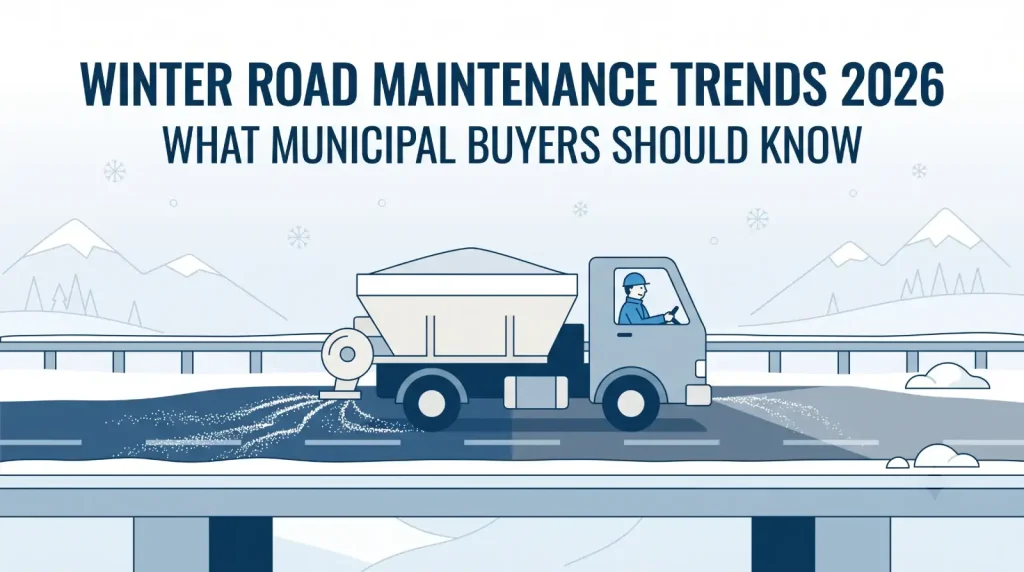
How Are Winter Maintenance Trends Changing in 2026?
Winter maintenance is evolving from a seasonal operational task into a year-round strategic planning process. Municipal buyers are increasingly expected to balance road safety, environmental responsibility, budget limitations, and workforce efficiency simultaneously.
Several factors are driving these changes:
- More frequent freeze-thaw cycles
- Greater variability in regional winter weather
- Rising labor and transportation costs
- Increased environmental regulations
- Higher public expectations for roadway safety
Rather than purchasing materials based solely on historical consumption, many municipalities now evaluate expected weather scenarios months before winter begins. Seasonal forecasting, inventory modeling, and supplier diversification have become standard planning activities.
Another noticeable shift is the growing use of performance-based procurement. Instead of comparing products only by unit price, procurement teams increasingly assess overall operational value, including application efficiency, storage stability, handling requirements, and expected performance under different weather conditions.
What Factors Are Driving Municipal Procurement Decisions?
Municipal procurement strategies continue to evolve because winter road maintenance involves multiple competing priorities. Purchasing departments frequently coordinate with engineering teams, maintenance supervisors, environmental specialists, and financial officers before selecting deicing materials.
Budget Stability
Annual winter maintenance budgets remain one of the most significant considerations. Procurement teams often evaluate:
- Material price stability
- Transportation costs
- Storage expenses
- Expected application frequency
- Emergency reserve requirements
A material with a higher purchase price may ultimately reduce seasonal operating costs if fewer applications are required during severe weather.
Climate Variability
Weather patterns have become less consistent across many regions. Instead of planning for average snowfall, agencies increasingly prepare for multiple weather scenarios including:
| Winter Condition | Procurement Consideration | Operational Impact |
|---|---|---|
| Light snowfall | Rapid application capability | Prevent surface icing |
| Heavy snowfall | Inventory capacity | Continuous road treatment |
| Ice storms | High-performance deicers | Faster ice penetration |
| Freeze-thaw cycles | Flexible treatment strategy | Reduce refreezing risks |
| Extreme cold | Low-temperature effectiveness | Maintain roadway safety |
Sustainability Objectives
Environmental performance has become an increasingly important procurement criterion. Many municipalities now assess:
- Chloride management practices
- Material efficiency
- Reduced application frequency
- Compatibility with local environmental policies
- Long-term infrastructure protection
These factors increasingly influence bid evaluations alongside traditional pricing metrics.
Why Does Calcium Chloride Remain Important in Winter Maintenance?
Among commercial deicing materials, Calcium Chloride continues to play a significant role because of its performance across a broad range of winter conditions.
Unlike materials that primarily rely on existing moisture, calcium chloride is hygroscopic, meaning it naturally attracts moisture from the surrounding environment. This characteristic helps initiate the melting process more rapidly under many cold-weather conditions.
Several operational characteristics explain its continued use in municipal winter maintenance:
| Characteristic | Operational Benefit | Typical Municipal Value |
|---|---|---|
| Hygroscopic behavior | Begins working quickly after application | Earlier ice control |
| Exothermic dissolution | Releases heat during dissolution | Faster initial melting |
| Low-temperature performance | Remains effective in colder conditions | Improved severe-weather response |
| Liquid compatibility | Suitable for anti-icing pretreatment | Supports proactive maintenance |
| Dust reduction capability | Can stabilize stockpiles and treated surfaces | Better material management |
Because different winter events require different treatment strategies, procurement teams often evaluate calcium chloride alongside other deicing materials based on expected climate conditions, roadway classifications, traffic volumes, and maintenance objectives rather than relying on a single material for every application.
In many winter maintenance programs, calcium chloride is also incorporated into liquid brines or blended with other deicing products to improve application efficiency under challenging weather conditions. The suitability of these approaches depends on local operating practices, pavement temperatures, and regional environmental requirements.
How Does Technology Influence Winter Maintenance Trends?
Digital transformation is becoming one of the defining winter maintenance trends of 2026. Municipal agencies are moving beyond traditional weather reports toward integrated decision-support systems that combine meteorological data, pavement monitoring, GPS tracking, and automated reporting.
Instead of relying solely on operator experience, maintenance managers increasingly use predictive analytics to determine when, where, and how much deicing material should be applied.
Road Weather Information Systems (RWIS)
Modern Road Weather Information Systems (RWIS) provide continuous monitoring of:
- Pavement temperature
- Air temperature
- Relative humidity
- Wind speed
- Surface moisture
- Freeze probability
These measurements help maintenance teams deploy resources before hazardous conditions develop rather than after roads become icy.
Smart Fleet Management
GPS-enabled spreaders and plows now generate operational data including:
- Vehicle location
- Material application rates
- Route completion status
- Fuel consumption
- Driver activity
- Equipment performance
This information supports both operational efficiency and procurement planning by identifying actual material usage across different weather events.
Data-Driven Procurement
Historical maintenance data allows municipalities to forecast annual demand more accurately.
Instead of estimating procurement quantities based only on previous winters, buyers increasingly analyze:
- Average application rate per lane-kilometer
- Storm frequency over multiple years
- Inventory turnover
- Emergency reserve consumption
- Supplier delivery performance
These datasets help reduce both over-purchasing and emergency shortages.
Calcium Chloride vs Sodium Chloride: Which Fits Modern Winter Maintenance?
Although this is not simply a question of one material being "better," procurement teams frequently compare Calcium Chloride and sodium chloride when evaluating long-term winter maintenance strategies.
| Evaluation Factor | Calcium Chloride | Sodium Chloride |
|---|---|---|
| Effective operating temperature | Lower pavement temperatures | Moderate winter temperatures |
| Melting speed | Generally faster | Moderate |
| Moisture attraction | Hygroscopic | Limited |
| Anti-icing suitability | Frequently used | Common but less effective in extreme cold |
| Typical application strategy | Severe winter conditions | General winter maintenance |
| Initial material cost | Typically higher | Generally lower |
| Lifecycle operational efficiency | Depends on climate and application strategy | Depends on local operating conditions |
The appropriate choice depends on several factors:
Choose Calcium Chloride when:
- Winter temperatures regularly fall well below freezing.
- Rapid ice penetration is operationally important.
- Anti-icing programs are used before storms.
- Agencies prioritize reduced application frequency under severe weather.
- Critical transportation corridors require high service levels.
Choose Sodium Chloride when:
- Winter temperatures remain relatively moderate.
- Budget constraints prioritize lower initial material cost.
- Road classifications have lower service requirements.
- Local operating procedures are designed around conventional salt spreading.
- Storage infrastructure is optimized for bulk rock salt.
Many municipalities ultimately adopt a blended strategy rather than relying exclusively on a single deicing material.
What Best Practices Help Municipal Buyers Prepare for Future Winters?
As winter maintenance trends continue to evolve, procurement decisions increasingly emphasize resilience rather than simply minimizing purchase cost. Long-term planning helps agencies respond more effectively to weather uncertainty while improving operational consistency.
Best Practices for Municipal Procurement
- Develop multi-year procurement plans to reduce exposure to seasonal market volatility.
- Evaluate lifecycle performance instead of unit price alone, considering application frequency and operational efficiency.
- Review supplier logistics capabilities before winter begins to minimize delivery disruptions during major storms.
- Integrate weather forecasting with inventory planning to maintain appropriate reserve stock levels.
- Standardize application guidelines so material performance can be evaluated consistently across different maintenance districts.
- Monitor pavement condition data to refine future purchasing decisions using measurable operational outcomes.
- Review environmental compliance requirements annually as regional regulations continue to evolve.
These practices help procurement teams make more informed purchasing decisions while supporting safe and efficient winter road operations.
Conclusion
Winter maintenance trends in 2026 reflect a broader shift toward proactive planning, data-driven decision-making, and balanced evaluation of operational performance, environmental responsibility, and long-term costs. Municipal buyers are increasingly selecting winter maintenance strategies based on expected weather variability, infrastructure priorities, supplier reliability, and total lifecycle value rather than acquisition price alone.
Among commonly used deicing materials, Calcium Chloride continues to play an important role because of its low-temperature performance, compatibility with proactive anti-icing programs, and flexibility across a wide range of winter operating conditions. However, the most effective procurement strategy depends on local climate, roadway classifications, maintenance objectives, and available resources.
When evaluating future winter maintenance programs, prioritize measurable performance, operational resilience, and evidence-based procurement practices that align with your municipality's long-term transportation goals.
FAQs
What are the biggest winter maintenance trends in 2026?
The most significant trends include increased adoption of proactive anti-icing, greater use of weather data and predictive analytics, stronger environmental considerations, and procurement strategies focused on lifecycle value instead of only purchase price.
- Wider deployment of RWIS technology
- Increased use of liquid anti-icing treatments
- Greater emphasis on supplier resilience
Why is Calcium Chloride commonly used for winter road maintenance?
Calcium Chloride performs effectively at lower pavement temperatures than many conventional deicing materials and begins working quickly because it attracts moisture and releases heat during dissolution.
- Effective in colder weather
- Suitable for anti-icing
- Often used for critical transportation routes
Is Calcium Chloride better than rock salt?
There is no universal answer because performance depends on climate, operational goals, and budget. Calcium chloride generally performs better in colder conditions, while rock salt may remain appropriate for moderate winter environments.
- Compare operating temperatures
- Consider lifecycle costs
- Match material to local conditions
When should municipalities begin winter maintenance planning?
Planning commonly begins several months before the winter season to allow sufficient time for forecasting demand, securing suppliers, preparing equipment, and training maintenance personnel.
- Review historical weather data
- Estimate seasonal inventory
- Confirm supplier schedules
- Inspect equipment
How do municipalities determine deicing material quantities?
Most agencies estimate annual requirements using historical weather records, road network size, expected storm frequency, application rates, and emergency reserve policies.
- Previous seasonal consumption
- Lane-kilometers maintained
- Weather forecasts
- Inventory safety margins
What environmental factors influence deicing material selection?
Environmental regulations increasingly encourage municipalities to balance roadway safety with responsible chloride management, infrastructure protection, and efficient application practices.
This often involves evaluating total material efficiency rather than focusing solely on the amount of product purchased.
Can technology reduce winter maintenance costs?
Digital monitoring systems can improve operational planning by optimizing application timing, reducing unnecessary treatments, and improving fleet utilization.
- Better route planning
- Accurate weather forecasting
- Reduced material waste
What should municipal buyers evaluate when selecting suppliers?
Supplier evaluation increasingly extends beyond pricing to include logistics reliability, inventory capacity, quality assurance, documentation, and delivery consistency.
- Manufacturing consistency
- Delivery capability
- Inventory availability
- Technical documentation
- Seasonal support
How often should winter maintenance strategies be reviewed?
Most transportation agencies benefit from reviewing their winter maintenance plans after each season. Annual reviews help identify operational improvements and adjust procurement strategies based on recent weather patterns and performance data.
What future developments may shape winter maintenance after 2026?
Future winter maintenance is expected to incorporate greater automation, artificial intelligence, connected vehicles, enhanced pavement sensing technologies, and more sustainable deicing practices as municipalities continue modernizing transportation infrastructure.