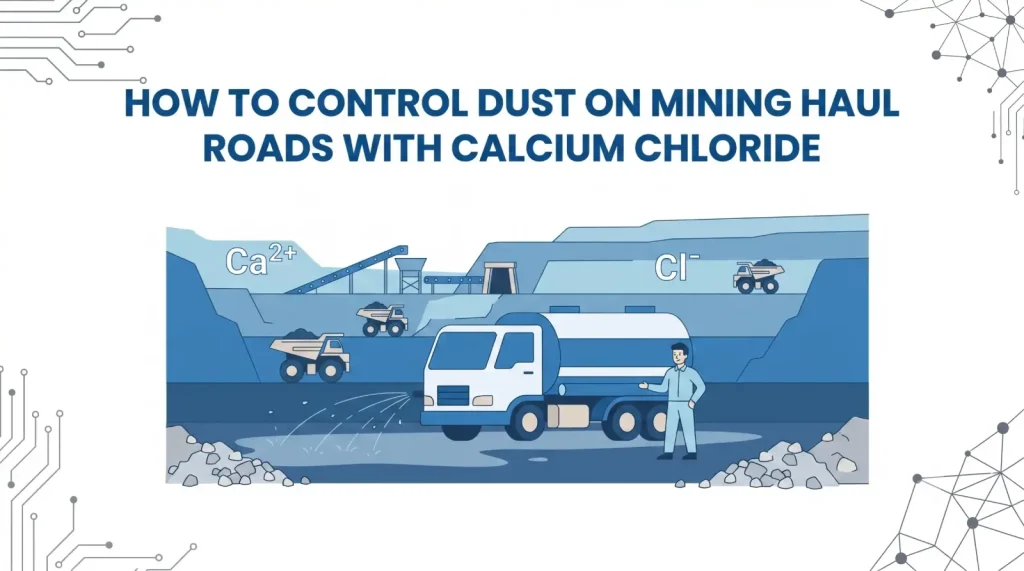
Haul road dust is more than a nuisance on a mine site. It’s a persistent, costly operational challenge that impacts safety, equipment longevity, and regulatory compliance. When heavy haul trucks travel unpaved roads, they grind surface material into fine, airborne particles that reduce visibility, infiltrate engines, and create health hazards for workers. Traditional water trucks offer temporary relief, but they require constant reapplication, wasting water and driving up operational costs.
The problem often lies in the method, not the intent. Many mine operators assume frequent watering is the only practical solution. In practice, water alone addresses the symptom—airborne dust—but not the root cause: the road surface's inability to retain moisture and resist mechanical breakdown.
What makes effective mining dust control so achievable is a shift from temporary wetting to long-term surface stabilization. This involves using hygroscopic salts that pull moisture from the air, keeping the road surface continually damp and compacted. The result is a significant reduction in water usage, equipment wear, and total cost of ownership.
Mining dust control is achievable with calcium chloride on haul roads if application rates are calibrated to local climate and traffic conditions. The main drivers of success are proper road preparation, a well-engineered application plan, and a consistent maintenance schedule. When these factors align, calcium chloride can suppress dust for weeks, not hours.
What Is Calcium Chloride and How Does It Work for Dust Control?
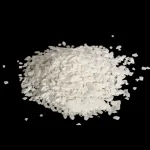
Calcium chloride (CaCl₂) is a hygroscopic salt compound that attracts and retains moisture from the surrounding air. Unlike water, which evaporates quickly under the heat and wind common to open-pit mines, CaCl₂ creates a continuously damp road surface. This moisture binds fine dust particles together and to larger aggregates, preventing them from becoming airborne when heavy haulers pass over.
The dust suppression mechanism works through two key processes:
- Moisture absorption (deliquescence): CaCl₂ pulls water vapor from the air, keeping the road surface damp even in arid conditions.
- Surface tension enhancement: The dissolved salt increases the surface tension of the water film around particles, strengthening the bonds that hold them in place.
This dual action makes calcium chloride particularly effective for mining dust control, where roads endure extreme loads and continuous traffic. A road treated with a 38% CaCl₂ solution can maintain a stable, dust-free surface for 4 to 8 weeks, compared to water-only applications that may require respraying every 2 to 4 hours under the same conditions.
Pre-Application Checklist for Haul Road Preparation
Before any product touches the road, the surface must be engineered to support the treatment. Skimping on preparation can reduce treatment longevity by 50% or more. Complete the following checklist before mobilization:
- Blade and shape the road crown: Establish a 3% to 5% cross-slope to shed rainwater, preventing ponding that leaches the calcium chloride.
- Remove loose aggregate: Scarify and recompact the top 2 to 3 inches (50–75 mm) of road surface material to create a dense, stable base.
- Test the road material fines content: The surface should contain 15% to 25% clay fines. If fines are below 10%, add a binding agent or imported clay material to ensure the salt has particles to bind.
- Apply a water pre-wet: Thoroughly moisten the road to a depth of 3 to 4 inches (75–100 mm) 24 to 48 hours before application. This primes the material and prevents the CaCl₂ solution from being absorbed too deeply.
- Check the weather forecast: Do not apply if rainfall exceeding 0.5 inches (12 mm) is predicted within 48 hours. Heavy rain washes away the treatment before it penetrates.
- Calibrate spray equipment: Verify nozzle output to achieve the target application rate (typically 0.25 to 0.50 gallons per square yard or 1.1 to 2.3 L/m²).
- Install signage and barricades: Close the treated section to traffic for a minimum of 2 to 4 hours after application to allow full penetration.
Step-by-Step Calcium Chloride Application Process
Step 1: Select the Right Product Form
Calcium chloride for mining dust control comes in two primary forms:
| Form | Typical Concentration | Best Application Method | Advantages |
|---|---|---|---|
| Liquid solution | 35% to 38% CaCl₂ | Surface spray, direct application | Immediate dust suppression; ideal for initial treatment |
| Flake/pellet (77% to 94% purity) | 77% to 94% CaCl₂ | Broadcast spreader, then water-activated | Lower transport cost; high residual performance |
Liquid is preferred for most initial treatments because it penetrates evenly and acts immediately. Flake calcium chloride, particularly the 94% purity grade, is often more economical for maintenance applications, as it can be spread on the road surface and activated by ambient moisture or light watering.
Step 2: Apply the Initial Treatment
Using a calibrated spray truck or distributor, apply the CaCl₂ solution uniformly across the road surface.
- Application rate for liquid (35% to 38% solution): 0.25 to 0.50 gallons per square yard (1.1 to 2.3 L/m²). On highly trafficked roads, lean toward the higher end of this range.
- Equivalent rate for flake (94% purity): 1.0 to 2.0 lbs per square yard (0.5 to 1.0 kg/m²).
- Temperature range: Apply when ambient and surface temperatures are above 20°F (-7°C). Cold surfaces reduce solution penetration.
Make one or two passes to distribute the product evenly. Overlapping spray patterns by 10% prevents striping. The goal is uniform coverage, not saturation.
Step 3: Allow Penetration and Curing
After application, close the road to all traffic for a minimum of 2 to 4 hours. This curing period allows the CaCl₂ solution to penetrate 2 to 4 inches (50–100 mm) into the road surface. Trafficking too soon pushes the treated material aside, creating ruts and reducing treatment effectiveness by an estimated 30% to 40%.
Step 4: Implement a Maintenance Schedule
Calcium chloride is not a one-time fix. Maintenance applications restore the salt concentration that traffic and weather gradually deplete.
Typical maintenance schedule for a high-traffic mine haul road (500+ truck passes/day):
| Climate Zone | Initial Treatment Frequency | Maintenance Application Rate |
|---|---|---|
| Arid (<10 in/year rainfall) | Every 8 to 12 weeks | 0.10 to 0.20 gal/sq yd |
| Temperate (10–30 in/year rainfall) | Every 6 to 8 weeks | 0.15 to 0.30 gal/sq yd |
| High rainfall (>30 in/year) | Every 4 to 6 weeks | 0.20 to 0.35 gal/sq yd |
To assess treatment status, mine operators can use a simple "boot scuff test." Scuff the road surface with your boot. If dry dust rises immediately, it’s time for a maintenance application. If the surface remains dark and compacted, the residual salt concentration is adequate.
Troubleshooting Common Calcium Chloride Application Problems
Symptom: Dust returns within 48 hours of treatment.
Solution: The application rate was likely too low for the fines content of the road material. Sample the top 2 inches and test for clay content. If fines are adequate, increase the initial application rate by 15% to 20%.
Symptom: The road surface becomes slippery when wet.
Solution: This indicates over-application or inadequate road crown. Check the cross-slope—it must be at least 3% to shed water. If the slope is correct, lightly blade the surface to break the salt crust, then recompact.
Symptom: Flake product is not dissolving and remains visible on the surface.
Solution: The ambient humidity is too low to activate the flake. Lightly water the road surface (0.05 to 0.10 gal/sq yd) to initiate dissolution. In the future, switch to a liquid application during dry seasons.
Symptom: Corrosion on truck frames and undercarriages appears accelerated.
Solution: While calcium chloride is corrosive to unprotected steel, corrosion accelerates when the product is over-applied. Verify that you are not exceeding the recommended application rates. For long-term fleet protection, consider implementing a regular undercarriage wash program and applying corrosion-inhibitor coatings to vulnerable components.
Mining Dust Control with Calcium Chloride vs. Alternative Suppressants
Where Calcium Chloride Outperforms Water
Water alone requires reapplication up to 10 times more frequently than CaCl₂. In a study on iron ore mine haul roads, water trucks had to reapply every 2.3 hours to maintain visibility, while a single CaCl₂ application lasted 6 weeks. This translates to a water savings of 1.2 million gallons (4.5 million liters) per mile of road over a 6-month dry season.
Calcium Chloride vs. Magnesium Chloride
Both are hygroscopic salts, but their performance differs by humidity. Calcium chloride outperforms magnesium chloride in relative humidity as low as 28%, while magnesium chloride requires humidity above 32% to be effective. For mines in arid regions (southwestern US, central Australia, northern Chile), this difference is operationally significant.
Calcium Chloride vs. Synthetic Polymer Emulsions
Polymer products create a surface crust but are prone to break under heavy haul truck loads exceeding 200 tons. Calcium chloride penetrates and stabilizes the full depth of the road material, making it better suited for ultra-class trucks. However, polymers may have lower environmental mobility, an advantage near sensitive waterways. The table below summarizes the performance dimensions:
| Performance Dimension | Calcium Chloride | Magnesium Chloride | Water | Synthetic Polymers |
|---|---|---|---|---|
| Longevity per application | 4–8 weeks | 3–6 weeks | 2–4 hours | 6–12 months |
| Effective humidity range | >28% RH | >32% RH | N/A | Independent |
| Heavy traffic suitability | Excellent | Good | Poor | Moderate |
| Relative cost per sq yd/year | $0.80–$1.50 | $0.70–$1.40 | $0.05–$0.20 (excl. labor) | $2.00–$4.00 |
| Frost heave resistance | Down to -50°F (-46°C) | Down to 10°F (-12°C) | 32°F (0°C) limit | Excellent |
Safety and Handling Guidelines for Calcium Chloride on Mine Sites
Calcium chloride is safe when handled with proper protocols. The Occupational Safety and Health Administration (OSHA) does not classify CaCl₂ as a carcinogen or a highly hazardous substance. However, it is a strong desiccant and can cause skin and eye irritation upon direct contact. The National Institute for Occupational Safety and Health (NIOSH) recommends a permissible exposure limit for respirable particulates that applies to CaCl₂ dust.
Mandatory personal protective equipment (PPE) for application crews:
- Chemical splash goggles (not standard safety glasses)
- Neoprene or butyl rubber gloves, gauntlet-style
- Long-sleeved cotton or tyvek coveralls with sealed seams
- NIOSH-approved N95 respirator when handling flake or pellet forms that generate dust
An emergency eyewash station and drench shower must be available within 25 feet of all mixing and transfer points. In the event of skin contact, remove contaminated clothing and flush the affected area with water for at least 15 minutes. For eye contact, irrigate continuously and seek medical evaluation.
Where Is Calcium Chloride Dust Suppression Most Cost-Effective?
Choose a calcium chloride program when:
- Your mine site averages less than 30 inches of annual rainfall. In high-rainfall regions, CaCl₂ leaches too quickly to be economical.
- Relative humidity averages above 28% during the dry season. Below this, the salt cannot pull enough moisture from the air.
- Your haul trucks exceed 100-ton payloads. The deep-penetration stabilization handles extreme loads better than surface-crusting products.
- Water access is limited or water cost is high. A single CaCl₂ treatment can displace up to 10 water truck passes, reducing water consumption by over 90%.
- You need frost heave resistance. Calcium chloride depresses the freezing point of road surface water, reducing winter road breakup.
Conclusion
Effective mining dust control on haul roads with calcium chloride hinges on engineering discipline, not just product application. The central takeaway is that calcium chloride delivers dramatic, measurable improvements—reduced water usage, fewer grader passes, and better visibility—when it is applied to a properly shaped, well-compacted road surface at calibrated rates.
Three core principles should guide any implementation: first, road preparation determines 70% of treatment success; second, maintenance applications based on visual cues and a fixed schedule keep performance consistent; and third, safety protocols for handling are non-negotiable and straightforward.
For mine sites evaluating their dust suppression strategy, the most productive next step is to conduct a road material analysis and a 1-mile pilot application. Compare the results—water truck passes, visibility hours, and road maintenance costs—against the previous three months of water-only treatment to quantify the return on investment.
FAQs
What is the best chemical for mining dust control?
The best chemical depends on site-specific conditions. For most arid and semi-arid mine sites, calcium chloride is the most cost-effective and durable option because it actively pulls moisture from the air, unlike water or polymer crusting agents that require high humidity or undisturbed surfaces.
How long does calcium chloride last on a haul road?
A single, properly engineered application of calcium chloride on a mine haul road typically lasts 4 to 8 weeks. Longevity depends on traffic volume, rainfall, and the road's initial fines content. Maintenance applications restore performance as the salt becomes diluted.
How does calcium chloride compare to water for dust control?
Calcium chloride suppresses dust 6 to 10 times longer than water alone. While water evaporates in hours, calcium chloride stays hygroscopically active, keeping the road damp for weeks. This can reduce water consumption for dust control by over 90%.
Is calcium chloride safe for the environment?
When used as directed, calcium chloride has a limited environmental mobility profile. It binds with road material and is not classified as a hazardous air or water pollutant by the EPA. Mine operators should still prevent runoff into sensitive watersheds through proper road grading and drainage design.
Is calcium chloride corrosive to mining equipment?
Yes, calcium chloride is corrosive to unprotected ferrous metals, including truck frames and undercarriages. The corrosion risk can be managed by adhering to recommended application rates, implementing regular equipment washing, and applying anti-corrosion undercoatings.
How much calcium chloride do I need per square yard?
An initial liquid application requires 0.25 to 0.50 gallons per square yard of a 35% to 38% CaCl₂ solution. For flake (94% purity), the equivalent rate is 1.0 to 2.0 lbs per square yard. The exact rate varies with road material fines content and traffic severity.
Does calcium chloride work in high-humidity areas?
Calcium chloride is most effective where relative humidity is above 28%. In high-humidity areas (above 70% RH), it can actually over-liquefy the road surface if over-applied, potentially making the road slick. Reduce application rates in these conditions.
When should I reapply calcium chloride on a mine road?
Reapply when a boot scuff test reveals dry dust rising from the road surface. On a fixed schedule, maintenance applications are typically needed every 4 to 8 weeks for high-traffic roads, with the exact interval dictated by precipitation and truck pass counts.
What are the alternatives to calcium chloride for mine road dust suppression?
The main alternatives are magnesium chloride, lignosulfonates, synthetic polymer emulsions, and emulsified asphalt. Each has trade-offs in cost, longevity, and performance under heavy truck loads versus calcium chloride’s superior performance in arid conditions.
How does calcium chloride help with road stabilization?
By keeping the road material continuously damp, calcium chloride maintains compaction density. It binds fine clay and silt particles together, reducing the formation of potholes, corrugations, and washboarding that result from dry material loss under heavy haul truck traffic.