Unpaved roads, mining haul routes, and construction sites share a persistent and costly problem: fugitive dust. Traditional dust control methods, such as water spraying, address the symptom but not the root cause. A single water truck can suppress dust for only a few hours before evaporation reverses the treatment, creating a cycle of high labor costs, excessive water consumption, and inconsistent results.
This operational inefficiency has driven infrastructure managers, mine operators, and municipal departments to seek alternatives that provide longer-lasting results with fewer applications. The shift is toward chemistry-based solutions that work with ambient moisture rather than against it.
What makes some salts draw moisture from the air while others simply dissolve in applied water? The answer lies in a physical property called deliquescence, and it forms the foundation of hygroscopic dust control. This approach transforms a road surface into a self-maintaining dust-free layer by leveraging atmospheric humidity. This guide explains the science, application techniques, cost variables, and environmental considerations of hygroscopic dust control for industrial and municipal use.
Hygroscopic dust control is an effective and long-lasting solution for unpaved surface dust suppression if site conditions—particularly relative humidity—are appropriately matched to the salt chemistry selected. The core mechanism involves salts that absorb moisture from the air to keep road surfaces continuously damp, binding fine particles and preventing them from becoming airborne.
How Does Hygroscopic Dust Control Work?
The Deliquescence Mechanism Explained
Hygroscopic dust control relies on a class of chemical compounds that spontaneously absorb water vapor from the surrounding atmosphere. When applied to an unpaved road surface, these compounds dissolve into the thin film of absorbed moisture, forming a concentrated brine that coats aggregate particles and fills the interstitial spaces between them.
This brine serves two simultaneous functions. First, it increases the surface tension and capillary forces between soil particles, effectively gluing fine dust-generating fragments to larger aggregate. Second, the continuous liquid phase prevents the release of respirable particulate matter—specifically PM10 and PM2.5 fractions—that become airborne when vehicles traverse dry surfaces.
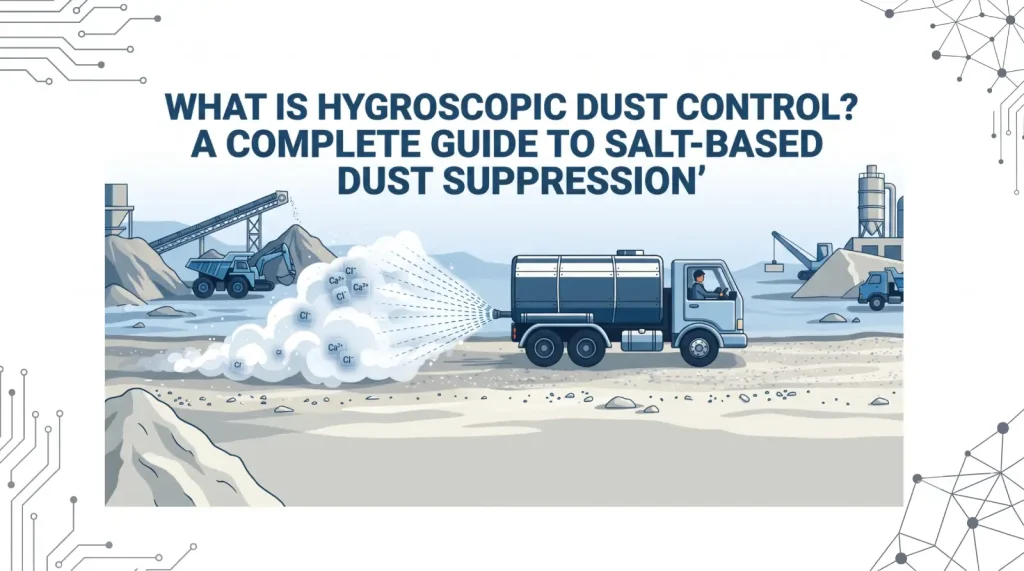
The process is self-regulating. During dry periods, the salt solution becomes more concentrated and its vapor pressure decreases, which increases its capacity to pull moisture from the air. When humidity rises—typically at night or early morning—the brine absorbs additional water, maintaining the road surface in a perpetually damp state. This cycle repeats without reapplication as long as sufficient residual salt remains on the surface.
Relative Humidity: The Threshold That Drives Performance
The most critical variable governing hygroscopic dust control performance is the deliquescence relative humidity (DRH) of the salt selected. DRH is the specific humidity level above which a salt will spontaneously absorb water and form a solution.
A salt remains dry and crystalline when ambient relative humidity is below its DRH. Once the air moisture exceeds this threshold, the salt phase-transitions into a brine and becomes actively dust-suppressive. This threshold behavior means that site-specific climate data—not generic product data sheets—must guide chemical selection.
| Salt Compound | Deliquescence RH at 25°C | Typical Effective Humidity Range |
|---|---|---|
| Calcium Chloride (CaCl₂) | 29% | Works above 30–35% RH |
| Magnesium Chloride (MgCl₂) | 33% | Works above 35–40% RH |
| Sodium Chloride (NaCl) | 75% | Works above 75–78% RH |
| Calcium Magnesium Acetate (CMA) | ~90% | Works above 90% RH (limited use) |
Calcium chloride is the most widely used hygroscopic dust control agent because its low DRH of 29% means it remains active across almost all inhabited climate zones. Magnesium chloride offers comparable performance with marginally slower moisture uptake kinetics, often preferred where chloride loading to groundwater requires closer management. Sodium chloride, while the least expensive, is only practical in high-humidity coastal or tropical environments where ambient RH consistently exceeds 75%.
What Are the Key Benefits of Hygroscopic Dust Control Compared to Water-Only Approaches?
Longevity of a Single Application
Water-only dust suppression evaporates to zero within hours under moderate sun and wind. A properly applied hygroscopic dust control treatment can remain active for weeks to months, depending on traffic volume, rainfall dilution, and aggregate gradation. Mining haul roads treated with calcium chloride at 1.0–1.5 lbs per square yard typically require reapplication every 4–8 weeks versus multiple water applications per day.
The Federal Highway Administration (FHWA) notes that "chemical dust suppressants can reduce the frequency of treatment by a factor of 10 to 20 compared to water alone," translating directly to reduced fleet hours, fuel consumption, and labor allocation.
Water Conservation Impact
Municipal water trucks delivering dust control on unpaved roads can consume 5,000 to 12,000 gallons of water per mile per year. Switching to a hygroscopic program typically reduces water consumption by 90% or more because the salt leverages existing atmospheric moisture rather than relying on applied liquid water.
A county managing 50 miles of gravel roads can conserve 25 million to 60 million gallons of water annually by shifting from daily water spraying to a quarterly hygroscopic salt application. In water-scarce regions, this conservation alone justifies the material cost.
Surface Stabilization and Road Integrity
Fine particles lost as dust are the binding agents that hold larger aggregate in place. When these fines are ejected, the road surface loosens and larger stones are displaced by traffic, accelerating road degradation. Dust loss of 1 ton per mile per day equates to roughly 1 inch of surface material lost each year from a standard 22-foot-wide road.
Hygroscopic treatments retain fine particles in the road matrix, maintaining compaction density and reducing the frequency and severity of potholing, washboarding, and rutting. Operators report 15%–30% reductions in blade maintenance frequency on treated segments.
Where Is Hygroscopic Dust Control Used in Industrial Applications?
Mining and Quarry Operations
Open-pit mines and quarries generate continuous dust from haul trucks, excavators, crushers, and conveyor transfer points. The Mine Safety and Health Administration (MSHA) mandates respirable dust limits, and non-compliance can halt operations. Hygroscopic salts applied to haul roads provide long-duration PM10 suppression without the 24-hour reapplication cycle that water demands.
A typical large open-pit mine applies calcium chloride at 1.0–2.0 lbs per square yard on primary haul roads, with reapplication intervals of 3–6 weeks depending on ore type, traffic counts, and seasonal humidity patterns. The reduction in water truck fleet size required is a secondary operational efficiency gain.
Construction Site Fugitive Dust Compliance
Earthmoving operations expose large areas of disturbed soil. EPA National Ambient Air Quality Standards (NAAQS) for particulate matter require construction sites over specified thresholds to implement a dust control plan. Hygroscopic salts applied to temporary site roads, staging areas, and exposed slopes provide compliant dust suppression while reducing the labor tied up in repeated water applications.
The application rate for construction sites is typically lighter than for permanent haul roads—0.5 to 1.0 lbs per square yard—because the treatment duration required is shorter, often 2–4 weeks to match a specific earthwork phase.
Unpaved Municipal and Rural Road Networks
The United States has over 1.3 million miles of unpaved public roads. Municipal road departments responsible for these networks report that dust control is the top resident complaint category. Hygroscopic programs reduce complaints because residents experience consistent, long-duration dust relief rather than the boom-bust cycle of water truck passes.
A typical application cycle for municipal gravel roads is 3–4 treatments per year: an initial spring application to stabilize the surface after winter, a mid-summer refresh, and an optional late-summer reapplication in high-traffic or arid locations.
What Factors Determine the Cost of a Hygroscopic Dust Control Program?
Material Cost Composition
The primary cost drivers for a hygroscopic dust control program are salt product price, transportation distance, application method, and site preparation requirements. Product cost typically ranges from $150 to $400 per ton for calcium chloride flake or pellet (typical market reference values), with magnesium chloride products falling in a comparable range.
The form factor—flake, pellet, or liquid—affects both product price and application logistics. Liquid solutions (30–38% concentration) minimize on-site mixing but ship and handle larger volumes. Dry flakes or pellets are more economical to transport but require dissolution equipment or direct spreading followed by moisture activation.
Application Rate Economics
| Road Type | Typical Annual Application | Material Rate per Application | Annual Material Cost per Mile (Estimate) |
|---|---|---|---|
| Low-traffic gravel road | 2–3 treatments | 0.5–0.8 lbs/sq yd | $1,800–$3,600 |
| Medium-traffic haul road | 3–4 treatments | 1.0–1.5 lbs/sq yd | $4,500–$9,000 |
| High-traffic mine road | 4–6 treatments | 1.5–2.0 lbs/sq yd | $12,000–$25,000 |
Note: Typical market reference values. Actual costs vary with local product pricing, freight, and application contractor rates.
The total cost must be evaluated against the baseline water truck operation it replaces. A water truck fleet consuming 100,000 gallons of water daily, with associated fuel, maintenance, and operator labor, can incur operating costs exceeding $500,000 annually for a large mine site. The material cost of a hygroscopic program is typically offset by the reduction in water truck fleet size and operating hours.
The Importance of Road Surface Preparation
Grading the road before application is an essential step that directly affects material efficiency and treatment longevity. A properly graded surface with a 2–4% crown ensures that rainwater drains to the shoulder rather than pooling on the traveled surface. Ponding dilutes and washes away hygroscopic salts, reducing effective treatment life by 30–50% compared to a crowned, free-draining profile.
Incorporating the salt into the top 1–2 inches of the road surface via light blading or mixing improves performance. Surface-only application is susceptible to traffic throw-off and wind losses within the first 48 hours. Mixed-in application binds the salt with road aggregate, extending effective duration.
What Is the Environmental Profile of Hygroscopic Dust Control Salts?
Chloride Loading and Vegetation
All chloride-based dust suppressants—calcium chloride, magnesium chloride, and sodium chloride—introduce soluble salts to the road environment. Roadside vegetation within 10–30 feet of treated surfaces may exhibit chloride stress in the form of leaf margin browning, reduced growth, or dieback in chloride-sensitive species.
Application rate management is the primary mitigation strategy. Rates above 2.0 lbs per square yard per application substantially increase chloride runoff potential without proportional dust suppression gains. Best practice is to use the minimum effective rate determined by site-specific testing, not a standardized high-rate application.
Calcium magnesium acetate (CMA) is a non-chloride alternative that the EPA has designated as "practically non-toxic to aquatic organisms," making it suitable for environmentally sensitive watersheds. However, CMA's DRH of approximately 90% limits its effective use to consistently humid environments, and its material cost is 3–5 times that of calcium chloride.
Aquatic Toxicity Considerations
Chloride runoff into surface waters is a primary regulatory concern. Chloride ions are conservative pollutants—they do not degrade, dilute, or biodegrade—and elevated concentrations in freshwater ecosystems can impair aquatic invertebrate and fish populations. The U.S. EPA chronic chloride water quality criterion for freshwater is 230 mg/L, with acute exposure thresholds at 860 mg/L.
Sites with direct drainage to trout streams, wetlands, or drinking water reservoirs must evaluate chloride loading in their dust control planning. Alternatives including reduced application rates, buffer zones, and CMA substitution are available where chloride sensitivity precludes conventional hygroscopic salts.
Calcium Chloride vs Magnesium Chloride vs Sodium Chloride: Which Hygroscopic Salt Should You Choose?
Performance Comparison Across Climate Zones
Calcium chloride is the top-performing hygroscopic dust control salt for most geographic regions because its DRH of 29% means it is active virtually any time humidity exceeds arid-desert levels. It also generates an exothermic dissolution reaction that accelerates initial brine formation during application.
Magnesium chloride has a slightly higher DRH of 33%, which makes it marginally less effective in very dry climates but functionally equivalent in moderate-humidity zones. Some operators report that magnesium chloride brine is less sticky or tacky than calcium chloride brine, which can reduce tracking onto paved surfaces at road intersections. This characteristic, however, also means marginally shorter effective duration on the road itself.
Sodium chloride (road salt or rock salt) is the budget option, but its DRH of 75% severely limits its functional window. It is only appropriate in consistently humid environments—coastal regions, the Pacific Northwest, and tropical locations—where ambient RH routinely stays above this threshold.
Decision Matrix for Salt Selection
Choose calcium chloride when:
- Site relative humidity frequently drops below 35%
- Longest possible treatment duration is the priority
- Mining or heavy industrial use with high traffic loads
- Application temperatures may be near freezing (CaCl₂ brine depresses the freezing point to approximately -50°F)
Choose magnesium chloride when:
- Moderate ambient humidity (40%+ RH typical)
- Reduced tracking or reduced pavement staining is desirable at intersections
- Vegetation sensitivity at site edges requires marginally lower chloride loading
Choose sodium chloride when:
- Ambient humidity consistently exceeds 75%
- Budget constraints are the overriding factor
- Short-duration, high-frequency reapplication is logistically feasible
Consider calcium magnesium acetate (CMA) when:
- Site drains to a sensitive watershed with chloride water quality limits
- Aquatic toxicity concerns override material cost considerations
- Consistently high humidity supports CMA's high DRH of approximately 90%
What to Look for in a Hygroscopic Dust Control Product
When evaluating hygroscopic salt products for a dust control program, procurement teams and facility managers should focus on product quality specifications and supplier documentation rather than marketing claims. The following factors form an objective evaluation framework.
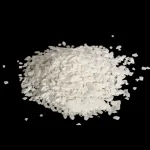
Product purity directly affects performance and application rate calculations. Calcium chloride is typically supplied at 94–97% purity as flake or pellet, with the balance being water and minor sodium, potassium, and magnesium chlorides. A batch-specific Certificate of Analysis (CoA) should be available from the supplier and should confirm the active concentration of the hygroscopic salt. This document allows buyers to calculate the true delivered active ingredient and adjust application rates accordingly.
The physical form of the product—flake, pellet, or liquid—determines handling requirements, dissolution time, and application equipment compatibility. Pellets reduce dust during handling and provide controlled dissolution, while flakes dissolve faster and are preferred for liquid brine preparation. Any supplier should provide a Safety Data Sheet (SDS) compliant with GHS Revision 7 and a particle size distribution specification for dry products.
For quality control laboratories and specification-driven buyers, adherence to recognized standards provides independent verification of product quality. Look for products that conform to ASTM D98 (standard specification for calcium chloride) or AASHTO M144 (calcium chloride for road stabilization), and for magnesium chloride products, conformance to ASTM D345 or equivalent is relevant. These standards establish minimum active content, limits on impurities like alkali metal chlorides, and standardized test methods.
Conclusion
Hygroscopic dust control transforms unpaved surface management from a labor-intensive water logistics operation into a chemistry-driven process that leverages atmospheric moisture for continuous dust suppression. The core mechanism—deliquescent salts absorbing water vapor to form a persistent surface brine—delivers treatment longevity measured in weeks rather than hours, reducing water consumption by 90% or more and significantly lowering fleet operating costs.
The three critical factors that determine program success are matching salt chemistry to site-specific humidity conditions using DRH data, preparing road surfaces with proper grading and crown drainage to maximize treatment life, and managing application rates to balance dust suppression performance against chloride loading in the surrounding environment. Site operators should prioritize humidity data collection and road surface condition assessment before committing to a specific salt product or application schedule.
For teams looking to evaluate a transition from water-only dust control to a hygroscopic program, the first step is a climate and traffic analysis that establishes DRH suitability, application frequency requirements, and the total cost of ownership comparison against current water truck operations.
FAQs
What is hygroscopic dust control?
Hygroscopic dust control is a method of suppressing dust on unpaved surfaces by applying deliquescent salts—such as calcium chloride or magnesium chloride—that absorb moisture from the air. This absorbed moisture maintains the road surface in a continuously damp state, which binds fine dust particles to larger aggregate and prevents them from becoming airborne when disturbed by vehicle traffic.
How does calcium chloride control dust?
Calcium chloride controls dust through its deliquescence property, which causes it to absorb water vapor from the atmosphere whenever the relative humidity exceeds 29%. Once absorbed, the moisture forms a brine film that coats road aggregate and fills the spaces between particles. This continuous liquid phase captures PM10 and PM2.5 particulates that would otherwise become airborne.
How long does a hygroscopic dust control treatment last?
A single hygroscopic dust control application typically lasts 4–8 weeks, depending on traffic volume, rainfall, application rate, and aggregate gradation. High-traffic mine haul roads may require reapplication every 3–4 weeks, while low-volume municipal gravel roads can maintain effectiveness for 8–12 weeks. In comparison, water-only applications may last only a few hours before evaporation.
Is hygroscopic dust control safe for the environment?
Hygroscopic dust control using chloride salts is generally considered safe for most applications when applied at recommended rates, but it does introduce soluble salts to the road environment. Calcium magnesium acetate (CMA) is an alternative that the U.S. EPA has designated as practically non-toxic to aquatic organisms and is preferred for sites draining to sensitive watersheds where chloride loading is a regulatory concern.
How much does hygroscopic dust control cost per mile?
The material cost for a hygroscopic dust control program typically ranges from $1,800 to $9,000 per mile per year, depending on road width, traffic volume, salt type, and application frequency (typical market reference values). These costs are typically offset by the substantial reduction in water truck fleet operating hours, fuel consumption, and blade maintenance on treated roads.
What is the difference between calcium chloride and magnesium chloride for dust control?
Calcium chloride has a lower deliquescence relative humidity threshold (29% vs 33% for magnesium chloride), making it effective across a wider range of climate conditions. Calcium chloride also generates an exothermic reaction that accelerates initial brine formation. Magnesium chloride brine is sometimes reported to reduce tracking onto paved surfaces at intersections, but may have a marginally shorter effective treatment duration.
When should hygroscopic dust control be applied?
Hygroscopic salts should be applied when relative humidity is above the salt's DRH threshold, typically early morning or late evening in arid regions. The road surface should be recently graded with a 2–4% crown for drainage, and light incorporation of the salt into the top 1–2 inches of aggregate improves retention. Avoid application immediately before forecast heavy rainfall to prevent wash-off losses.
Can you use road salt (sodium chloride) for dust control?
Sodium chloride can be used for dust control, but only in consistently humid environments where relative humidity exceeds 75%. This limits its effective use to coastal regions, tropical locations, and the Pacific Northwest. In drier climates, sodium chloride will remain crystalline and inactive, providing no dust suppression until humidity rises above its high DRH threshold.
How does hygroscopic dust control compare to water spraying?
Hygroscopic dust control outperforms water spraying on treatment duration by a factor of 10–20, according to Federal Highway Administration analysis. Water evaporates within hours, while hygroscopic salts continuously regenerate their moisture content from atmospheric humidity. A hygroscopic program also reduces water consumption by over 90% and lowers total fleet and labor costs compared to daily water truck operations.
Does hygroscopic dust control affect road surface quality?
Properly applied hygroscopic salts improve road surface quality by retaining the fine particles that bind larger aggregate in a compacted matrix. Dust loss of one ton per mile per day equates to approximately one inch of surface material lost annually. By retaining these fines, hygroscopic treatments reduce potholing, washboarding, and rutting, and operators report 15–30% fewer blade maintenance cycles on treated segments.